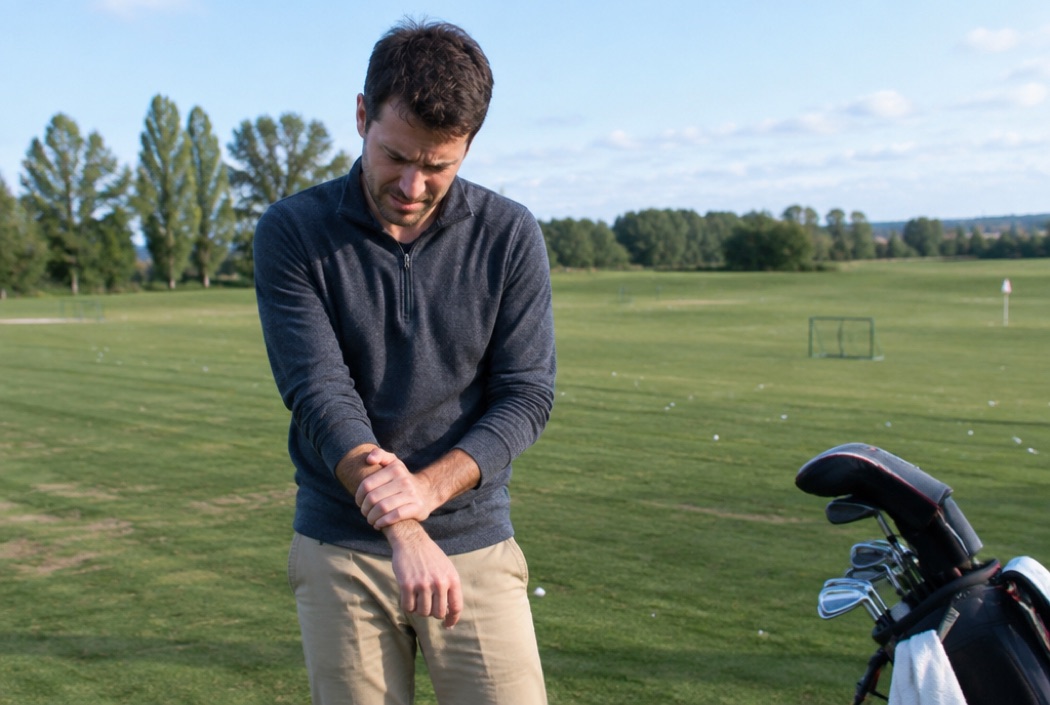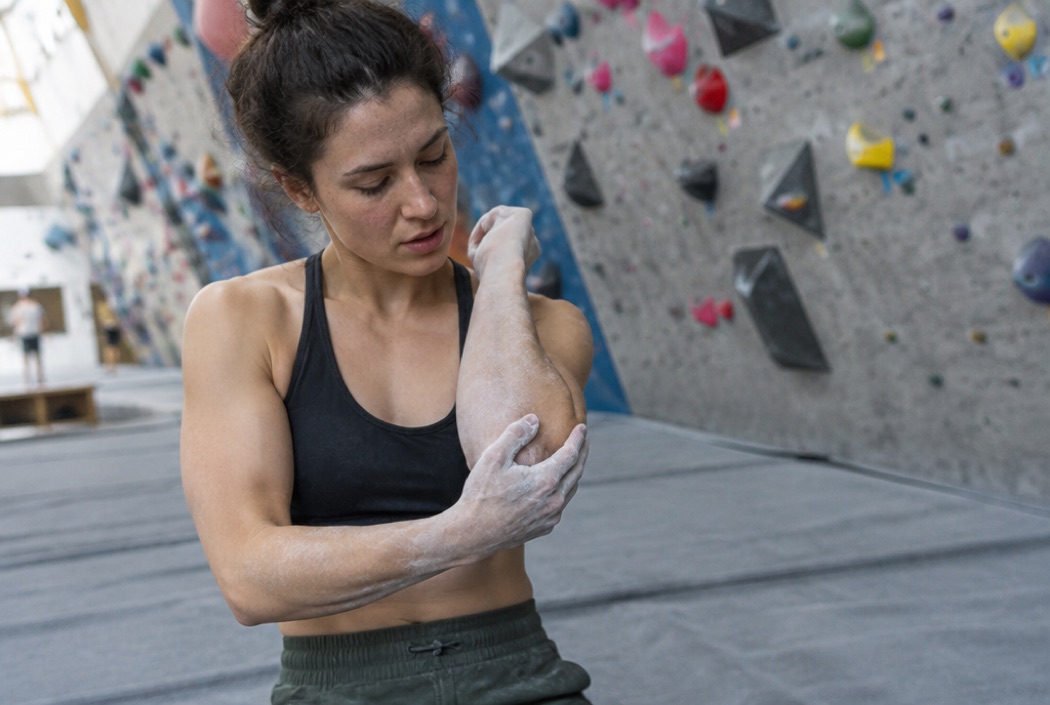


What is De Quervain’s tendinopathy?
Anatomy of the first compartment tendons
De Quervain’s tendinopathy affects the abductor pollicis longus and extensor pollicis brevis tendons, which run together through a narrow tunnel on the outer edge of the wrist, on the thumb side. These tendons allow the thumb to spread and extend, a movement that’s extremely common in everyday life as well as in sport.
Why does this area become painful?
Pain appears when these tendons undergo repeated friction in their narrow tunnel, particularly during repeated movements combining thumb abduction and wrist tilting. Repeated gripping motions, racquet movements, or certain intensive manual activities contribute to this tendinopathy.
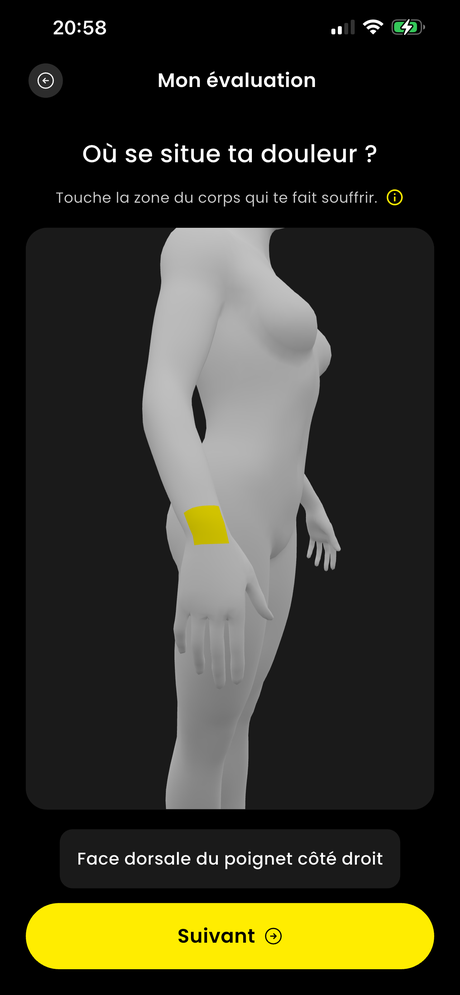

Physio insight · Thibault
This tendinopathy is very common among new parents because of the repeated movements of carrying a baby (thumb spread, wrist tilted): the same overload mechanism shows up in athletes through repeated gripping and racquet movements.
Physio tip · Hemrick
Test your pain by folding your thumb into your palm then tilting your wrist toward your little finger (Finkelstein’s test): if the pain is clear-cut on the outer edge of the wrist, that’s a good indicator of De Quervain’s tendinopathy.
Causes and risk factors
De Quervain’s tendinopathy develops from repeated friction of the thumb tendons within their narrow tunnel.
Biomechanical and personal factors
- Repeated movements combining thumb abduction and wrist tilting
- Resuming or suddenly increasing a manual or sporting activity
- Repeatedly carrying a child (thumb spread, wrist tilted)
- Stiffness or a lack of strength in the wrist and forearm
Which sports contribute to De Quervain’s tendinopathy?
Any sport with repeated gripping and thumb movements exposes these tendons:
- Golf
- Racquet sports (tennis, badminton)
- Climbing
- Skiing (poles)
- Canoeing, kayaking and rowing
- Sports with repeated gripping of a handle or racquet
De Quervain’s tendinitis: the symptoms to watch for
De Quervain’s tendinitis, which physios call De Quervain’s tendinopathy or tenosynovitis, causes pain on the edge of the wrist, on the thumb side. It flares up when the thumb spreads or grips while the wrist tilts: lifting a baby, carrying a saucepan, wringing out a sponge, turning a key, holding a racket or a club.[1]
When you press on it, one precise spot is tender at the base of the thumb, where two tendons run through a narrow tunnel. The area can look slightly swollen at times. Putting the tendons under tension is very telling: with the thumb tucked into the palm and the wrist tilted towards the little finger, the pain is sharp on the thumb side. This is the Finkelstein test.[1][2]
The most common signs
Pain on the edge of the wrist, thumb side, which can travel up towards the forearm
Sharp pain when lifting an object with the thumb spread and the wrist tilted
A spot that is tender to touch, sometimes swollen, at the root of the thumb
A less reliable pinch: things slip out of your hand, opening a jar becomes a chore
Pain when wringing, turning a key or typing on your phone for a long time
The word tendinitis suggests inflammation. In reality, the thumb tendons and their sheath are mostly thickened by repeated friction, more than inflamed: it is an overload, not an infection or permanent wear.[3][5]
De Quervain’s or another kind of wrist and thumb pain?
Not every pain on the thumb side is De Quervain’s. Pain lower down, at the base of the thumb, when pinching or unscrewing, points more towards thumb arthropathy. Pain on the back of the wrist when you bend it upwards suggests wrist extensor tendinitis, and pain on the palm side suggests wrist flexor tendinitis. Tingling in the fingers, especially at night, makes you think of carpal tunnel syndrome. And pain that started after a fall on the hand needs medical advice.
Tendinitis, muscle soreness or a muscle tear?
Muscle soreness in the forearm shows up the day after an unusual effort, affects the whole muscle and fades within a few days. A muscle tear happens suddenly, during a violent effort, higher up in the forearm. De Quervain’s tendinitis, on the other hand, sets in little by little, on one precise spot of the wrist, and comes back with every repeated thumb movement as long as the tendons have not been strengthened.
Ultrasound, X-ray: do you need tests?
In most cases, the symptoms and the doctor’s tests are enough to recognise De Quervain’s tendinitis. If the pain persists or the picture is unusual, the doctor may order an ultrasound to look at the tendons and their sheath, or an X-ray to check the thumb joint.[1][2]
Treating De Quervain’s tendinopathy in rehab with a sports physio
The goal of treatment is to reduce friction of the tendons in their tunnel while progressively strengthening their capacity to absorb load.
- 1
Reducing pain and managing load
- 2
Wrist and finger mobility
- 3
Isometric strengthening
- 4
Progressive concentric strengthening
- 5
Eccentric strengthening
- 6
Full forearm work
- 7
Correcting sporting technique
- 8
Strengthening under sport-specific load
- 9
Progressive return to your sport
- 10
Return to competition
“It’s not that the tendon is fragile, it’s that the load needs to be better dosed and distributed.”
Progressive strengthening, the cornerstone of treatment
Progressive strengthening of the thumb tendons, combined with comprehensive wrist and forearm work, restores their capacity to absorb the load specific to your sport or activity.
In brief
Progressive strengthening of the thumb tendons
Comprehensive wrist and forearm work
Correcting technique if needed
Gradual return: mobility, then load, then sport
Ready to take your De Quervain’s tendinopathy seriously?
Start the HOPP programme designed by sports physios.
Which exercises for De Quervain’s tendinitis?
Physio treatment for De Quervain’s tendinitis rests on two things: reducing the friction of the tendons in their tunnel, then giving them their strength back with progressive exercises. Immobilising the thumb and waiting is not enough: a tendon needs load, in the right dose, to become robust again.[5]
The two tendons involved spread and lift the thumb. They work with the muscles that stabilise the wrist, the extensors on the back and the flexors on the palm side, and with the whole forearm. When the wrist lacks stability, it tilts towards the little finger with every grip and the thumb tendons rub more. Higher up, a poorly stabilised shoulder forces the hand to clench. That is why strengthening is not limited to the thumb.
- 1
Restore wrist mobility
: the carpal decoaptation exercise is a gentle mobility drill: it relaxes the joint and helps the wrist move freely, without forcing and without bringing the pain back. - 2
Contract without moving
: static strengthening of the thumb in extension means pushing the thumb against a fixed support, with no movement. This held contraction often calms the pain and wakes the tendons up without making them rub. - 3
Strengthen through movement
: spreading and lifting the thumb against light resistance, on the way up and then while slowing the way down, gives the tendons back the strength they need to carry, grip and hit. - 4
Stabilise the wrist and shoulder
: wrist and forearm work, plus the floor clock exercise for the shoulder, spread the effort better across the whole arm, so the thumb no longer has to compensate.
In the HOPP programme, these exercises are shown on video and dosed every day according to your pain and how you feel.
Splint, taping: useful or not?
A splint that supports the thumb, or taping, can bring relief when the pain is strong, for example to get through a busy day. It is a temporary aid, not the core treatment: worn all the time without strengthening, it lets the thumb lose its strength. Ask your doctor or pharmacist about the model and how long to wear it, and keep doing the exercises alongside.[2]
Should you rest or keep playing sport?
Total rest is generally not necessary. It’s better to temporarily adapt the movements that clearly reproduce the pain, while starting progressive strengthening as soon as possible.
Think you might have a different wrist or hand injury?
Take your free test in 3 minutes flat.
When should you see a specialist for De Quervain’s tendinopathy?
If the pain persists for more than four to six weeks despite adapting your activities and following a well-run strengthening programme, a medical opinion is recommended to consider additional treatment options.
De Quervain’s tendinitis: how long does it take to heal?
The recovery time for De Quervain’s tendinitis depends mostly on how long the pain has been there and on how much room the triggering movement takes up in your days. These are guidelines, not promises: every tendon has its own pace.
3 to 6 weeks
Pain after effort, on the edge of the wrist
6 to 12 weeks
Pain during the movement, less secure pinch
3 to 6 months
Daily pain, in place for months
Indicative timeframes, with regular rehabilitation.
The earlier you react, the shorter it is. What lengthens recovery: carrying on with the movement that rubs without changing anything, not using the thumb at all for weeks, or repeating the painful movement ten times a day to check. Resting the thumb is not always enough: it is often the tilt of the wrist that needs correcting.
Anti-inflammatories, rest, injection: what really helps
Anti-inflammatories and ice can calm a painful flare-up, but they do not act on the cause, which is mechanical. Complete rest brings relief for a while, then the pain returns with the first repeated movement. If the discomfort lasts despite adapted movements and well-run strengthening, the doctor may suggest other treatments, such as an injection. In every case, it is progressive reloading that gives the tendons their tolerance back.[2][5]
De Quervain’s tendinitis and racket sports: can you keep playing?
In tennis, badminton or padel, the thumb tendons work with every shot: the hand squeezes the handle and the wrist tilts at impact. In most cases, you do not need to stop completely, but to adapt your game while the tendons settle down.
Playing with De Quervain’s tendinitis
Keep the sessions where the pain stays mild and settles within the following hours
Loosen your grip: holding the racket less tightly eases the thumb tendons straight away
Cut back on wristy shots, such as slice serves, smashes or whipped drop shots
Check your handle size: too thin, and it forces you to clench your hand
Return to your usual volume in stages: a few shots, then more, then hard
The same principles apply to golf, where the wrist hinges at impact, to climbing, to skiing with poles, and to rowing. In swimming, the thumb is under little strain: it is often a good way to keep up your cardio.
How to stop De Quervain’s tendinitis from coming back?
Once the pain has gone, the thumb tendons remain sensitive to the same causes: lots of repeated movements, thumb spread and wrist tilted. That is true on a court, but also with a baby in your arms or a phone in your hand.[4]
The right habits
Lift with both hands, palms underneath: the thumb no longer acts as a hook
Keep your hand in line with your forearm when you grip or carry
On your phone, one hand holds the device and the index finger of the other types
Keep one thumb and wrist strengthening exercise in your week
Increase your volume of play or manual work gradually
The HOPP care programmes to treat your De Quervain’s tendinopathy and get back to sport
This tendinopathy requires progressive, well-dosed strengthening. HOPP offers you a precise exercise programme, allowing you to get back to your activities as quickly as possible.
The programme runs from 3 to 9 weeks depending on the injury and ends with a reconditioning phase allowing a return to competition in the best possible conditions. Each programme is designed by the HOPP team, made up of two sports physiotherapists who are experts in assessing and treating athletes. You’ll also find theoretical content throughout your progression, so you master every aspect of your recovery and can adjust your treatment independently. If needed, our team of physiotherapists is on hand to support you.
Your HOPP programme, as a subscription
You start for free: 3 days of personalised programme, no credit card. After that, you choose to continue with the subscription, or to stay on limited free access.
3 days
of personalised programme, in the app
- No credit card
- No email needed
- Your first session today
After the 3 days, you choose
I subscribe
Everything unlocked
- Today’s session and your personalised programme
- Daily adjustment of your programme
- Conversations with support
- Plus everything free access already keeps
I stay on free
Limited access
- The dashboard: your progress and your metrics
- Booking a video call with a sports physio
- The HOPP shop
- Today’s session and your personalised programme
- Daily adjustment of your programme
- Conversations with support
Choose your plan
Your personalised programme, adjusted daily to how you feel
€9.99 /month€99 /year
No commitment
- Personalised programme
- Daily tracking
- Daily adjustment
- Return-to-sport assessment
- Reconditioning phase
- Relapse prevention
- HOPP community access
- 1 video call of 20 minutes every month7 video calls of 20 minutes over the year
The same programme, with your sports physio on video
€39.99 /month€299 /year
No commitment
- Personalised programme
- Daily tracking
- Daily adjustment
- Return-to-sport assessment
- Reconditioning phase
- Relapse prevention
- HOPP community access
- 1 video call of 20 minutes every month7 video calls of 20 minutes over the year
A single video call with a FIFA-certified sports physio, no subscription: €35
What your subscription includes
Personalised programme
Built for your injury by two sports physiotherapists, from your assessment.
Daily tracking
Today’s session, your progress and your metrics, all in your dashboard.
Daily adjustment
How you feel today shapes what comes next: more load if all is well, less if the pain complains.
Return-to-sport assessment
A checkpoint to know whether your body is ready to go back to your sport, and at what level.
Video call with a FIFA-certified sports physio
Plan with video callsIn the plan with video calls: 20 minutes to review your progress with them.
Reconditioning
A final phase to get your level back before returning at full intensity.
Prevention
Exercises to strengthen your weak points and lower the risk of a relapse.
Community
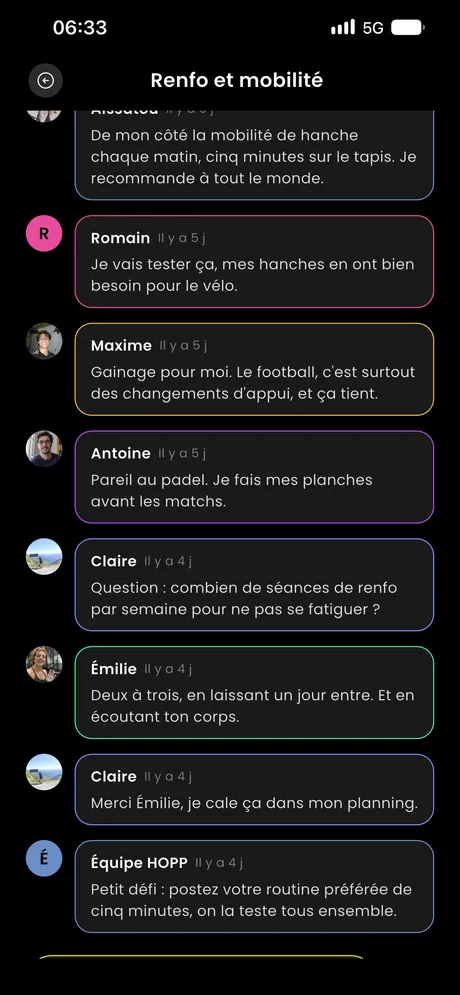
Talk with other athletes going through the same rehab.
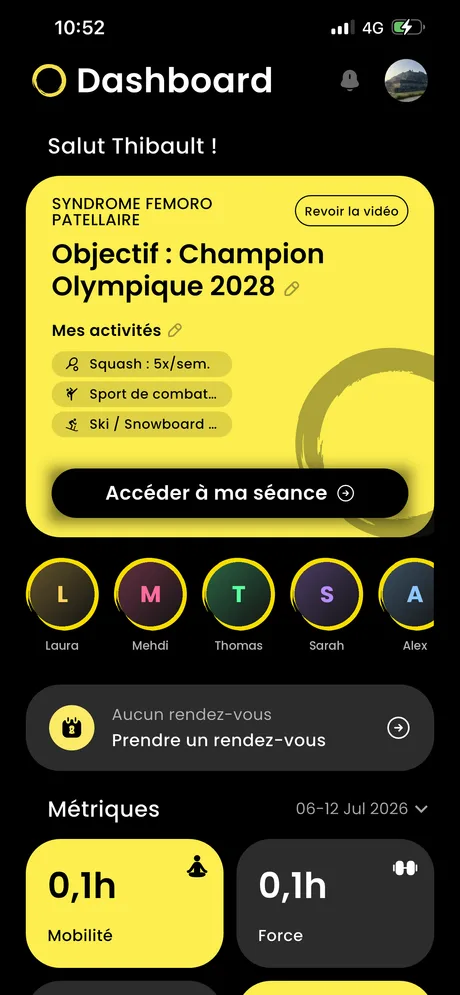
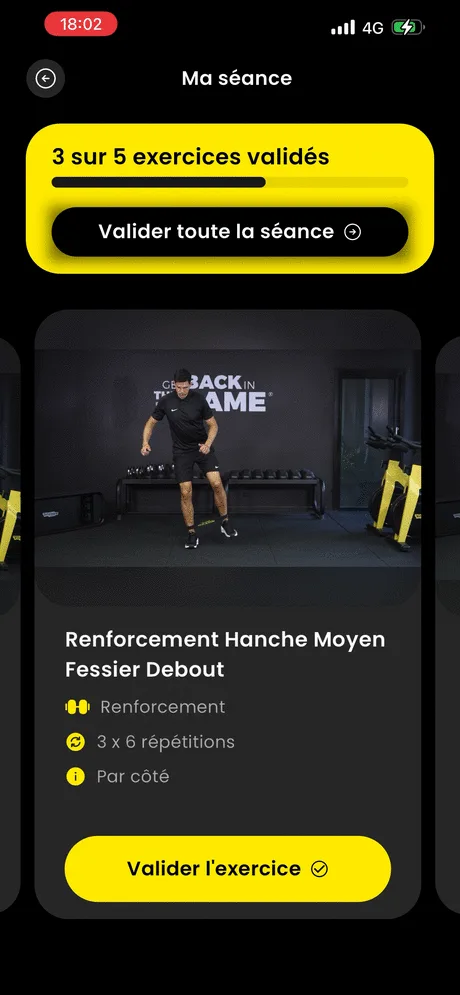
The HOPP app, for real
A programme that adapts to you every day
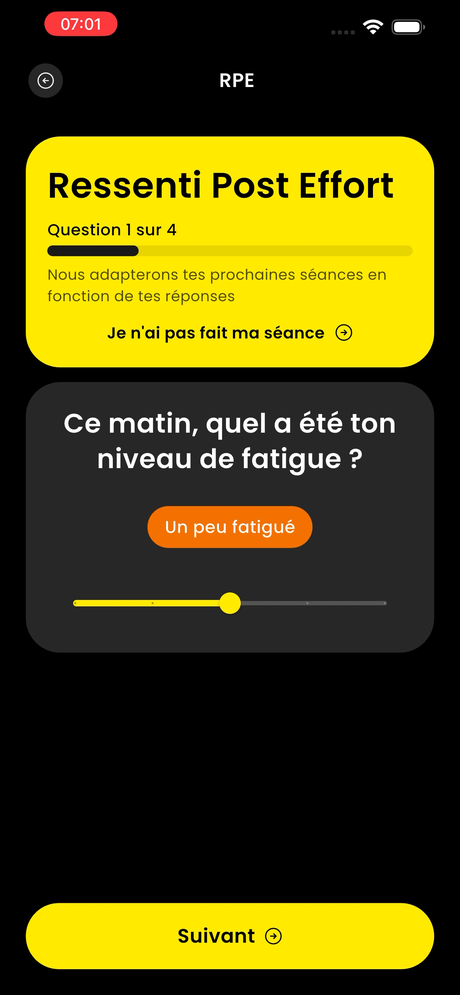
Every day, how you feel (RPE) is factored in to automatically adjust the rest of your programme: more load if all is well, a bit less if your wrist is complaining. This daily personalisation is what makes the difference compared to a fixed, paper-based programme.

Ready to start your programme?
Join the HOPP support programme designed by sports physios.
Keep these pointers close at hand
The De Quervain’s tendinitis guide covers recovery times, the right moves and the traps to avoid. You get it by email within a minute.

F.A.Q
Does the HOPP programme replace a medical consultation?
No. HOPP is a support and rehab tool designed by sports physiotherapists, but it doesn’t replace a doctor’s opinion. If in doubt, or if the pain persists, see a health professional.
Is the programme suited to all sporting levels?
Yes. Every programme is personalised to your sport, your level and how you feel each day, whether you’re a recreational athlete or preparing for competition.
Can I keep playing sport with this tendinopathy?
In most cases, yes, by temporarily adapting the movements that reproduce the pain, while starting strengthening in parallel.
How long does it take to recover?
A structured programme generally brings clear improvement within a few weeks, with a full return to sport after several weeks of progressive strengthening.
Can a splint help?
A splint immobilising the thumb can temporarily ease the pain, but it doesn’t replace progressive strengthening, which remains the underlying treatment.
Does Finkelstein’s test confirm the diagnosis?
This test is a good indicator, but it doesn’t replace a full medical diagnosis. It mainly helps point toward De Quervain’s tendinopathy rather than another cause of wrist pain.
Does this tendinopathy mainly affect new parents?
It is indeed very common among new parents because of repeated carrying movements, but it also affects many athletes who do repeated gripping or racquet movements.