

What is carpal tunnel syndrome?
Carpal tunnel anatomy
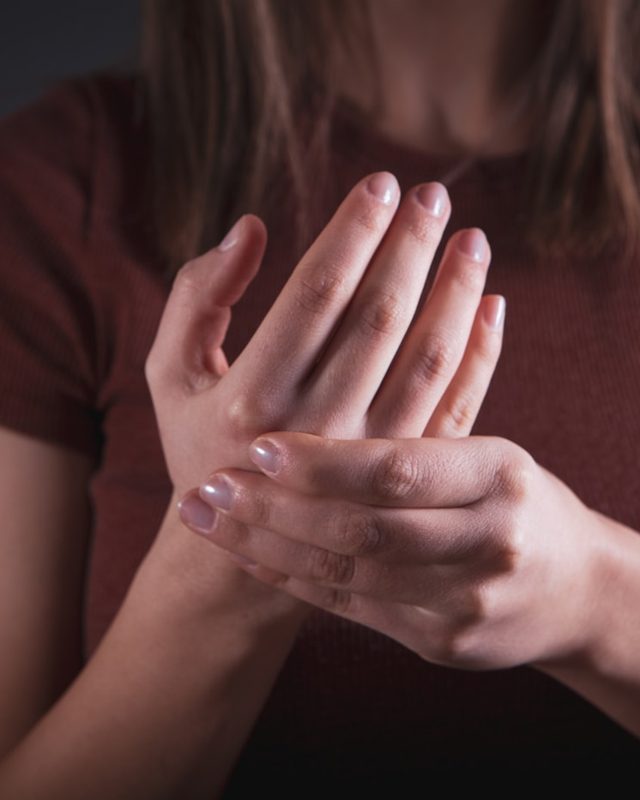
The carpal tunnel is a narrow passage at the base of the palm, formed by the carpal bones and a transverse ligament. It provides passage for the median nerve and several finger flexor tendons. Carpal tunnel syndrome is a compression of this nerve, causing tingling, numbness or pain mainly affecting the thumb, index and middle fingers.[1]
Why does this nerve get compressed?
Compression occurs when pressure inside the carpal tunnel increases, linked to repeated wrist flexion-extension movements, prolonged flexed positions (such as on a bike handlebar), or local swelling of the flexor tendons following overload. Certain individual factors (pregnancy, hormonal changes) can also contribute to this syndrome.
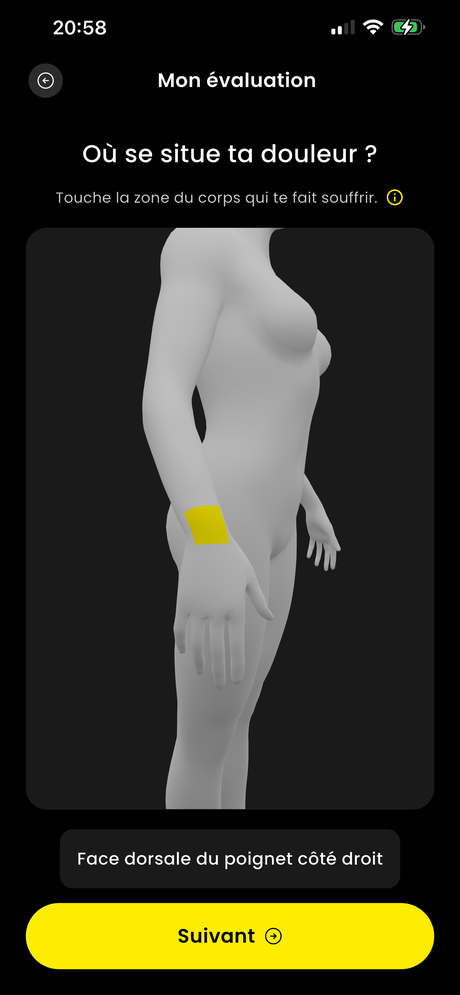
Symptoms and diagnosis of carpal tunnel syndrome
Typical symptoms and their triggers
Tingling and numbness typically affect the thumb, index and middle fingers, often more pronounced at night or on waking. They’re classically triggered or worsened by holding the wrist flexed (bike handlebar, prolonged weight-bearing).
How symptoms progress without treatment
Without treatment, symptoms can become permanent rather than intermittent, with a risk of losing strength in the thumb-index pinch grip and, in advanced neglected cases, visible wasting of the muscles at the base of the thumb.
Differential diagnosis
Several wrist or hand conditions can look like carpal tunnel syndrome :
- De Quervain’s tendinopathy, pain more localised to the edge of the thumb, without tingling
- Ulnar nerve compression at the elbow, which tends to affect the ring and little fingers
- A cervical disc herniation or cervicobrachialgia, which can refer tingling down to the hand
Causes and risk factors
Carpal tunnel syndrome results from increased pressure inside an anatomically narrow space.[1]
Biomechanical and personal factors
- Repeated wrist flexion-extension movements
- A prolonged flexed wrist position (handlebar, weight-bearing)
- Local swelling of the flexor tendons after overload
- Individual factors (pregnancy, hormonal changes, family history)
Which sports contribute to carpal tunnel syndrome?
All sports involving prolonged weight-bearing or repeated wrist flexion carry a risk for this syndrome:
- Cycling (prolonged position on the handlebar)
- Climbing
- Weight training with repeated weight-bearing
- Racquet sports
- Gymnastics (weight-bearing on the hands)
- Long-distance mountain biking and road cycling
Why does this syndrome appear without an obvious reason?
The carpal tunnel is an anatomically limited space : a gradual increase in pressure inside it, linked to repeated movements or a prolonged position, is enough to compress the median nerve without any single identifiable event.
Treating carpal tunnel syndrome in rehab with a sports physio
The goal of treatment is to reduce pressure on the median nerve by working on wrist and tendon mobility, while adapting the positions and movements that worsen the compression.
- 1Reducing pain and managing load
- 2Wrist and finger mobility
- 3Isometric strengthening
- 4Progressive concentric strengthening
- 5Eccentric strengthening
- 6Overall forearm work
- 7Correcting sporting technique
- 8Strengthening under sport-specific load
- 9Progressive return to your sport
- 10Return to competition
“The nerve needs space to glide freely: it’s often the position, more than the effort, that needs to change.”
Mobility and postural adaptation, the cornerstones of treatment
Neuromeningeal gliding work for the median nerve, combined with adapting prolonged flexed wrist positions (bike handlebars in particular), often significantly reduces symptoms without the need for an invasive procedure.
In brief
- Median nerve gliding work
- Adapting at-risk positions
- Overall strengthening of the wrist and forearm
- Gradual return: mobility, then load, then sport
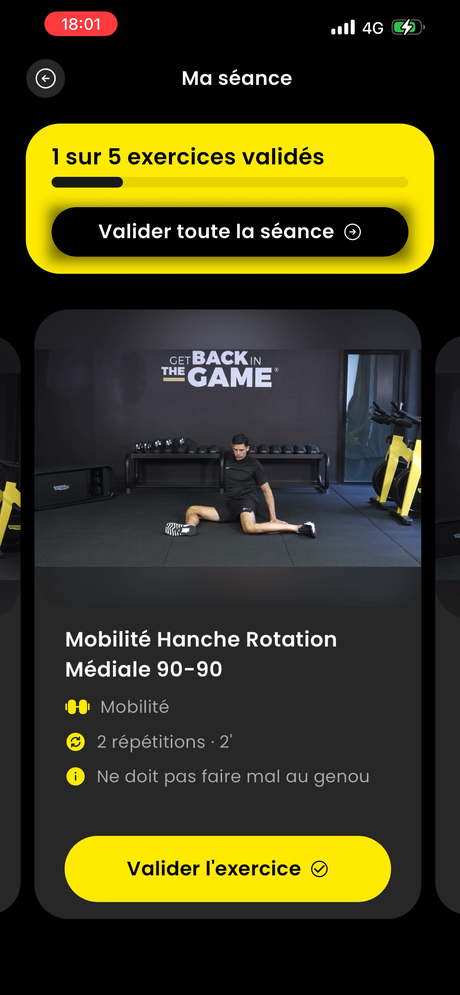
Ready to take your carpal tunnel syndrome seriously?
Start the HOPP programme designed by sports physios.
Should you rest or keep playing sport?
Total rest is generally not necessary. It’s better to temporarily adapt the positions and movements that clearly reproduce the symptoms (prolonged flexed position), while starting rehab as soon as possible.
Think you might have a different wrist or hand injury?
Take your free test in 3 minutes flat.
When should you see a specialist for carpal tunnel syndrome?
If symptoms persist for more than four to six weeks despite adapting your activities, or if you feel a loss of strength or a lasting decrease in sensation, a medical opinion is recommended to assess the nerve involvement.
Recovery time: how long does it take to recover from carpal tunnel syndrome?
A clear improvement in symptoms is often seen within 4 to 6 weeks of rehab and postural adaptation. Longstanding or more pronounced symptoms may take longer to fully disappear.
Factors that speed up or slow down recovery
- How long symptoms had been present before treatment started
- Adapting at-risk positions (handlebar, prolonged weight-bearing)
- Consistency in neural gliding work
- Whether or not an established loss of strength is present
Preventing recurrence
Carpal tunnel syndrome comes back easily if at-risk positions aren’t durably adapted.
Adapting your position when cycling
Adjusting the handlebar to limit excessive wrist flexion, combined with regular breaks to change hand position, clearly reduces repeated pressure on the carpal tunnel during long rides.
Maintaining neural gliding work
Regular median nerve gliding work, even brief, kept up after the symptoms disappear, helps preserve the nerve’s mobility within the tunnel and prevent recurrence.
The HOPP care programmes to treat your carpal tunnel syndrome and get back to sport
This syndrome requires neural mobility work and postural adaptation. HOPP offers you a precise exercise programme, allowing you to get back to your activities as quickly as possible.
The programme runs from 3 to 9 weeks depending on the injury and ends with a reconditioning phase allowing a return to competition in the best possible conditions. Each programme is designed by the HOPP team, made up of two sports physiotherapists who are experts in assessing and treating athletes. You’ll also find theoretical content throughout your progression, so you master every aspect of your recovery and can adjust your treatment independently. If needed, our team of physiotherapists is on hand to support you.
Essential
FROM INJURY TO
BACK TO YOUR ACTIVITIES
59€
One-time payment
“AT YOUR OWN PACE WITH
DAILY ADAPTATION”
- 100% of the treatment programme
- Daily personalisation
- Flexibility / Mobility
- Strengthening
- Proprioception
- Progress tracking
- Return-to-running programme
- Theoretical content included
Performance
TO GET BACK TO SPORT
IN THE BEST CONDITIONS
79€
One-time payment
“GET BACK TO YOUR LEVEL
WITHOUT RISK OF RELAPSE”
- 100% of the treatment programme
- Daily personalisation
- Flexibility / Mobility
- Strengthening
- Proprioception
- Progress tracking
- Return-to-running programme
- Theoretical content included
- + 4-week return-to-play plan with 6 difficulty levels
Expert
PERSONALISED VIDEO-CALL
SUPPORT, ANY TIME
149€
One-time payment
“A PHYSIO
WHENEVER YOU NEED”
- 100% of the treatment programme
- Daily personalisation
- Flexibility / Mobility, Strengthening, Proprioception
- Progress tracking
- Return-to-running programme
- Theoretical content included
- + 4-week return-to-play plan with 6 difficulty levels
- + 2 video calls with an expert sports physio / return check-up
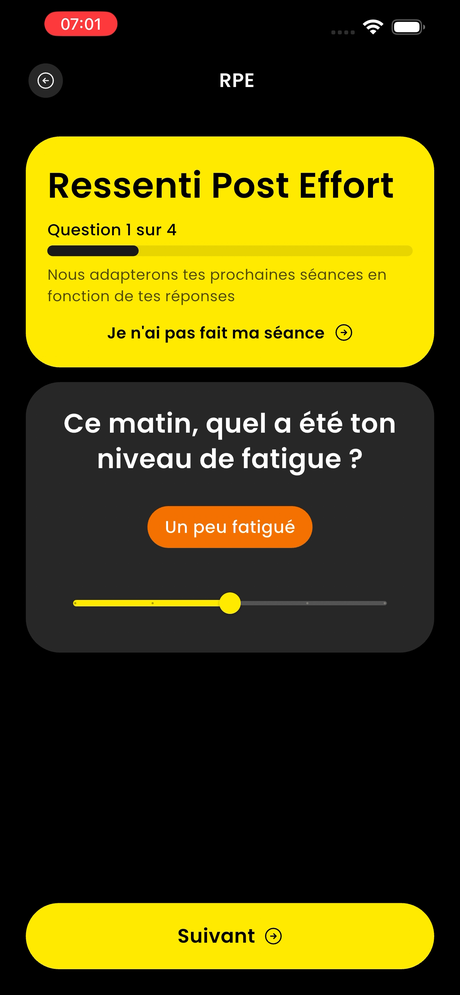
A programme that adapts to you every day
Every day, how you feel (RPE) is factored in to automatically adjust the rest of your programme: more load if all is well, a bit less if your wrist is complaining. This daily personalisation is what makes the difference compared to a fixed, paper-based programme.

Ready to start your programme?
Join the HOPP support programme designed by sports physios.
F.A.Q
Does the HOPP programme replace a medical consultation?
No. HOPP is a support and rehab tool designed by sports physiotherapists, but it doesn’t replace a doctor’s opinion. If in doubt, or if the pain persists, see a health professional.
Is the programme suited to all sporting levels?
Yes. Every programme is personalised to your sport, your level and how you feel each day, whether you’re a recreational athlete or preparing for competition.
Can I keep cycling with this syndrome?
In most cases, yes, by adapting your position on the handlebar (less flexed wrist) and the duration of your rides, while starting rehab in parallel.
How long does it take to feel better?
A structured programme generally gives a clear improvement within a few weeks, but longstanding symptoms may take longer to fully disappear.
Is surgery necessary?
Rarely as a first option for athletes. Rehab and postural adaptation often bring satisfactory improvement, with surgery considered in case of failure or a lasting loss of strength.
Is a night splint useful?
Yes, keeping the wrist in a neutral position during sleep often clearly reduces nighttime symptoms, which are among the most bothersome in this syndrome.[3]
Is the loss of strength reversible?
In cases treated early, yes, strength generally returns once the compression is relieved. In longstanding cases with established muscle wasting, recovery may be more partial.