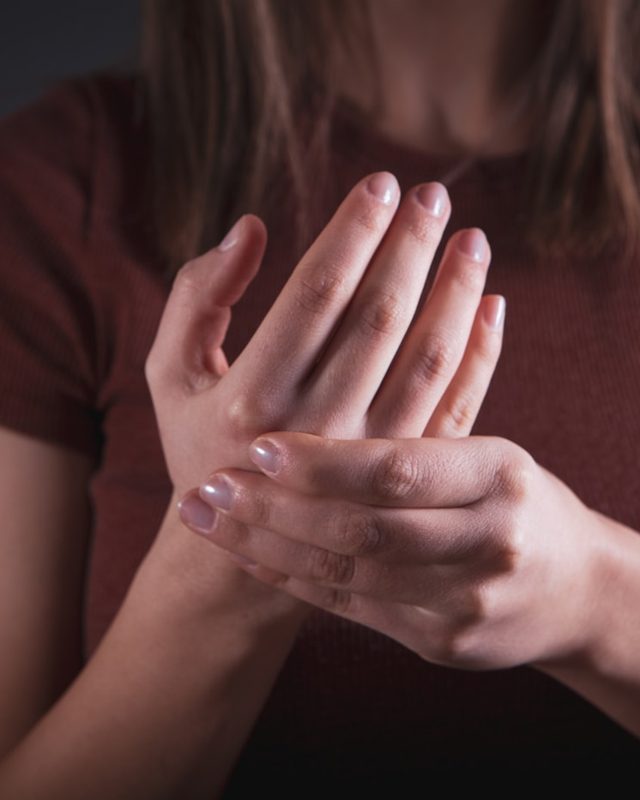


What is De Quervain’s tendinopathy?
Anatomy of the first compartment tendons
De Quervain’s tendinopathy affects the abductor pollicis longus and extensor pollicis brevis tendons, which run together through a narrow tunnel on the outer edge of the wrist, on the thumb side.[1] These tendons allow the thumb to spread and extend, a movement that’s extremely common in everyday life as well as in sport.
Why does this area become painful?
Pain appears when these tendons undergo repeated friction in their narrow tunnel, particularly during repeated movements combining thumb abduction and wrist tilting. Repeated gripping motions, racquet movements, or certain intensive manual activities contribute to this tendinopathy.
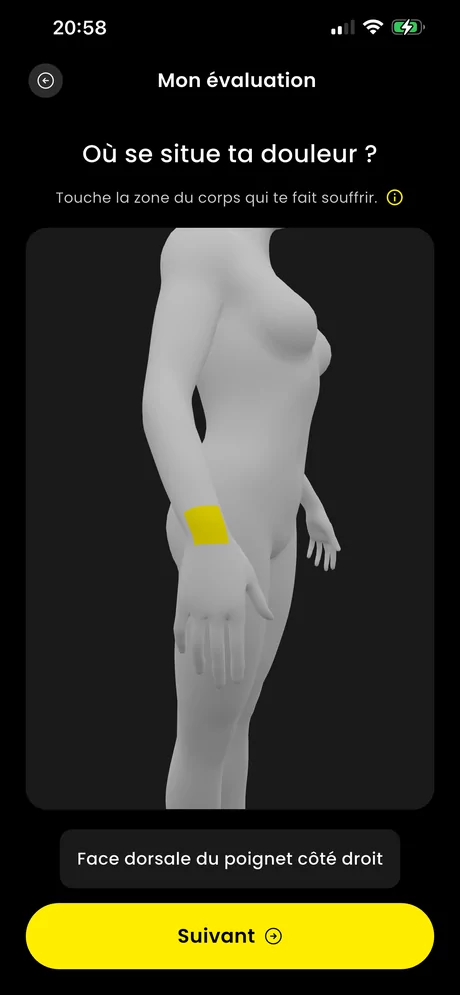
Symptoms and diagnosis of De Quervain’s tendinopathy
Typical pain and its triggers
The pain is located on the outer edge of the wrist, just above the thumb, triggered by spreading the thumb, gripping objects or tilting the wrist toward the little finger. Slight swelling along the tendon tunnel is sometimes visible, and Finkelstein’s test (folding the thumb into the palm, then tilting the wrist) typically reproduces the pain.
Differential diagnosis
Several types of wrist and thumb pain can look like De Quervain’s tendinopathy:
- Thumb joint conditions, with pain more centred on the joint at the base of the thumb
- Wrist joint conditions, with more diffuse pain and sometimes morning stiffness
- Carpal tunnel syndrome, with tingling in the fingers rather than purely mechanical pain
Causes and risk factors
De Quervain’s tendinopathy develops from repeated friction of the thumb tendons within their narrow tunnel.
Biomechanical and personal factors
- Repeated movements combining thumb abduction and wrist tilting
- Resuming or suddenly increasing a manual or sporting activity
- Repeatedly carrying a child (thumb spread, wrist tilted)
- Stiffness or a lack of strength in the wrist and forearm
Which sports contribute to De Quervain’s tendinopathy?
Any sport with repeated gripping and thumb movements exposes these tendons:
- Golf
- Racquet sports (tennis, badminton)
- Climbing
- Skiing (poles)
- Canoeing, kayaking and rowing
- Sports with repeated gripping of a handle or racquet
Treating De Quervain’s tendinopathy in rehab with a sports physio
The goal of treatment is to reduce friction of the tendons in their tunnel while progressively strengthening their capacity to absorb load.
- 1Reducing pain and managing load
- 2Wrist and finger mobility
- 3Isometric strengthening
- 4Progressive concentric strengthening
- 5Eccentric strengthening
- 6Full forearm work
- 7Correcting sporting technique
- 8Strengthening under sport-specific load
- 9Progressive return to your sport
- 10Return to competition
“It’s not that the tendon is fragile, it’s that the load needs to be better dosed and distributed.”
Progressive strengthening, the cornerstone of treatment
Progressive strengthening of the thumb tendons, combined with comprehensive wrist and forearm work, restores their capacity to absorb the load specific to your sport or activity.
In brief
- Progressive strengthening of the thumb tendons
- Comprehensive wrist and forearm work
- Correcting technique if needed
- Gradual return: mobility, then load, then sport
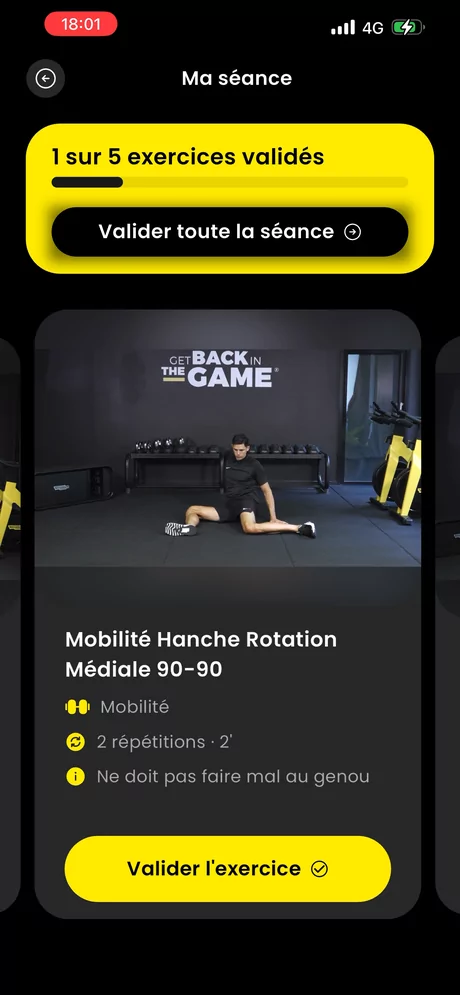
Ready to take your De Quervain’s tendinopathy seriously?
Start the HOPP programme designed by sports physios.
Should you rest or keep playing sport?
Total rest is generally not necessary. It’s better to temporarily adapt the movements that clearly reproduce the pain, while starting progressive strengthening as soon as possible.
Think you might have a different wrist or hand injury?
Take your free test in 3 minutes flat.
When should you see a specialist for De Quervain’s tendinopathy?
If the pain persists for more than four to six weeks despite adapting your activities and following a well-run strengthening programme, a medical opinion is recommended to consider additional treatment options.
Expected recovery timeline for De Quervain’s tendinopathy
With a well-run strengthening programme, clear improvement is usually seen within a few weeks, with a full return to activities after several weeks of progressive strengthening.
Preventing recurrence
Once the pain has settled, a few measures help stop it coming back:
- Keep up regular strengthening of the thumb and wrist tendons
- Increase volume gradually when resuming intensive manual or sporting activity
- Vary your grips and movements during repetitive activities (carrying, racquet, handle)
- Correct your technique if a sporting movement puts excessive strain on the thumb
The HOPP care programmes to treat your De Quervain’s tendinopathy and get back to sport
This tendinopathy requires progressive, well-dosed strengthening. HOPP offers you a precise exercise programme, allowing you to get back to your activities as quickly as possible.
The programme runs from 3 to 9 weeks depending on the injury and ends with a reconditioning phase allowing a return to competition in the best possible conditions. Each programme is designed by the HOPP team, made up of two sports physiotherapists who are experts in assessing and treating athletes. You’ll also find theoretical content throughout your progression, so you master every aspect of your recovery and can adjust your treatment independently. If needed, our team of physiotherapists is on hand to support you.
Essential
FROM INJURY TO
BACK TO YOUR ACTIVITIES
59€
One-time payment
“AT YOUR OWN PACE WITH
DAILY ADAPTATION”
- 100% of the treatment programme
- Daily personalisation
- Flexibility / Mobility
- Strengthening
- Proprioception
- Progress tracking
- Return-to-running programme
- Theoretical content included
Performance
TO GET BACK TO SPORT
IN THE BEST CONDITIONS
79€
One-time payment
“GET BACK TO YOUR LEVEL
WITHOUT RISK OF RELAPSE”
- 100% of the treatment programme
- Daily personalisation
- Flexibility / Mobility
- Strengthening
- Proprioception
- Progress tracking
- Return-to-running programme
- Theoretical content included
- + 4-week return-to-play plan with 6 difficulty levels
Expert
PERSONALISED VIDEO-CALL
SUPPORT, ANY TIME
149€
One-time payment
“A PHYSIO
WHENEVER YOU NEED”
- 100% of the treatment programme
- Daily personalisation
- Flexibility / Mobility, Strengthening, Proprioception
- Progress tracking
- Return-to-running programme
- Theoretical content included
- + 4-week return-to-play plan with 6 difficulty levels
- + 2 video calls with an expert sports physio / return check-up
A programme that adapts to you every day
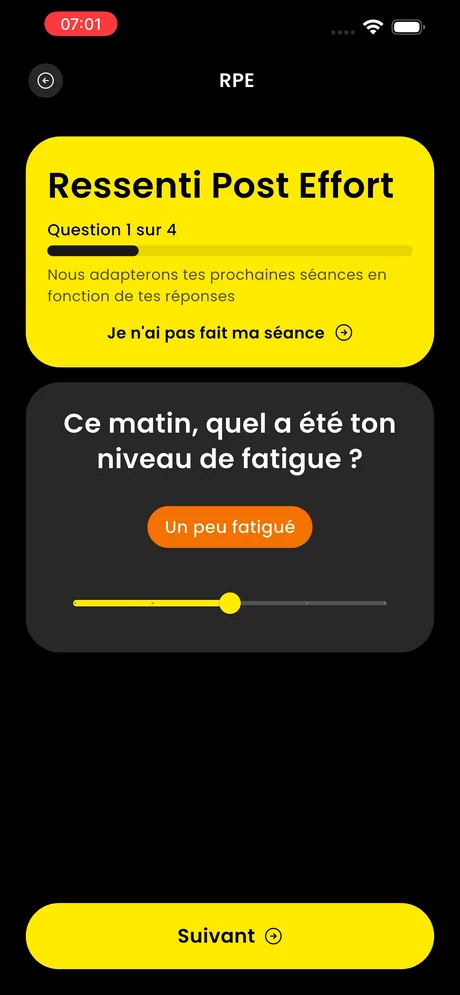
Every day, how you feel (RPE) is factored in to automatically adjust the rest of your programme: more load if all is well, a bit less if your wrist is complaining. This daily personalisation is what makes the difference compared to a fixed, paper-based programme.

Ready to start your programme?
Join the HOPP support programme designed by sports physios.
F.A.Q
Does the HOPP programme replace a medical consultation?
No. HOPP is a support and rehab tool designed by sports physiotherapists, but it doesn’t replace a doctor’s opinion. If in doubt, or if the pain persists, see a health professional.
Is the programme suited to all sporting levels?
Yes. Every programme is personalised to your sport, your level and how you feel each day, whether you’re a recreational athlete or preparing for competition.
Can I keep playing sport with this tendinopathy?
In most cases, yes, by temporarily adapting the movements that reproduce the pain, while starting strengthening in parallel.
How long does it take to recover?
A structured programme generally brings clear improvement within a few weeks, with a full return to sport after several weeks of progressive strengthening.
Can a splint help?
A splint immobilising the thumb can temporarily ease the pain, but it doesn’t replace progressive strengthening, which remains the underlying treatment.
Does Finkelstein’s test confirm the diagnosis?
This test is a good indicator, but it doesn’t replace a full medical diagnosis. It mainly helps point toward De Quervain’s tendinopathy rather than another cause of wrist pain.
Does this tendinopathy mainly affect new parents?
It is indeed very common among new parents because of repeated carrying movements[2], but it also affects many athletes who do repeated gripping or racquet movements.
Scientific references
- Satteson E, Tannan SC. De Quervain Tenosynovitis. StatPearls, NCBI Bookshelf, National Library of Medicine (NIH). ncbi.nlm.nih.gov/books/NBK442005
- Daglan E, Morgan S, Yechezkel M, Rutenberg TF, Shemesh S, Iordache SD, Kadar A. Risk Factors Associated With de Quervain Tenosynovitis in Postpartum Women. Hand (N Y), 2024;19(4):643-647. PubMed : pubmed.ncbi.nlm.nih.gov/36692105
This page is based on peer-reviewed scientific publications. It remains a general self-assessment tool and does not replace medical advice.