



Flexibility and mobility: what’s the difference?
Every joint moves through several planes of motion. Passive mobility is the range of motion reached without muscular effort, while active mobility depends on your strength and control over that movement.
Flexibility (a tissue’s ability to stretch) is only one part of mobility. For your knee, for example, good mobility combines tissue flexibility, muscular strength, and motor control — not just how much tissue can stretch.

The techniques that actually improve mobility
What works
Stretching works on the tissue’s ability to elongate
Eccentric strengthening improves mobility by building control over the range of motion[2]
Static or isometric strengthening, held for 10 to 30 seconds, is particularly effective[1]
Resistance bands used on their own are often counterproductive for mobility
Progressive work, never forced
Mobility work should always be progressive and adapted to the pain you feel: the goal is to gain range of motion without ever forcing an irritated joint.
It fits naturally into a rehabilitation programme, alongside muscle strengthening, to best prepare your return to your sporting movement.

When is mobility work useful?
Examples of relevant conditions
Tendinitis
Patellofemoral pain syndrome
Ankle sprain
External rotation instability
ACL tear
Herniated disc
Hip osteoarthritis
Kneecap dislocation
The HOPP solution to support you
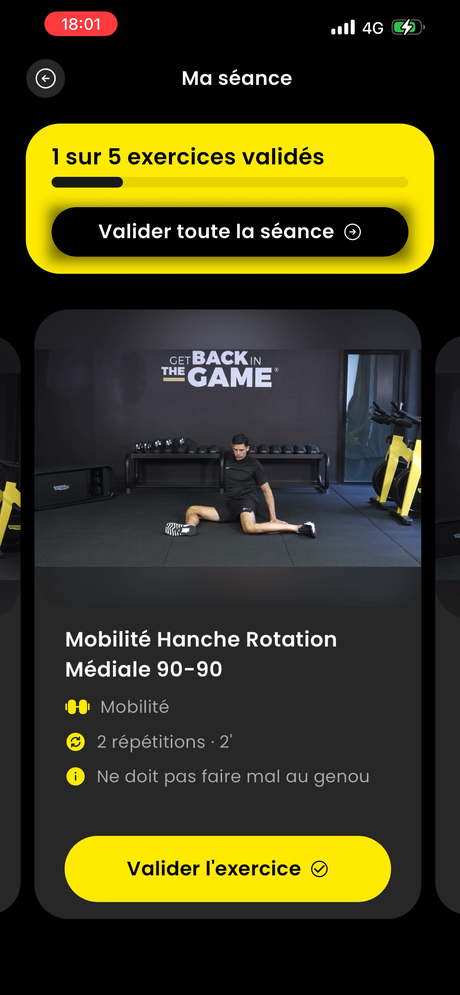
HOPP guides you through mobility exercises suited to your injury, combining stretching and strengthening for lasting results.
Guided mobility exercises
Videos filmed by sports physiotherapists help you work on your mobility with the right technique, safely.
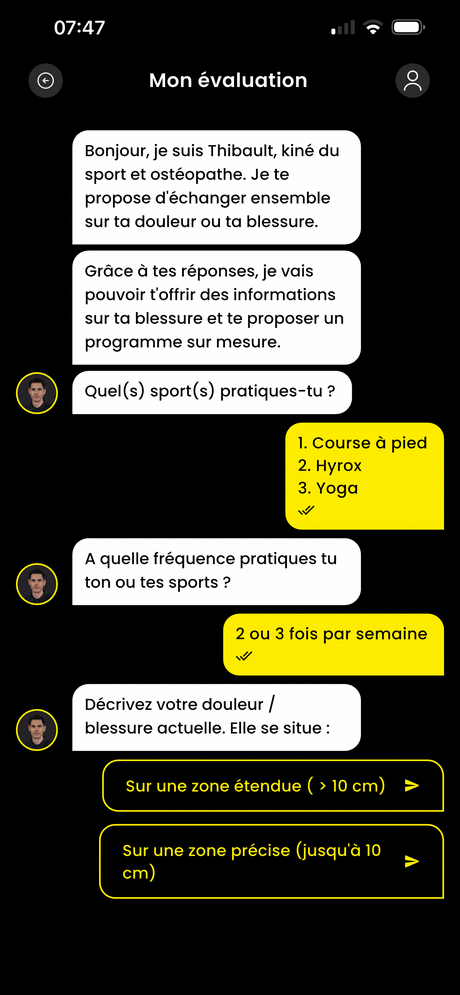
A sports physio to adjust your programme
If your mobility isn’t progressing as expected, talk it through by teleconsultation with an expert sports physiotherapist.
Frequently asked questions
Are stretching and mobility the same thing?
No. Stretching works on tissue flexibility, which is only one component of mobility. Mobility also combines strength and motor control over the range of motion.
Are resistance bands useful for mobility?
Used on their own, they’re often counterproductive. Eccentric strengthening and isometric work are generally more effective.[2]
How long should you hold an isometric contraction for mobility?
Holding for 10 to 30 seconds is generally recommended for this type of work.[1]
Can a lack of mobility cause an injury?
Yes, a mobility deficit in one joint can encourage the appearance of many conditions, from tendinitis to sprains, by shifting the strain onto other structures.
Ready to regain your mobility?
Start your free 3-minute assessment and get your personalised programme.