


Managing pain and effort after an injury
An injury is often synonymous with pain. Whether it’s inflammatory or mechanical, it’s this pain that pushes you to seek help and that alerts you to the severity of your injury. In reality, the notion of pain is different for everyone, which is why we don’t factor it into our questions about your injury. What we do have, however, are solutions to reduce that pain: pain-relief techniques.
Every injury responds to the same underlying issue: exposure to more strain than the tissue can handle.
A few examples
- A sprain: too much strain for the ligament
- A fracture: too much strain for the bone
- A muscle injury: too much strain for the fibre
- Tendinitis: excess strain on the tendon
The goal in managing pain is to dose the strain applied to the tissue involved. We guide you to the solutions suited to the nature of your injury.
Learn more about pain →
Joint mobility and muscle strengthening during care
Whatever your injury, you’ll always find joint mobility and muscle strengthening exercises in your care programme. Managing strain effectively requires as much mobility as possible — that doesn’t mean becoming flexible at all costs, but good joint mobility helps optimise a technical or sporting movement, which matters both during progression and at the point of return to activity.
Regular muscle strengthening helps you regain strength and stability, and also increases the capacity of your tissues (muscle, tendon, ligament, joint) to withstand strain. Strengthening the hamstrings after a knee sprain, for example, protects the joint when you return to jumping.
Learn more about mobility → Learn more about strengthening →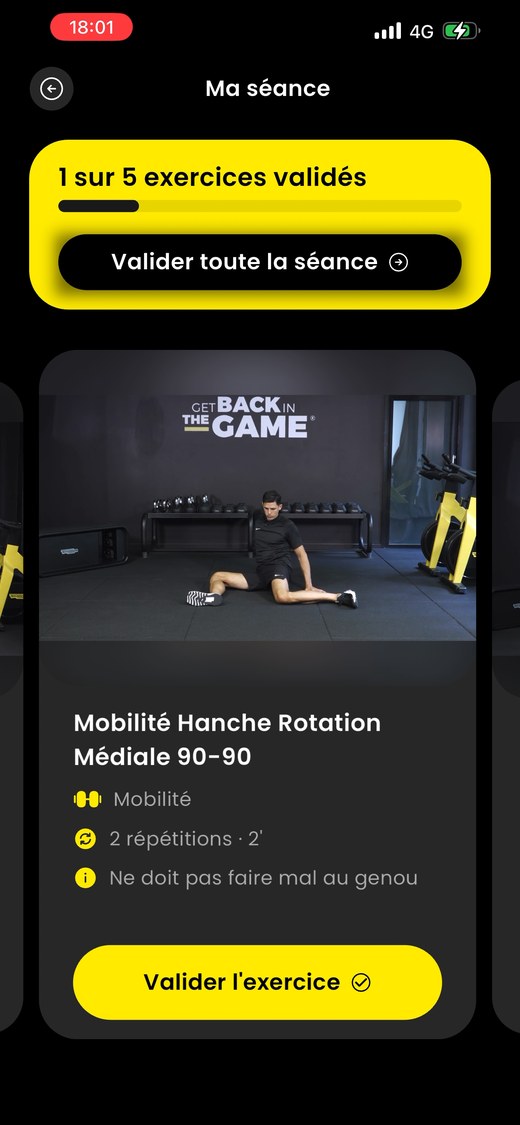
Proprioception and stability to prepare your return to sport
Throughout your programme, you’ll find exercises designed to refine your stability — necessary for the quality of your sporting movement and the safety of your joint. More broadly, proprioception lets you work on your coordination and get your body moving again.
It’s a key step in rehabilitation: for example, for an ankle sprain, you need to work the whole lower limb (foot, ankle, leg, knee, pelvis) for an optimal result before the return-to-play phase.
Learn more about proprioception →
Return to sport after injury and back to competition
The return-to-activity phase during care
Returning to sport shouldn’t wait until the end of your care — it’s an integral part of the progression of your treatment. The HOPP team’s goal is to support athletes from injury all the way to a return to competition, with both physical and psychological reconditioning.
Learn more about return-to-play training →Getting back on the field in training
You can return to training even if there’s still strengthening or stability work to deepen. It’s a crucial step and often an important source of motivation for the athlete — but there’s still a step between training and returning to competition.
Learn more about training management →Returning to competition, strong and confident
The return-to-play phase, included in every HOPP care programme, lets you progress to the level needed to return to competition, with:
In-depth muscle strengthening
Proprioception, jumping, explosiveness, endurance
Technical mastery
Completing the 9 levels of return-to-play training in a HOPP programme guarantees a safe return to sport and limits the risk of recurrence.
Learn more about returning to competition →
Independence and managing your sporting practice safely
Progression and managing your effort
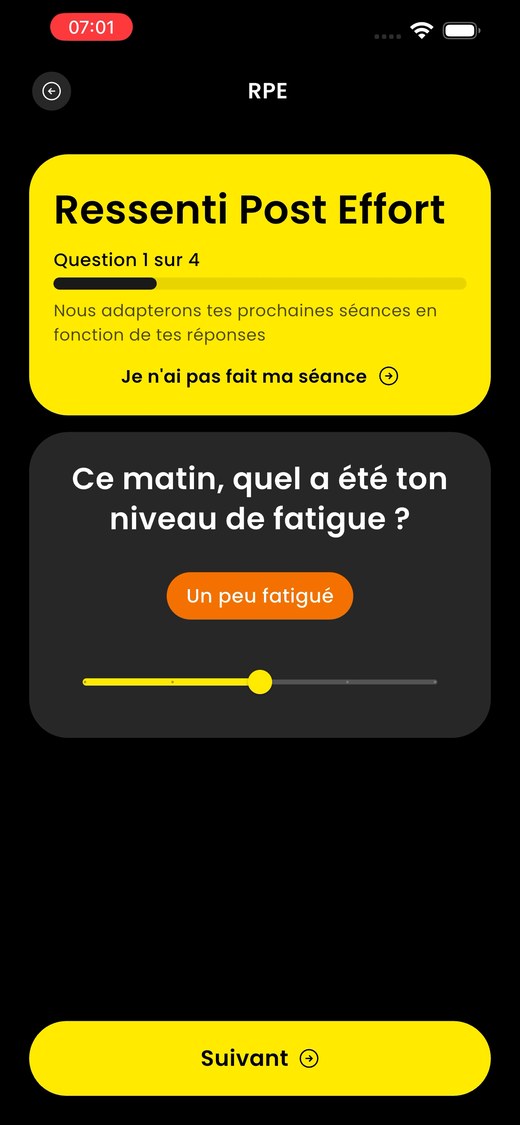
Knowing when to train and when to rest is always a dilemma for an athlete. The simple ECE principle (external constraint evaluation), present in every care programme, lets you set your own pace of progression for a fast, safe result.
Learn more about independence →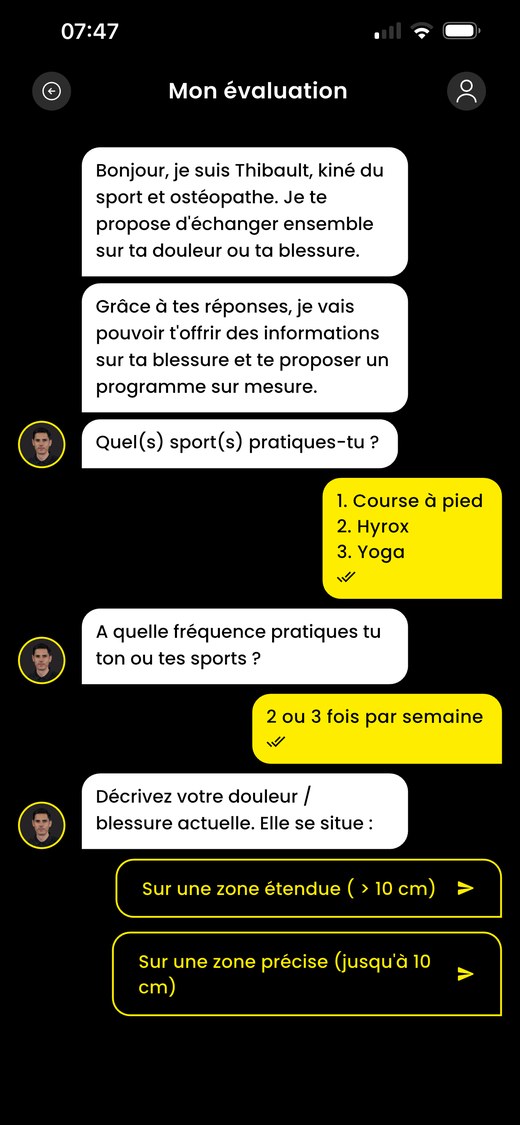
How to avoid injury or recurrence
The number one risk factor for injury is a history of injury. To avoid falling into that trap, you need to take the greatest care with your treatment: understand your injury, understand your body (ECE), and follow the care programme all the way through to be sure your body is strong enough for your return to the field.