


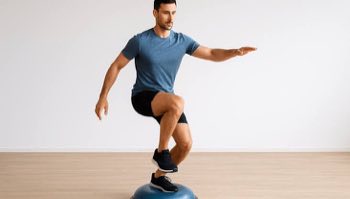
Why does the knee hurt when bending (or straightening)?
The knee is a complex joint that works the cartilage under the kneecap, several tendons, two menisci and the joint itself all at the same time. When bending (flexion) or fully straightening (extension) triggers pain, several different structures may be responsible, and they do not call for the same rehab programme.
The good news: the precise location of the pain and the exact movement that triggers it almost always give good clues about the likely cause. That is the purpose of this page: to help you identify your pain profile so you can find the most likely lead, then point you to the page dedicated to that injury so you can start a suitable rehab programme.
Does your pain appear more when straightening the leg?
This guide focuses on pain when bending. If your pain appears more when you fully straighten the knee, this guide on pain when straightening the leg will be a better fit.
Table: identify the likely cause of your pain
Use this table as a starting point. It does not replace a diagnosis, but it helps you spot the most likely lead based on the exact location of your pain and the movement that triggers it.
This table only covers the broad trends: several causes can coexist, especially after a knee injury. If in doubt, the following sections detail the most common causes.
Physio insight
a sharp pain that you can point to with one finger on a precise spot points more towards a tendon or a meniscus. A more diffuse pain, hard to pinpoint, points more towards the cartilage or the joint itself.
Physio tip
reproduce the movement that triggers your pain (squatting, going down a stair, fully straightening the leg) and note at which exact point of the range it appears. This marker, more than the intensity of the pain, is often the most useful for guiding the diagnosis.
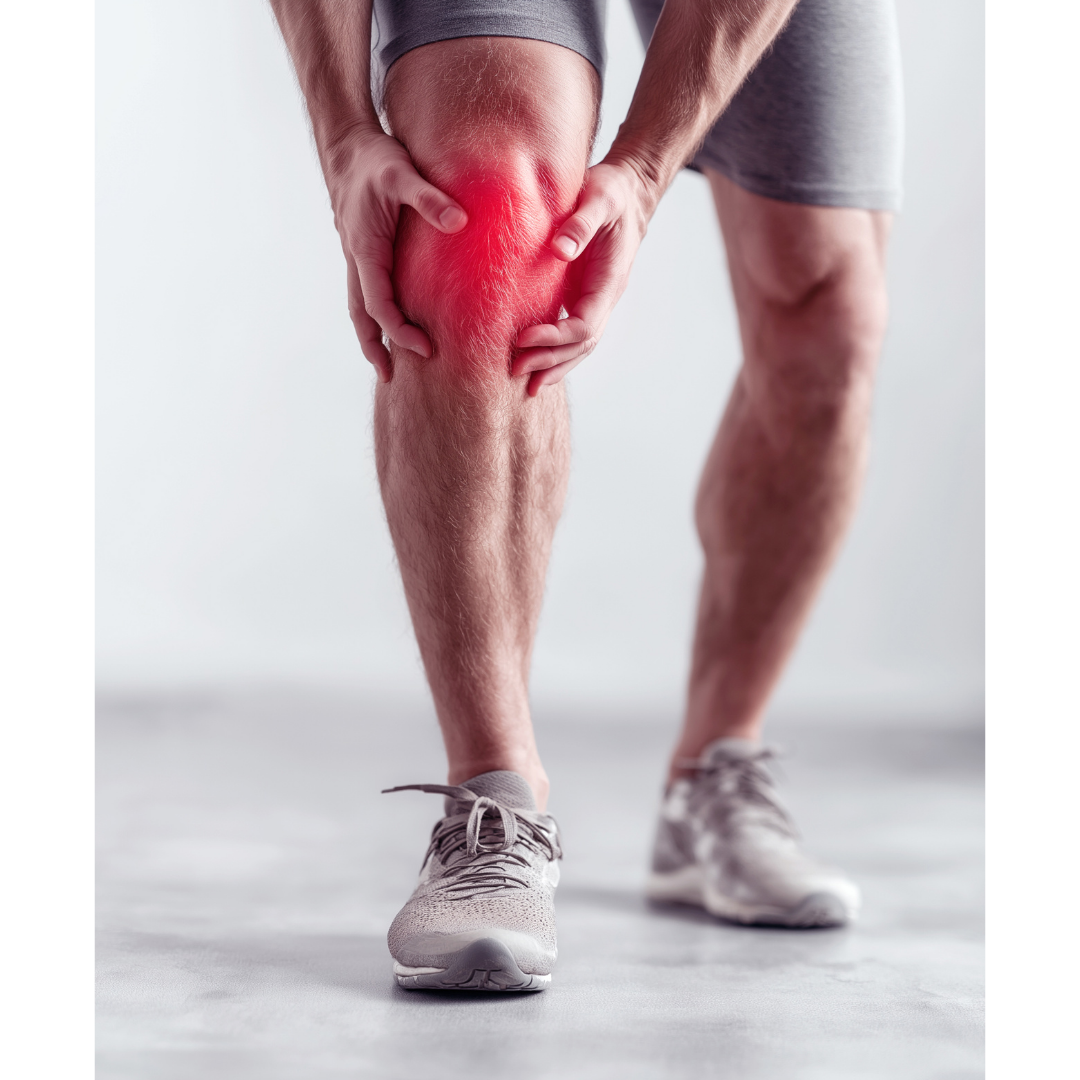
Diffuse pain at the front of the knee: chondropathy and patellofemoral pain syndrome
This is by far the most common pain profile when bending: discomfort around or behind the kneecap, more marked after sitting a long time with bent knees (the famous “cinema sign”), going down stairs, or in a squat position.
Two diagnoses look very similar at this stage. Patellofemoral chondropathy is a real lesion of the cartilage under the kneecap, often accompanied by a crackling or grinding felt during movement. Patellofemoral pain syndrome is a more functional disorder, linked to the way the kneecap glides in its groove during flexion, without necessarily any cartilage wear being found. In both cases, targeted quadriceps strengthening and work on the hip and pelvis chain are at the heart of rehab.[2]
Want to know what you really have?
Take the HOPP test in 3 min: it identifies your injury and suggests the right programme.
Pain on one precise spot: knee tendinopathies
If you can put a finger on one precise spot of your pain, the lead changes. Three tendons are involved depending on the exact location:
- Patellar tendinopathy: precisely below the kneecap, at the tendon insertion, triggered by jumping, landing and prolonged squatting.
- Quadriceps tendinopathy: just above the kneecap, with the same triggers (deep squats, jumps, going down stairs).
- Pes anserine tendinopathy: lower down, on the inner side of the tibia, triggered mainly by running and bending against resistance.
In all three cases, the pain often eases during the warm-up only to come back after exercise: a classic sign of tendinopathy, which leads many athletes to carry on without adapting their load.[1]
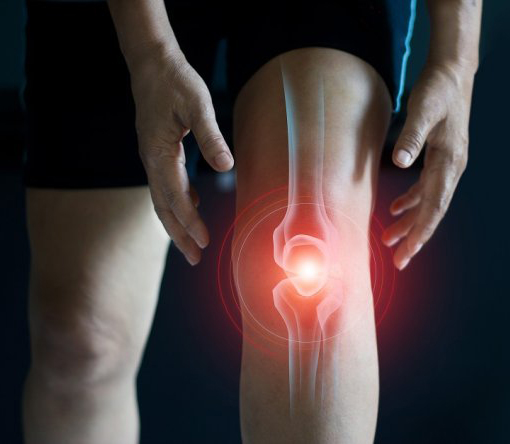
Pain on the side of the knee, with catching: meniscus injury
Pain precisely located on the joint line, inner or outer, combined with a catching or pseudo-locking sensation, points towards a medial meniscus injury or a lateral one. It is classically triggered by twisting the knee, deep squatting or changes of direction.
True joint locking, where the knee stays stuck and can no longer fully straighten, is a sign to take seriously: it requires medical advice before starting a rehab programme (see the next section).
Start your rehab programme
Exercises designed by sports physios, adjusted every day to how you feel.
Other possible causes
Three other situations can explain pain when bending or straightening the knee, less common but easy to recognise if you know their profile:
- Knee osteoarthritis: diffuse pain throughout the joint, with characteristic morning stiffness (stiffness that improves as you move), more marked in a prolonged squat. If this diagnosis is confirmed, discover the movements to avoid and to favour in daily life.
- Iliotibial band syndrome: pain on the outer side of the knee, specific to running, absent at the start then appearing after a certain distance.
- Popliteal cyst: tightness or a lump at the back of the knee, more marked in full flexion, most often secondary to an underlying meniscus injury.
One last lead deserves a separate mention, because it reverses the logic of this page: Hoffa’s disease also affects the area below the kneecap, but is triggered mainly in full extension (straight leg) and when kneeling, not really when bending. If your pain below the kneecap appears mainly with a straight leg rather than when bending, that is the lead to look at rather than patellar tendinopathy.

When to seek urgent medical advice before starting a programme
In the vast majority of cases, knee pain when bending can be managed directly with a targeted rehab programme, without waiting for further tests. Some signs, however, should lead you to see a doctor quickly to get imaging before starting anything:
- True joint locking: the knee stays stuck, impossible to bend or straighten it fully
- Major, sudden swelling that appeared within a few hours after an impact or a twisting movement
- A complete inability to put your foot down or bear weight on the leg
- A clear feeling of instability, as if the knee was “giving way” or buckling
- Pain that follows a direct, violent trauma (impact, fall, high-speed twist)
These signs suggest a more serious lesion (ligament rupture, displaced meniscus tear, fracture) that requires imaging before knowing which rehab programme suits your situation. Outside these cases, you can start working today.
F.A.Q
Why does my knee only hurt when I bend it?
Because bending the knee increases the pressure on specific structures (cartilage under the kneecap, tendons, menisci) that are not loaded in the same way when the leg is straight. The exact location of the pain and the movement that triggers it point towards the likely cause, as summarised in the table above.
My knee cracks and hurts when I bend it, is it serious?
Not necessarily. Cracking without pain is often harmless, but cracking combined with a sharp pain at the front of the knee points more towards patellofemoral chondropathy. It is only a concern if it comes with significant swelling, true locking or instability, signs that call for prompt medical advice.
Should I stop sport if my knee hurts when bending?
In most cases, no: it is better to temporarily adapt the movements that clearly reproduce the pain (deep squats, jumps, stairs) while starting a targeted strengthening programme, rather than stopping activity altogether.
When should I worry about knee pain when bending?
You should seek medical advice quickly in case of true joint locking, major swelling that appeared within a few hours, or a complete inability to put weight on the foot. These signs require imaging before starting any rehab programme.
Pinpoint your knee injury
Take your free 3-minute test and start a programme that adjusts every day to how you feel.