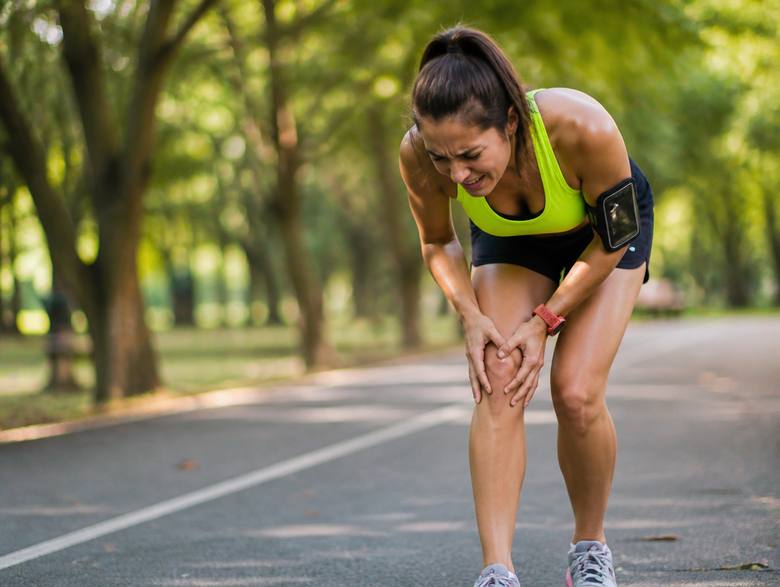


What is iliotibial band syndrome?
Iliotibial band anatomy
The iliotibial band is a fibrous structure that runs along the outer side of the thigh, from the hip down to below the knee. With every knee flexion-extension, it slides over a bony prominence of the femur (the lateral femoral condyle), a bit like a windscreen wiper, hence the name given to this syndrome when this repeated friction becomes painful.
Why does this friction become painful?
The band repeatedly rubbing against the lateral femoral condyle, with every stride, can irritate the tissue there when running volume or intensity increases too quickly. Weakness in the hip stabilising muscles (gluteus medius) makes it worse by increasing knee wobble with each step.[1]
Symptoms and diagnosis of iliotibial band syndrome
Typical pain and its triggers
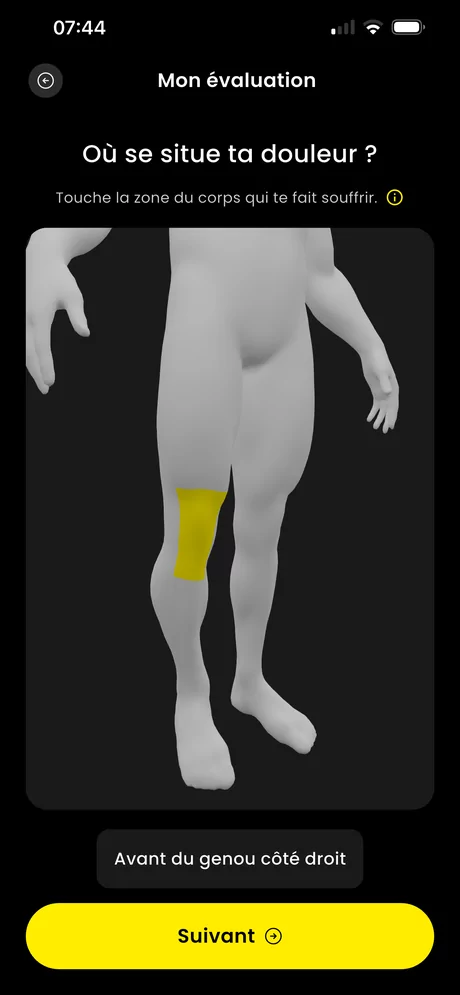
Pain on the outer side of the knee, typically absent at the start of a run then appearing after a certain distance, often forcing you to stop. The pain usually eases quickly at rest, unlike other knee conditions.
Differential diagnosis
Other outer knee pain conditions can resemble this syndrome:
- Patellofemoral pain syndrome, with pain more centred on the kneecap itself
- A lateral meniscus injury, with mechanical locking or pain that persists even without exertion
Causes and risk factors
This syndrome develops from repeated friction of the iliotibial band, encouraged by too rapid an increase in load.[2]
Risk factors
- Too rapid an increase in running volume or intensity
- Weakness in the hip stabilising muscles (gluteus medius)[1]
- A high volume of downhill running
- Poor saddle adjustment in cycling
Which sports contribute to iliotibial band syndrome?
Sports with a repetitive knee flexion-extension movement are the most affected:
- Running, particularly long-distance
- Cycling, especially with a poorly adjusted saddle
- Downhill running, which increases friction
- Trail running on hilly terrain
- Any sport with a high running volume
Treating iliotibial band syndrome in rehab with a sports physio
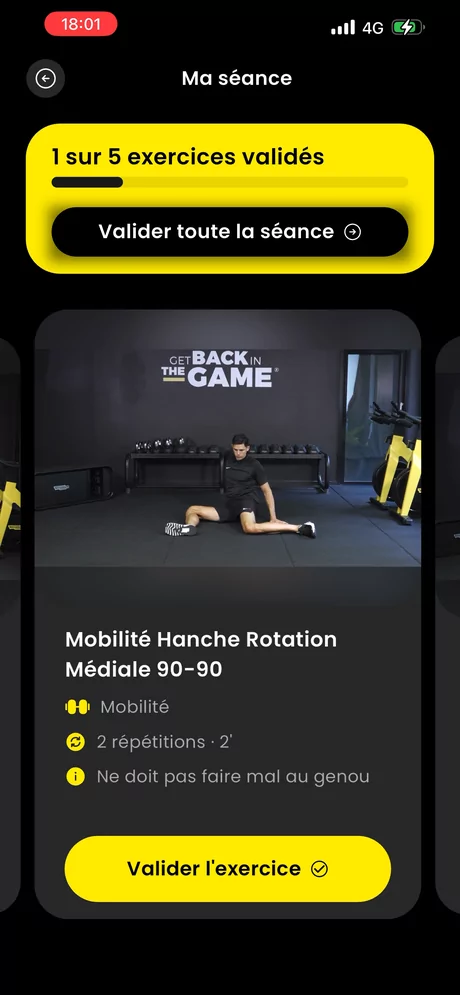
The goal of treatment is to reduce local irritation and strengthen the hip stabilising muscles to reduce knee wobble with each stride.
- 1Reducing local irritation
- 2Hip and knee mobility
- 3Strengthening the gluteus medius
- 4Progressive strengthening of the chain (hip, knee, ankle)
- 5Correcting running stride
- 6Proprioceptive work
- 7Progressive reintroduction of running
- 8Progressively increasing volume
- 9Return to your sport
- 10Return to competition
DEMONSTRATION
Video by Hemrick, co-founder of HOPP.
“It’s not that the band is too tight, it’s that the hip needs to better stabilise the knee with every stride.”
Strengthening, the cornerstone of treatment
Strengthening the gluteus medius is central to treating iliotibial band syndrome, because this muscle stabilises the pelvis and limits excessive inward knee wobble with each step, which increases friction on the band.[1] It’s complemented by overall work on the lower limb chain and, if needed, by correcting running technique.
In brief
- Strengthening the gluteus medius as a priority
- Progressive strengthening of the hip – knee – ankle chain
- Correcting stride if needed
- Gradual return to your running volume
Ready to take your iliotibial band syndrome seriously?
Start the HOPP programme designed by sports physios.
Should you rest or keep playing sport?
Total rest isn’t essential. It’s better to temporarily reduce your running volume and avoid prolonged downhills, while keeping up alternative physical activity (low-resistance cycling, swimming) and starting hip strengthening as soon as possible.
Think you might have a different knee injury?
Take your free test in 3 minutes flat.
When should you see a specialist for iliotibial band syndrome?
If pain persists for more than three weeks despite adapting your running volume, or if it appears earlier and earlier in your runs despite strengthening, a medical opinion is recommended to rule out another cause of outer knee pain.
Expected progression of iliotibial band syndrome
A clear improvement is generally seen within a few weeks with regular gluteus medius strengthening, followed by a full, progressive return to your running volume.
Preventing recurrence
Several measures help limit the risk of recurrence once the pain has resolved:
- Keeping up regular gluteus medius strengthening over the long term
- Progressing cautiously in running volume and intensity
- Limiting large volumes of downhill running without specific preparation
- Checking your saddle adjustment if you cycle
The HOPP care programmes to treat your iliotibial band syndrome and get back to sport
To heal durably, iliotibial band syndrome requires progressively rebalancing hip stability. HOPP offers you a precise exercise programme, allowing you to get back to running as quickly as possible. By combining stretching, mobility, gluteus medius strengthening and training management, HOPP supports you all the way back to the field.
The programme runs from 3 to 9 weeks depending on the injury and ends with a reconditioning phase allowing a return to competition in the best possible conditions. Each programme is designed by the HOPP team, made up of two sports physiotherapists who are experts in assessing and treating athletes. You’ll also find theoretical content throughout your progression, so you master every aspect of your recovery and can adjust your treatment independently. If needed, our team of physiotherapists is on hand to support you.
Essential
FROM INJURY TO
BACK TO YOUR ACTIVITIES
59€
One-time payment
“AT YOUR OWN PACE WITH
DAILY ADAPTATION”
- 100% of the treatment programme
- Daily personalisation
- Flexibility / Mobility
- Strengthening
- Proprioception
- Progress tracking
- Return-to-running programme
- Theoretical content included
Performance
TO GET BACK TO SPORT
IN THE BEST CONDITIONS
79€
One-time payment
“GET BACK TO YOUR LEVEL
WITHOUT RISK OF RELAPSE”
- 100% of the treatment programme
- Daily personalisation
- Flexibility / Mobility
- Strengthening
- Proprioception
- Progress tracking
- Return-to-running programme
- Theoretical content included
- + 4-week return-to-play plan with 6 difficulty levels
Expert
PERSONALISED VIDEO-CALL
SUPPORT, ANY TIME
149€
One-time payment
“A PHYSIO
WHENEVER YOU NEED”
- 100% of the treatment programme
- Daily personalisation
- Flexibility / Mobility, Strengthening, Proprioception
- Progress tracking
- Return-to-running programme
- Theoretical content included
- + 4-week return-to-play plan with 6 difficulty levels
- + 2 video calls with an expert sports physio / return check-up
A programme that adapts to you every day
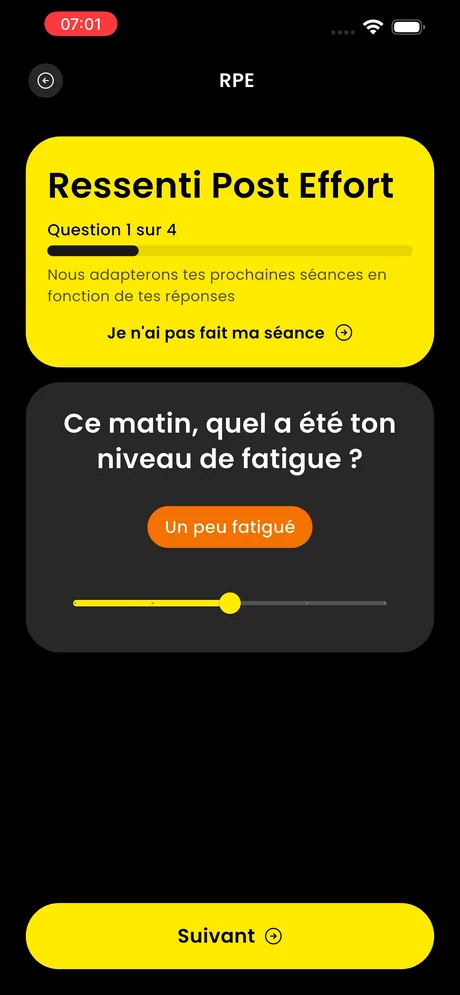
Every day, how you feel (RPE) is factored in to automatically adjust the rest of your programme: more load if all is well, a bit less if your band is complaining. This daily personalisation is what makes the difference compared to a fixed, paper-based programme.

Ready to start your programme?
Join the HOPP support programme designed by sports physios.
F.A.Q
Does iliotibial band syndrome only affect runners?
It mainly affects runners and cyclists, because of the repetitive knee flexion-extension movement.[2] It can more rarely affect other athletes doing similar movements in high volume.
Can I keep running with iliotibial band syndrome?
In most cases, yes, by temporarily reducing volume and avoiding downhills, while starting hip strengthening in parallel rather than stopping completely.
How long does it take to recover from iliotibial band syndrome?
It depends on how long-standing the pain is and how consistent the strengthening is. A clear improvement is generally seen within a few weeks, with a full, progressive return to running afterward.
Does the HOPP programme replace a medical consultation?
No. HOPP is a support and rehab tool designed by sports physiotherapists, but it doesn’t replace a doctor’s opinion. If in doubt, or if the pain persists, see a health professional.
Is the programme suited to all sporting levels?
Yes. Every programme is personalised to your sport, your level and how you feel each day, whether you’re a recreational athlete or preparing for competition.
How can I tell this syndrome apart from a lateral meniscus injury?
Iliotibial band syndrome appears after a certain running distance and eases quickly at rest, whereas a meniscus injury causes more persistent pain, sometimes with mechanical locking of the knee, regardless of distance covered.
Should I avoid downhills completely?
Not completely, but it’s better to temporarily limit prolonged downhills, which increase friction on the band, while hip strengthening progresses.