


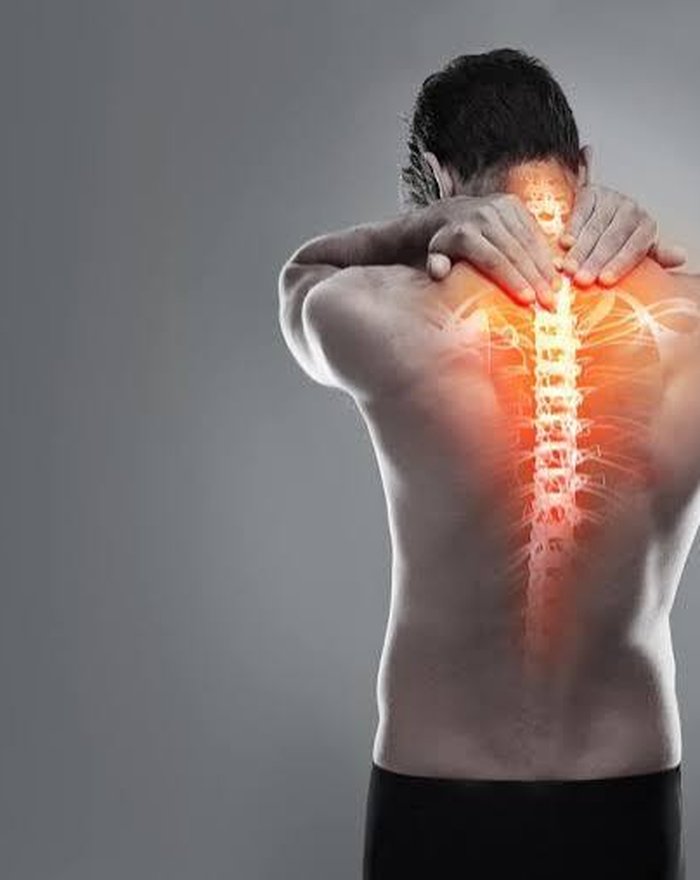
Pain is a warning message sent by your body: in the acute phase, it protects you by stopping you from making an injury worse. But when it settles in over time, it can become a real obstacle to your everyday activities and to getting back to sport. HOPP was designed by FIFA-certified sports physios to help you understand your pain and treat it at the source, not just mask it.
What is the role of pain and how do we feel it?
Pain is a warning message from your body: it’s the only tool it has to communicate with you. When it appears, everything plays out at the level of the brain. The painful tissue (muscle, tendon, ligament, bone) sends a signal via a nerve, and this signal differs depending on where it comes from.
Your brain receives all the information coming from the body and sorts it. It’s the brain that determines whether the message received should be considered dangerous or not.[1] If so, pain appears. If not, it can stay completely silent.

Which injuries can be painful?
Here’s a non-exhaustive list of conditions that can cause pain and require surgical, medical or functional treatment:
The main causes of pain
Cartilage damage (after trauma)
Bone injury (fracture, stress fracture)
Ligament tears (ACL, PCL)
Arthritis, with the associated swelling
Tendinitis or tendinopathy
Nerve compression
Dislocation (elbow, shoulder…)
Hip bursitis
Chronic spinal instability
Rheumatoid arthritis
Joint effusion
Meniscus injury

Who should I see when something hurts?
When pain appears, you need to try to understand where it’s coming from. A GP generally starts by prescribing imaging (X-ray, MRI, CT scan, ultrasound). Based on the results, they decide on the treatment to apply or refer you to a specialist colleague.
The injury in question may require rehab, rest, surgery, an injection, or medical treatment. The doctor’s first instinct is to check for inflammation: as long as it’s present, it’s difficult to durably reduce the pain.

Physiotherapy techniques against pain
After a thorough clinical examination, a physio has many techniques available to reduce pain or inflammation and support healing. The ideal is to favour a functional approach and limit orthopaedic treatment, except in the case of significant trauma where a surgeon is often still needed.
Passive pain-relief techniques
These techniques are used when pain or inflammation are very significant.
What they offer
Physiotherapy can help quickly relieve the patient
Stretching and mobilisation have an anti-inflammatory effect
Massaging the injured area relieves pain after a joint injury
Draining a hematoma (after an ankle sprain or a fracture) reduces inflammation
Active techniques to fight pain
Muscle strengthening offers many benefits for the body. It can be used very early on, even with a joint immobilised or in a splint, depending on the clinical examination. Gentle and progressive, it must be adapted to the severity of the injury.
It has a significant pain-relieving and anti-inflammatory effect[2], and can also reduce certain pain by acting at a distance: strengthening the quadriceps and hamstrings, for example, can help reduce joint or arthritic pain in the spine. Physical activity remains, in the vast majority of cases, beneficial against pain.
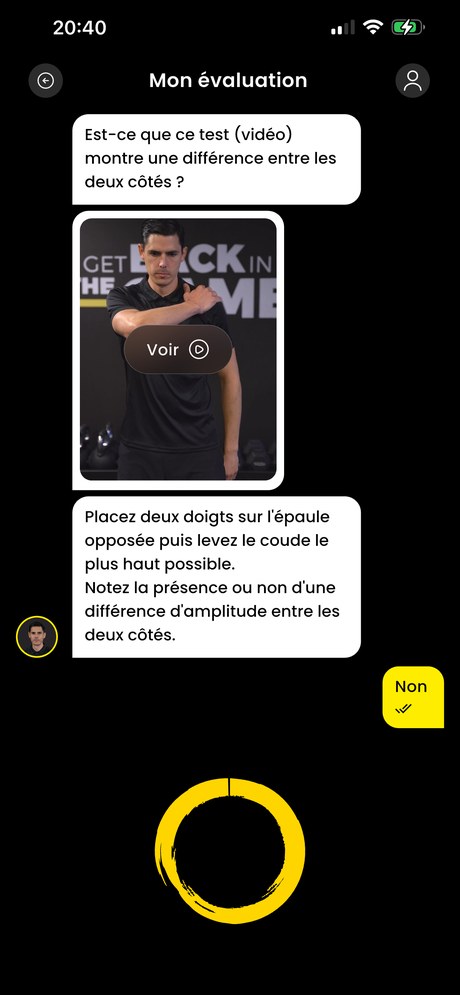
The HOPP solution for managing a painful injury
There are therefore many tools to reduce pain and support healing. Passive and active techniques must be used wisely to allow a pain-free return to sporting activities, whether running, CrossFit or swimming. This is exactly what HOPP offers: complete support after every injury.
Understanding your pain in 3 minutes
You describe your pain, HOPP helps you precisely understand what’s going on and offers you a suitable care programme, with no need to wait for an appointment.
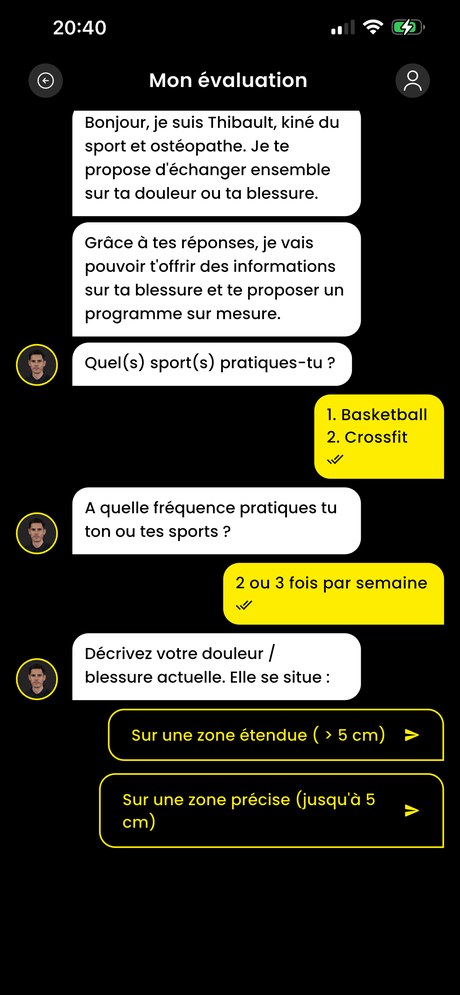
Detailed exercise videos
Videos filmed by sports physios help you find the best exercises to recover as quickly as possible, combining passive and active techniques based on your situation, and get back on the path to healthy sporting practice.

A sports physio if pain persists
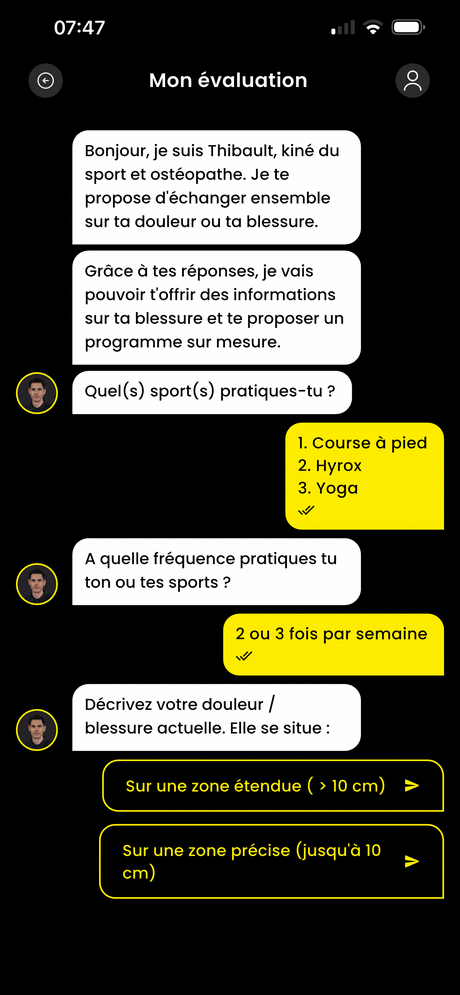
If your pain doesn’t improve as expected, you can talk directly via video consultation with an expert sports physio, to adjust your programme or consider a different approach.
Frequently asked questions
Does pain always mean there’s a serious injury?
No. Pain is an interpretation by your brain based on the signals received, influenced by many factors.[1] It’s not always proportional to how serious an injury actually is, which is why a precise assessment is valuable rather than relying solely on how intense it feels.
Should I stop sport as soon as pain appears?
Not systematically. In many cases, suitable, well-dosed activity, combined with the right pain-relief techniques, is more beneficial than stopping completely. It depends on the cause and intensity of the pain.
Is rest the best solution against pain?
Not always. Active techniques, particularly progressive muscle strengthening, have a pain-relieving and anti-inflammatory effect that’s often underestimated[2], alongside or instead of rest depending on the situation.
When should I seek emergency care?
If pain is very intense, appears after significant trauma, or comes with visible deformity, major swelling or a total inability to move the area, a prompt medical consultation is recommended.
Does HOPP replace a medical consultation?
No. HOPP is an injury information tool designed by sports physios, it doesn’t replace a doctor’s opinion. It gives you clear markers to understand your situation and directs you to a professional if needed.
Ready to understand your pain?
Start your free assessment in 3 minutes and get your personalised programme.
Scientific references
- Moseley GL, Butler DS. Fifteen years of explaining pain: the past, present, and future. Journal of Pain, 2015;16(9):807-813. PubMed : pubmed.ncbi.nlm.nih.gov/26051220
- Naugle KM, Fillingim RB, Riley JL 3rd. A meta-analytic review of the hypoalgesic effects of exercise. Journal of Pain, 2012;13(12):1139-1150. PubMed : pubmed.ncbi.nlm.nih.gov/23141188
This page is based on peer-reviewed scientific publications. It remains a general self-assessment tool and does not replace medical advice.