

What is a shoulder dislocation?
Shoulder dislocation anatomy
A shoulder dislocation is a complete loss of contact between the head of the humerus and the shoulder blade’s socket (the glenoid), most often forward (anterior dislocation, the most common type). It’s the most common joint dislocation in the human body, directly linked to this joint’s great mobility, which comes at the expense of its stability.[1]
Why does this dislocation happen?
Dislocation most often occurs during direct trauma (a fall, an impact) or a forced cocked-arm movement (external rotation, arm raised), the position in which the shoulder is most vulnerable. It can damage the labrum (a Bankart lesion) or the bone of the humeral head (a Hill-Sachs lesion), which increases the risk of future recurrence.
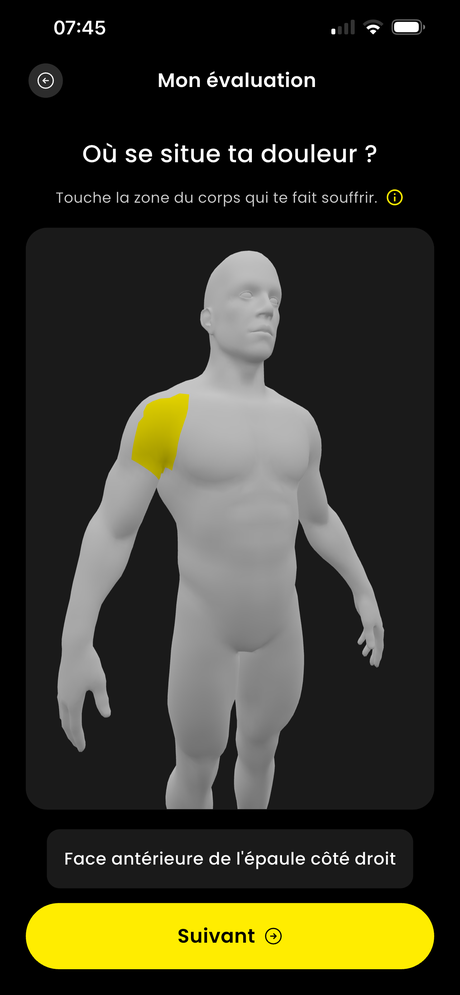
Dislocation or subluxation: what’s the difference?
A dislocation is a complete loss of contact between the head of the humerus and the glenoid, which requires reduction (putting it back in place) by a healthcare professional. A subluxation is a partial displacement, often followed by spontaneous reduction. Both share the same risk factors and the same rehab approach.
Structures that can be damaged
During a dislocation, several structures can be damaged, which affects the risk of recurrence:
- The labrum, the cartilage rim that lines the glenoid (a Bankart lesion if it tears)
- The humeral head, which can develop a small bony notch (a Hill-Sachs lesion)
- The joint capsule and gleno-humeral ligaments, which stretch
Symptoms and diagnosis of a shoulder dislocation
Typical signs at the time of the episode
A dislocation causes intense, immediate pain, a visible deformity in the shoulder’s contour, and an inability to move the arm normally. Temporary numbness or tingling in the arm can appear, linked to stretching of nearby nerve structures, and usually disappears after reduction.
How it progresses without complete rehab
The main risk after a dislocation is recurrence, particularly high in young athletes after a first episode.[2] Psychological apprehension can also settle in durably around at-risk movements (arm raised, external rotation), limiting confidence and sporting performance well after the tissues have healed.
Differential diagnosis
After a shoulder injury, several diagnoses need to be distinguished:
- Subluxation, a partial displacement with spontaneous reduction
- An associated fracture of the humeral head or glenoid rim, which should always be checked for with imaging
- A brachial plexus injury, rare but more serious, if numbness in the arm persists beyond a few hours
Causes and risk factors
A dislocation almost always follows an identifiable trauma, but certain factors clearly increase the risk, particularly of recurrence.
Biomechanical and personal factors
- A young age at the time of the first episode, the main risk factor for recurrence[2]
- Constitutional joint hyperlaxity
- A Bankart or Hill-Sachs lesion after a first episode, which structurally weakens the shoulder
- A lack of rotator cuff strengthening
Which sports contribute to shoulder dislocation?
All sports that place the arm in a cocked position or expose you to a risk of falling directly on the shoulder are involved:
- Rugby, during tackles and falls
- Handball and volleyball
- Judo and combat sports
- Skiing and snowboarding
- Climbing
- Throwing sports
Why is the risk of recurrence so high after a first dislocation?
Each dislocation episode can damage the labrum or bone a little more, making the shoulder mechanically less stable for next time. Without complete active strengthening of the rotator cuff and shoulder blade stabilisers, this structural instability isn’t compensated for, which explains why the risk of recurrence stays high even once the initial pain is forgotten.
Treating a shoulder dislocation in rehab with a sports physio
Once the dislocation has been reduced by a healthcare professional, the goal of treatment is to progressively strengthen the structures that actively stabilise the shoulder to prevent recurrence, which is very common without suitable rehab.
Phase 1 – Protection after reduction
After it’s put back in place by a healthcare professional, a period of immobilisation or relative rest is prescribed to let the tissues stabilise, before starting active rehab.
Phase 2 – Strengthening active stability
Strengthening the rotator cuff and shoulder blade stabilisers, combined with proprioceptive work, then becomes the priority to compensate for the mechanical fragility left by the dislocation.
Phase 3 – Return to sport
The final phase progressively reintroduces at-risk movements (cocked arm, contact) before a full return to training and then competition, with particular attention paid to rebuilding confidence in these movements.
In practice, this programme breaks down into 10 concrete steps:
- 1Protection and reducing pain
- 2Recovering pain-free mobility
- 3Isometric strengthening of the cuff
- 4Strengthening shoulder blade stability
- 5Shoulder proprioceptive work
- 6Closed-chain strengthening
- 7Open-chain strengthening
- 8Strengthening under sport-specific load
- 9Progressive return to your sport
- 10Return to competition
DEMONSTRATION
Video by Hemrick, co-founder of HOPP.
“The first dislocation is treated, further ones are prevented, through real strengthening work.”
Strengthening active stability, the cornerstone of treatment
Strengthening the rotator cuff and the shoulder blade stabilisers creates the dynamic stability that’s essential after a dislocation, particularly in young athletes who have the highest risk of recurrence. Proprioceptive work also trains the shoulder’s protective reflexes.
In brief
- Complete rotator cuff strengthening
- Shoulder proprioceptive work
- Strengthening the shoulder blade stabilisers
- Gradual return: mobility, then load, then sport
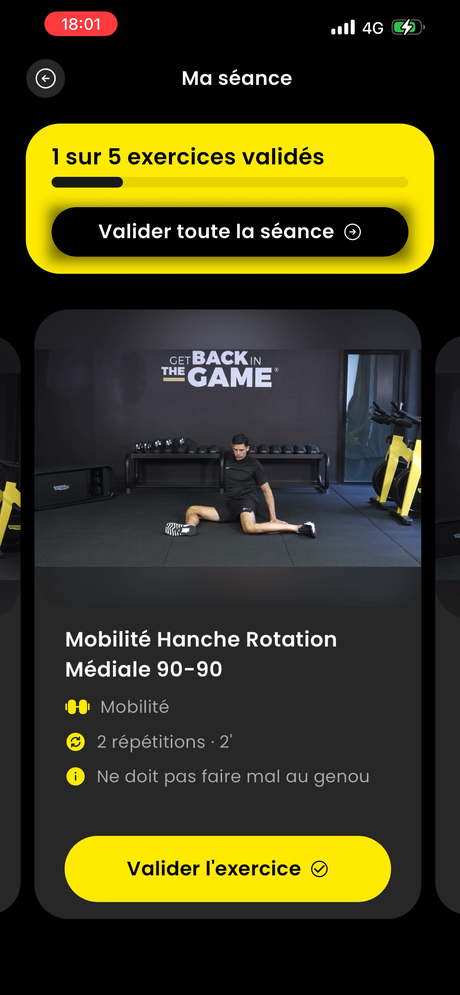
Ready to take your shoulder dislocation seriously?
Start the HOPP programme designed by sports physios.
Should you rest or keep playing sport?
After the initial immobilisation period prescribed by the doctor, prolonged rest isn’t recommended: it’s active, progressive strengthening that durably protects the shoulder against further dislocation.
Think you might have a different shoulder injury?
Take your free test in 3 minutes flat.
When should you see a specialist for a shoulder dislocation?
Any dislocation must be urgently reduced by a healthcare professional if this hasn’t already been done. A medical opinion is then needed to assess the condition of the structures (labrum, bone) and discuss whether surgical stabilisation might be necessary, particularly in young athletes at high risk of recurrence.
Recovery time: how long does it take to recover from a shoulder dislocation?
After the initial immobilisation period (generally 1 to 3 weeks, depending on the medical prescription), active strengthening extends over 6 to 12 weeks. A full return to at-risk sports (contact, cocked arm) is safer between 3 and 6 months, the time it takes for active stability to be fully restored.
Factors that speed up or slow down healing
- Whether or not there are associated lesions (Bankart, Hill-Sachs)
- Consistency in rotator cuff strengthening
- Working on confidence in at-risk movements, not just strength
- Following a proper load progression before returning to contact sports
Preventing re-injury
Shoulder dislocation is one of the injuries most likely to recur if strengthening isn’t continued once mobility has been regained.
The 10% progression rule
Not increasing training volume or intensity by more than 10% per week, particularly for cocked-arm movements, protects the shoulder during its phase of relative fragility.
Ongoing rotator cuff maintenance
Regular resisted external rotation work (band or light load), kept up even after initial rehab ends, maintains the shoulder’s active stability. It’s this ongoing strengthening, more than rest, that concretely reduces the long-term risk of recurrence.
The HOPP care programmes to treat your shoulder dislocation and safely get back to sport
This dislocation requires complete strengthening and proprioceptive work to durably secure your shoulder and prevent recurrence. HOPP offers you a precise exercise programme, allowing you to get back to your activities as quickly as possible.
The programme runs from 3 to 9 weeks depending on the injury and ends with a reconditioning phase allowing a return to competition in the best possible conditions. Each programme is designed by the HOPP team, made up of two sports physiotherapists who are experts in assessing and treating athletes. You’ll also find theoretical content throughout your progression, so you master every aspect of your recovery and can adjust your treatment independently. If needed, our team of physiotherapists is on hand to support you.
Essential
FROM INJURY TO
BACK TO YOUR ACTIVITIES
59€
One-time payment
“AT YOUR OWN PACE WITH
DAILY ADAPTATION”
- 100% of the treatment programme
- Daily personalisation
- Flexibility / Mobility
- Strengthening
- Proprioception
- Progress tracking
- Return-to-running programme
- Theoretical content included
Performance
TO GET BACK TO SPORT
IN THE BEST CONDITIONS
79€
One-time payment
“GET BACK TO YOUR LEVEL
WITHOUT RISK OF RELAPSE”
- 100% of the treatment programme
- Daily personalisation
- Flexibility / Mobility
- Strengthening
- Proprioception
- Progress tracking
- Return-to-running programme
- Theoretical content included
- + 4-week return-to-play plan with 6 difficulty levels
Expert
PERSONALISED VIDEO-CALL
SUPPORT, ANY TIME
149€
One-time payment
“A PHYSIO
WHENEVER YOU NEED”
- 100% of the treatment programme
- Daily personalisation
- Flexibility / Mobility, Strengthening, Proprioception
- Progress tracking
- Return-to-running programme
- Theoretical content included
- + 4-week return-to-play plan with 6 difficulty levels
- + 2 video calls with an expert sports physio / return check-up
A programme that adapts to you every day
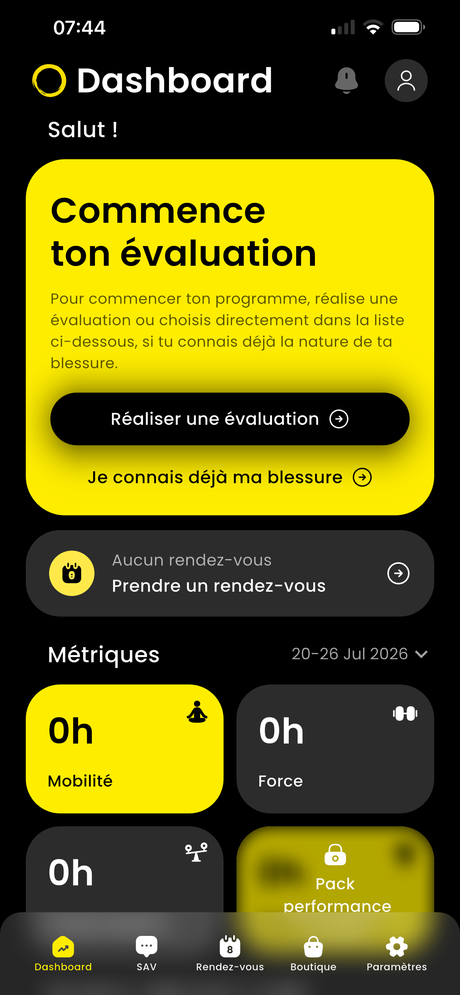
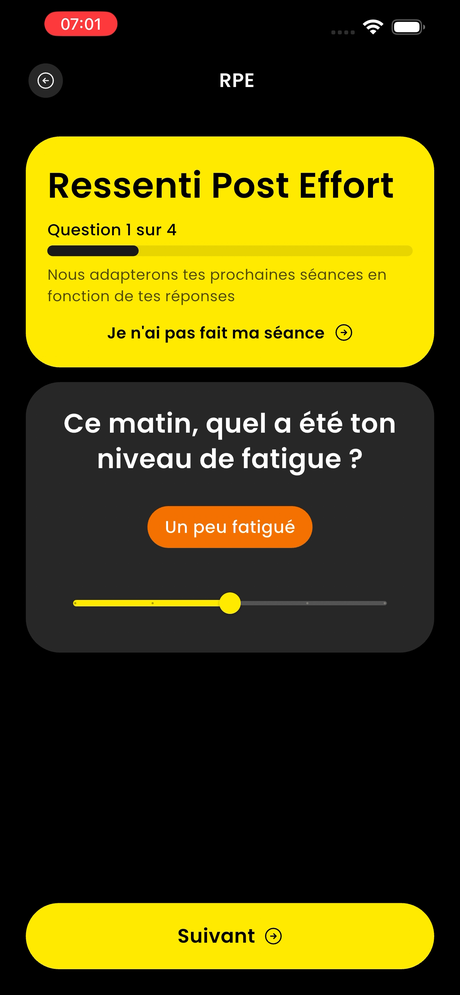
Every day, how you feel (RPE) is factored in to automatically adjust the rest of your programme: more load if all is well, a bit less if your shoulder is complaining. This daily personalisation is what makes the difference compared to a fixed, paper-based programme.

Ready to start your programme?
Join the HOPP support programme designed by sports physios.
F.A.Q
Does the HOPP programme replace a medical consultation?
No. HOPP is a support and rehab tool designed by sports physiotherapists, but it doesn’t replace a doctor’s opinion. If in doubt, or if the pain persists, see a health professional.
Is the programme suited to all sporting levels?
Yes. Every programme is personalised to your sport, your level and how you feel each day, whether you’re a recreational athlete or preparing for competition.
Will it happen again after a dislocation?
The risk of recurrence exists, particularly in young athletes, especially if rehab isn’t thorough. Well-conducted strengthening significantly reduces this risk.
How long does it take to get back to sport?
After the initial immobilisation period, a progressive return to sport generally takes place over several weeks to a few months, depending on the sport and the level of recurrence risk.
Is surgery systematic after a dislocation?
No, but it’s more often discussed for young, active athletes after a first episode, because of the high risk of recurrence without surgical stabilisation in this population.
Does a dislocation permanently damage the shoulder?
Not necessarily. Complete rehab allows the vast majority of athletes to regain a functional, stable shoulder. The main risk remains recurrence without sufficient strengthening, not systematic irreversible damage.
Do I have to avoid overhead sports for life?
No, most athletes go back to these movements normally after complete rehab. Extra caution and sustained strengthening are still recommended in the first few months after returning.