

What is a shoulder subluxation?
Shoulder instability anatomy
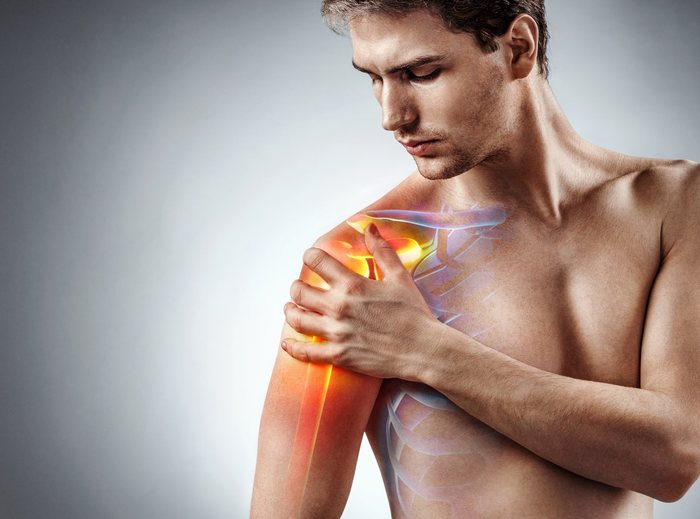
The shoulder is the most mobile joint in the body, but also the least stable: the head of the humerus rests on a shallow glenoid surface, stabilised mainly by the ligaments, the labrum (a cartilaginous rim) and the rotator cuff.[1] A subluxation is a partial, temporary displacement of the humeral head out of the glenoid, which reduces on its own, unlike a complete dislocation.[2]
Why does this subluxation happen?
Subluxation most often occurs during a cocked-arm movement (external rotation, arm raised), the position where the shoulder is structurally most vulnerable, or following previous trauma that weakened the stabilising structures. Constitutional laxity or a lack of rotator cuff strengthening also increase the risk.
The structures that stabilise the shoulder
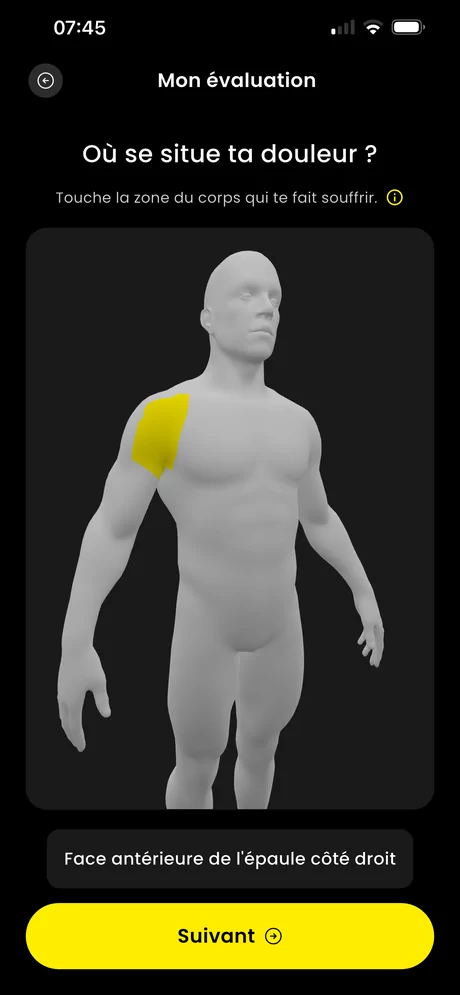
Shoulder stability relies on two types of structures:
- The passive stabilisers: the glenohumeral ligaments, the capsule and the labrum
- The active stabilisers: the rotator cuff and shoulder blade muscles, which actively compensate for the laxity of the passive structures
Symptoms and diagnosis of a shoulder subluxation
Typical sensations and their triggers
A subluxation feels like the shoulder briefly “jumping” or “giving way,” sometimes with temporary numbness in the arm, before it spontaneously slips back into place. It’s most often triggered by a cocked-arm movement (external rotation, arm raised).
Progression without full rehab
Without enough strengthening of active stability, subluxation episodes tend to recur, sometimes triggered by less and less extreme movements. Psychological apprehension can also set in around at-risk movements, limiting sporting confidence.
Differential diagnosis
After an episode of shoulder instability, a few distinctions are worth making:
- A complete dislocation, which needs to be reduced by a health professional, unlike a subluxation which reduces on its own
- Multidirectional instability, linked to constitutional hyperlaxity rather than an isolated traumatic episode
- A labral tear (SLAP) which can coexist with instability
Causes and risk factors
A subluxation results from an imbalance between the shoulder’s natural mobility and its capacity for active stabilisation.
Biomechanical and personal factors
- Constitutional joint laxity
- A lack of rotator cuff strengthening
- A history of similar episodes, which progressively weakens the passive structures
- Poor motor control of the shoulder blade
Which sports contribute to shoulder subluxation?
All sports that place the arm in a cocked position (arm raised, external rotation) carry a risk of this type of instability:
- Handball and volleyball
- Rugby, during tackles and contact
- Throwing sports (javelin, water polo)
- Judo and combat sports
- Climbing
- Skiing and fall-prone sports
Why do episodes often recur?
Each subluxation episode places a bit more strain on passive structures that are already weakened, without active stability necessarily having been strengthened in parallel. Without specific work on the rotator cuff and shoulder blade stabilisers, this cycle keeps feeding itself, which explains why recurrences are so common.
Treating a shoulder subluxation in rehab with a sports physio
The goal of treatment is to strengthen the structures that actively stabilise the shoulder (rotator cuff, shoulder blade stabilisers) to compensate for the laxity and prevent recurrence.
Phase 1 – Initial protection
Right after the episode, a few days of relative rest limits irritation to the weakened structures, before active rehab begins.
Phase 2 – Strengthening active stability
Strengthening the rotator cuff and shoulder blade stabilisers becomes the priority, to compensate for the laxity of the passive structures.
Phase 3 – Return to sport
The final phase progressively reintroduces at-risk movements (cocked arm) before a full return to training, with particular attention paid to rebuilding confidence in these movements.
In practice, this programme breaks down into 10 concrete steps:
- 1Protection and reducing pain
- 2Recovering pain-free mobility
- 3Isometric strengthening of the cuff
- 4Strengthening shoulder blade stability
- 5Shoulder proprioceptive work
- 6Closed-chain strengthening
- 7Open-chain strengthening
- 8Strengthening under sport-specific load
- 9Progressive return to your sport
- 10Return to competition
DEMONSTRATION
Video by Hemrick, co-founder of HOPP.
“An unstable shoulder is stabilised by muscle before it’s stabilised by surgery.”
Strengthening active stability, the cornerstone of treatment
Strengthening the rotator cuff and the shoulder blade stabilisers creates dynamic stability that compensates for the laxity of the passive structures (ligaments, labrum). Proprioceptive work, which trains the shoulder’s protective reflexes, is also essential.
In brief
- Strengthening the rotator cuff
- Shoulder proprioceptive work
- Strengthening the shoulder blade stabilisers
- Gradual return: mobility, then load, then sport
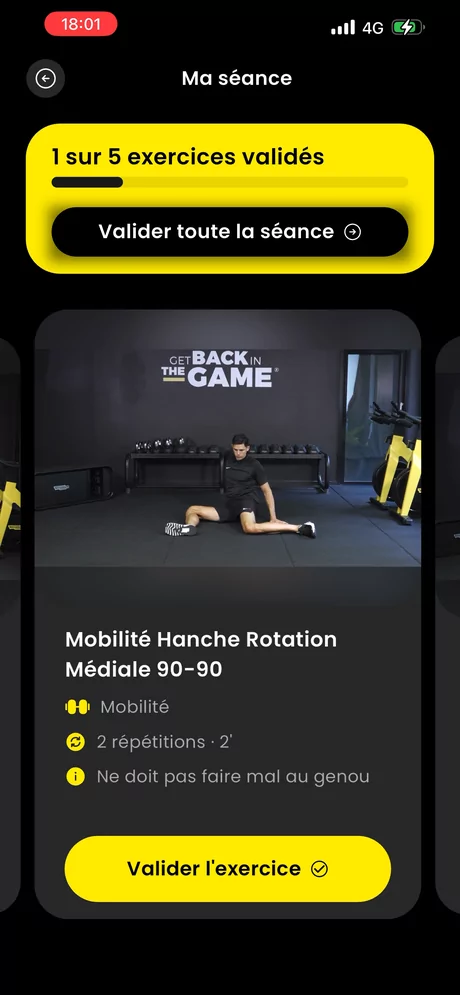
Ready to take your shoulder subluxation seriously?
Start the HOPP programme designed by sports physios.
Should you rest or keep playing sport?
A period of relative rest is useful right after the episode, but prolonged rest isn’t the answer: it’s active strengthening that durably protects the shoulder against recurrence, to be reintroduced progressively as soon as the acute pain eases.
Think you might have a different shoulder injury?
Take your free test in 3 minutes flat.
When should you see a specialist for a shoulder subluxation?
After a first episode, a medical opinion is recommended to assess the condition of the stabilising structures (labrum, ligaments) and discuss whether further tests are needed, particularly if episodes recur.
Healing time: how long does it take to stabilise your shoulder?
After a few days of relative rest, active strengthening generally spans 6 to 10 weeks. A full return to at-risk sports (cocked arm, contact) is safer between 2 and 4 months, giving active stability time to be fully restored.
Factors that speed up or slow down healing
- The number of episodes already experienced
- How consistently you keep up rotator cuff strengthening
- Building confidence in at-risk movements
- Sticking to a gradual load progression before returning to at-risk sports
Preventing recurrence
Subluxation frequently recurs if strengthening isn’t kept up once the initial discomfort has gone.
The 10% progression rule
Not increasing training volume or intensity by more than 10% per week, especially for cocked-arm movements, protects the shoulder during its phase of relative fragility.
Maintenance strengthening for the cuff
Regular resisted external rotation work, kept up even after the initial rehab has finished, maintains the shoulder’s active stability. It’s this ongoing strengthening that concretely reduces the risk of new episodes over the long term.
The HOPP care programmes to treat your shoulder subluxation and safely get back to sport
This instability requires complete strengthening and proprioceptive work to durably secure your shoulder. HOPP offers you a precise exercise programme, allowing you to get back to your activities as quickly as possible.
The programme runs from 3 to 9 weeks depending on the injury and ends with a reconditioning phase allowing a return to competition in the best possible conditions. Each programme is designed by the HOPP team, made up of two sports physiotherapists who are experts in assessing and treating athletes. You’ll also find theoretical content throughout your progression, so you master every aspect of your recovery and can adjust your treatment independently. If needed, our team of physiotherapists is on hand to support you.
Essential
FROM INJURY TO
BACK TO YOUR ACTIVITIES
59€
One-time payment
“AT YOUR OWN PACE WITH
DAILY ADAPTATION”
- 100% of the treatment programme
- Daily personalisation
- Flexibility / Mobility
- Strengthening
- Proprioception
- Progress tracking
- Return-to-running programme
- Theoretical content included
Performance
TO GET BACK TO SPORT
IN THE BEST CONDITIONS
79€
One-time payment
“GET BACK TO YOUR LEVEL
WITHOUT RISK OF RELAPSE”
- 100% of the treatment programme
- Daily personalisation
- Flexibility / Mobility
- Strengthening
- Proprioception
- Progress tracking
- Return-to-running programme
- Theoretical content included
- + 4-week return-to-play plan with 6 difficulty levels
Expert
PERSONALISED VIDEO-CALL
SUPPORT, ANY TIME
149€
One-time payment
“A PHYSIO
WHENEVER YOU NEED”
- 100% of the treatment programme
- Daily personalisation
- Flexibility / Mobility, Strengthening, Proprioception
- Progress tracking
- Return-to-running programme
- Theoretical content included
- + 4-week return-to-play plan with 6 difficulty levels
- + 2 video calls with an expert sports physio / return check-up
A programme that adapts to you every day
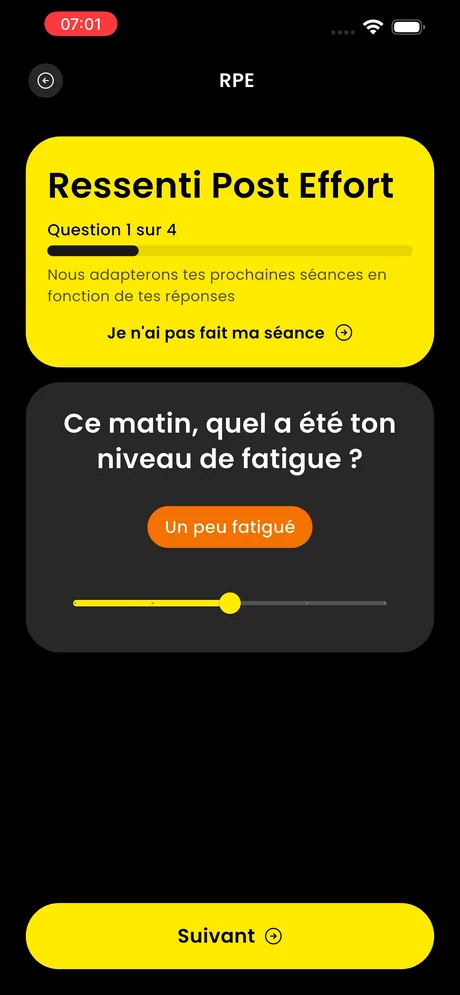
Every day, how you feel (RPE) is factored in to automatically adjust the rest of your programme: more load if all is well, a bit less if your shoulder is complaining. This daily personalisation is what makes the difference compared to a fixed, paper-based programme.

Ready to start your programme?
Join the HOPP support programme designed by sports physios.
F.A.Q
Does the HOPP programme replace a medical consultation?
No. HOPP is a support and rehab tool designed by sports physiotherapists, but it doesn’t replace a doctor’s opinion. If in doubt, or if the pain persists, see a health professional.
Is the programme suited to all sporting levels?
Yes. Every programme is personalised to your sport, your level and how you feel each day, whether you’re a recreational athlete or preparing for competition.
What’s the difference between subluxation and dislocation?
A subluxation is a partial, temporary displacement of the shoulder that reduces on its own, while a dislocation is a complete displacement that often needs manipulation to be reduced.[2]
Will it happen again if I go back to sport?
The risk of recurrence mainly exists if rehab isn’t thorough. Well-conducted strengthening of the rotator cuff and stabilisers significantly reduces this risk.[3]
Is surgery necessary?
Not systematically. Many athletes durably stabilise their shoulder through rehab alone. Surgery is mainly considered if episodes recur despite well-conducted rehab.
Can a subluxation progress into a full dislocation?
Yes, if episodes keep recurring without rehab, the stabilising structures can keep weakening, increasing the risk of a more complete episode in future.
Do I need to wear a brace after a subluxation?
Rarely for long. A brace can offer temporary reassurance, but it’s active strengthening of the rotator cuff that really protects the shoulder in the long run.