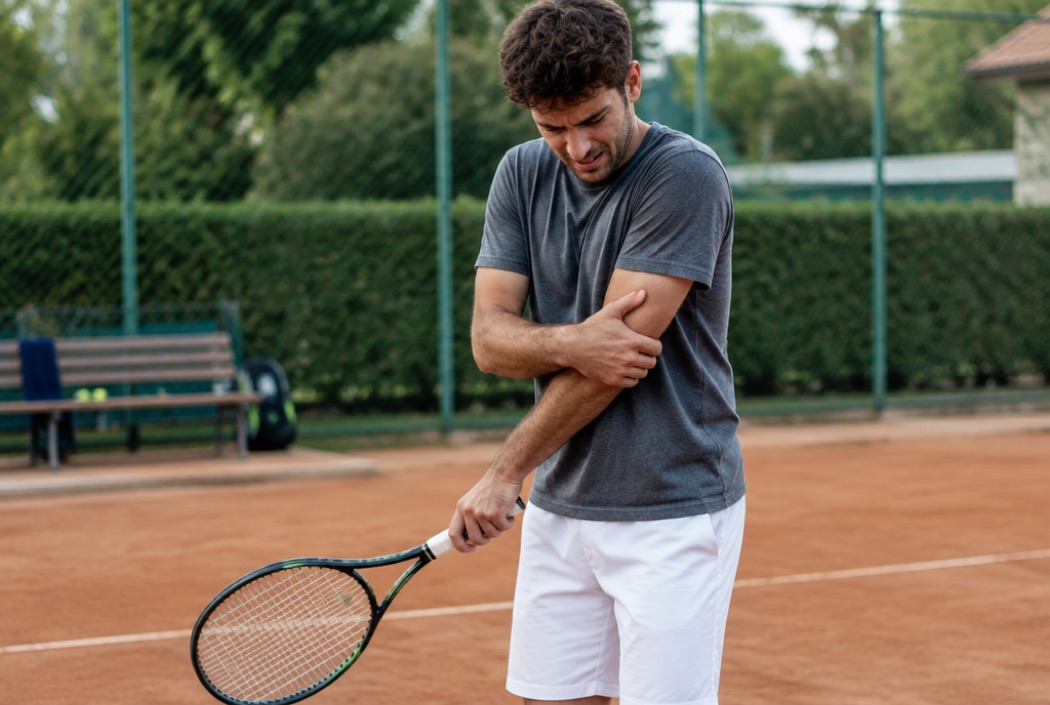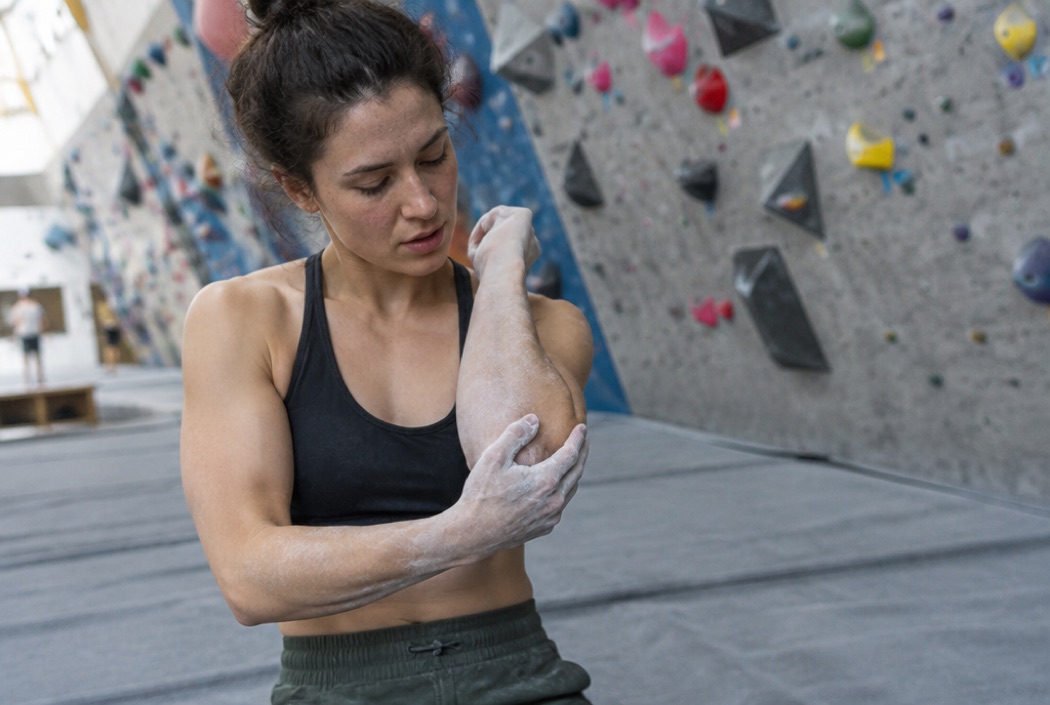


What is distal biceps tendinopathy?
Distal biceps tendon anatomy
The distal biceps tendon connects the biceps brachii muscle to its attachment point on the radius, just in front of the elbow. It enables elbow flexion and forearm supination (turning the palm upward). This tendinopathy affects the lower part of the biceps, at the crease of the elbow, distinct from long head of biceps tendinopathy, which concerns its attachment at the shoulder.
Why does this tendon become painful?
Pain appears when the distal biceps tendon is repeatedly loaded beyond its capacity to adapt, particularly during movements combining elbow flexion and supination against resistance. Too rapid an increase in weight-training loads, a repetitive gripping motion in supination, or a sudden forced-flexion effort are the most common causes.
Physio insight · Thibault
We say “tendinopathy” rather than “tendinitis” because it’s most often the tendon’s reaction to repeated mechanical overload, which calls for progressive strengthening work rather than simple rest.
Physio tip · Hemrick
Test your pain by flexing your elbow, palm facing up, against light resistance: if the pain is clear-cut at the crease of the elbow, along the tendon’s path, that’s a good indicator of distal biceps tendinopathy.
Causes and risk factors
Distal biceps tendinopathy appears when this tendon is repeatedly loaded beyond its capacity to adapt.
Biomechanical and personal factors
- Too rapid an increase in weight-training volume or load (curls, pulling exercises)
- A strength or endurance deficit in the biceps and forearm
- A repetitive gripping motion in supination
- Insufficient recovery between sessions that heavily load the elbow
- A history of elbow or shoulder tendinopathy
Which sports contribute to distal biceps tendinopathy?
Any sport that heavily involves elbow flexion combined with supination carries a particular risk:
- Weight training, particularly supinated curls
- Climbing and gripping sports
- Throwing sports
- Rugby, during rucks and tackling
- Combat sports (judo, wrestling)
- CrossFit with heavy pulling movements
Distal biceps tendinitis: the symptoms in the crease of the elbow
Distal biceps tendinitis, which physios call distal biceps tendinopathy, causes pain at the bottom of the biceps, in the crease of the elbow. “Distal” simply means the end of the muscle furthest from the shoulder: it is the tendon that attaches the biceps to the forearm, on the radius. It bends the elbow and turns the palm up.[1]
Biceps pain flares up when this tendon works: lifting a load with your palm facing up, pulling, screwing, carrying with a bent elbow. In the hollow of the elbow, the tendon is tender when pressed, and fully straightening the arm can pull, especially in the morning.
The most common signs
Pain in the crease of the elbow when lifting, palm facing up
A tender area after a workout, in the evening or the next day
Trouble screwing or turning a handle
Stiffness on waking when straightening the arm
Pain on pull-ups, especially at the end of the way down, and less strength with the elbow bent
The pain usually comes on gradually, after loads increased too fast or repeated pulling. Despite the word tendinitis, it is less an inflammation than an overloaded tendon that no longer tolerates what you ask of it.[3]
Biceps pain: at the elbow or at the shoulder?
The biceps has tendons at both ends. Pain at the top of the arm, at the front of the shoulder, points to long head of biceps tendinopathy. Here, we are talking about the bottom of the biceps, at the elbow. Other neighbouring pains exist: on the outside of the elbow, think of tennis elbow; on the inside, of golfer’s elbow; at the back, of triceps tendinitis.
Tendinitis, muscle soreness or a muscle tear?
Muscle soreness affects the whole muscle, appears the day after an unusual session and goes away within a few days. A biceps muscle injury happens suddenly, right in the middle of the arm, sometimes with a bruise. Distal biceps tendinitis, on the other hand, sits in the crease of the elbow, sets in gradually and comes back with every pulling session.
Ultrasound, MRI: do you need scans?
Often, the doctor’s clinical examination is enough to point to distal biceps tendinitis. If the pain has persisted for several weeks despite rehab, the doctor may order an ultrasound or an MRI.[1][2]
Treating distal biceps tendinopathy in rehab with a sports physio
The goal of treatment is to progressively strengthen the tendon to restore its capacity to absorb load, while temporarily reducing the movements that reproduce the pain.
- 1
Reducing pain and managing load
- 2
Elbow and wrist mobility
- 3
Isometric strengthening
- 4
Progressive concentric strengthening
- 5
Eccentric strengthening
- 6
Full forearm work
- 7
Correcting sporting technique
- 8
Strengthening under sport-specific load
- 9
Progressive return to your sport
- 10
Return to competition
“It’s not that the tendon is fragile, it’s that the load needs to be better dosed and distributed.”
Strengthening, the cornerstone of treatment
Strengthening the biceps, particularly eccentric work, restores the tendon’s capacity to withstand the flexion and supination strain specific to your sport. Comprehensive work on the forearm and shoulder effectively completes the treatment.
In brief
Progressive strengthening of the biceps
Specific work in supination
Eccentric strengthening
Gradual return: mobility, then load, then sport
Ready to take your distal biceps tendinopathy seriously?
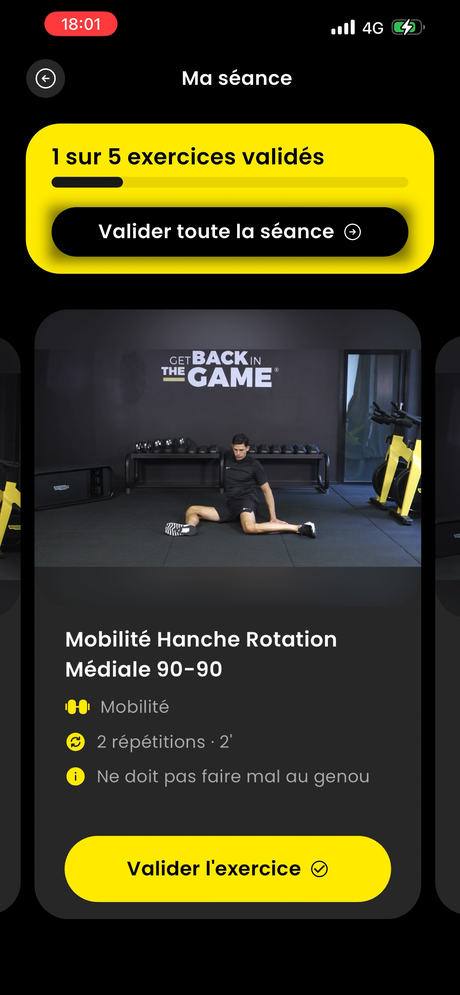
Start the HOPP programme designed by sports physios.
Distal biceps tendinitis: which exercises?
What should you do about biceps tendinitis? The treatment relies on progressive exercises, not on resting the arm. A tendon gets stronger with load, heavy and slow, increased in steps.[3]
The biceps does not bend the elbow on its own. It works with the brachialis, just underneath, and with the forearm muscles, while the triceps, its antagonist, controls the movement at the back. It also has a second role, often forgotten: turning the palm up. If you lighten your curls but keep the screwdriver, the palm-up pulls and the bags to carry, the tendon never gets a break. A programme that only works on bending the elbow forgets half of the tendon.
- 1
Release the muscle
: massaging the biceps, on the belly of the muscle and not on the tendon, eases tension in the arm. Stretching, for its part, can irritate the tendon if it is too strong: when in doubt, do not stretch at the start. - 2
Hold without moving
: static strengthening of the biceps, elbow at a right angle against resistance, works the tendon without irritating it. This is what calms things best at the start. - 3
Load slowly, then turn the palm
: the slow curl, where you control the way up and above all the way down, gives the tendon back its capacity. You add turning the palm up against resistance. - 4
Stabilise the shoulder and return to pulling
: the clock exercise on the floor builds the stability of the shoulder, which the biceps relies on. Then pulling comes back: rows, pull-ups, and finally your sport.
In the HOPP programme, these exercises are shown on video and adjusted every day to your pain and your form.
Which grip takes load off the tendon?
The palm-up grip is the one that loads the biceps tendon most. With a hammer grip, thumb up, or with the palm down, it gets a breather: this is a good way to keep training during treatment. In daily life, switch hands for screwing and carry bags with your arm down by your side.
Should you rest or keep playing sport?
Total rest is generally not necessary. It’s better to temporarily adapt the movements that clearly reproduce the pain, while starting progressive strengthening of the tendon as soon as possible.
Think you might have a different elbow injury?
Take your free test in 3 minutes flat.
When should you see a specialist for distal biceps tendinopathy?
If the pain persists for more than three to four weeks, or if you feel a pop, notice a muscle deformity, or a clear loss of strength in flexion (suggestive of a tendon tear), a medical opinion is recommended.
Distal biceps tendinitis: how long does it take to heal?
The recovery time for biceps tendinitis depends on the stage of the pain: only after the session, at the start of the effort, or throughout the effort. Here are pointers, not promises: every tendon has its own pace.
4 to 6 weeks
Pain only after the session
6 to 12 weeks
Pain at the start, which fades once warm and then returns
3 to 4 months
Pain during effort, pulling is hindered
Indicative timeframes, with regular rehabilitation.
With a structured programme, improvement is often clear fairly quickly, but a full return to heavy loads takes more patience. What makes it longer: stopping arm work while waiting for it to pass, or keeping your loads because the pain fades once you are warm. An overloaded tendon copes poorly with sudden effort.[3]
Anti-inflammatories, rest, stretching: what really helps
Anti-inflammatories can calm an occasional flare of pain, but they do not act on the cause: biceps tendinitis involves little inflammation. Complete rest makes the tendon lose a little more of its capacity, and the pain comes back with the first pull-up. Stretching that is too strong can irritate the tendon even more: when in doubt, it is better not to stretch at the start. What helps: keeping whatever stays under 3 out of 10 for pain, static holds, then progressive loading.[1]
Biceps tendinitis and weight training: can you keep training?
In weight training, pain in the biceps or forearm often comes from palm-up curls and heavy pulls, especially when the loads went up too fast. In most cases, you can keep doing your sport, as long as you adapt the movements that bring the pain back.
Training with distal biceps tendinitis
Lighten curls and pulls, keep legs, cardio and core stability work
Switch to a hammer grip or palm-down grip on pulls
Control the way down: no sudden drop with straight arms at the bottom of a pull-up
Set aside explosive movements and maximal loads for a while
Log your pulling loads: it is the weekly total that counts
The same principles apply to CrossFit and climbing, where the biceps pulls on every move, and to rugby or combat sports, where the elbow works in resisted flexion during grappling.
How to stop biceps tendinitis from coming back?
Once the pain has gone, the tendon stays sensitive to the same causes: too much load, too fast, on the movements that bend the elbow and turn the palm. A few habits limit the risk of relapse.
The right habits
Increase your pulling loads in small steps
Keep one slow exercise for the biceps and palm rotation in your week
Vary your grips: palm up, hammer, palm down
Warm up the elbow with light sets before heavy pulls
Spread pulling sessions across the week rather than stacking them all together
The HOPP care programmes to treat your distal biceps tendinopathy and get back to sport
This tendinopathy requires progressive, well-dosed strengthening. HOPP offers you a precise exercise programme, allowing you to get back to your activities as quickly as possible.
The programme runs from 3 to 9 weeks depending on the injury and ends with a reconditioning phase allowing a return to competition in the best possible conditions. Each programme is designed by the HOPP team, made up of two sports physiotherapists who are experts in assessing and treating athletes. You’ll also find theoretical content throughout your progression, so you master every aspect of your recovery and can adjust your treatment independently. If needed, our team of physiotherapists is on hand to support you.
Your HOPP programme, as a subscription
You start for free: 3 days of personalised programme, no credit card. After that, you choose to continue with the subscription, or to stay on limited free access.
3 days
of personalised programme, in the app
- No credit card
- No email needed
- Your first session today
After the 3 days, you choose
I subscribe
Everything unlocked
- Today’s session and your personalised programme
- Daily adjustment of your programme
- Conversations with support
- Plus everything free access already keeps
I stay on free
Limited access
- The dashboard: your progress and your metrics
- Booking a video call with a sports physio
- The HOPP shop
- Today’s session and your personalised programme
- Daily adjustment of your programme
- Conversations with support
Choose your plan
Your personalised programme, adjusted daily to how you feel
€9.99 /month€99 /year
No commitment
- Personalised programme
- Daily tracking
- Daily adjustment
- Return-to-sport assessment
- Reconditioning phase
- Relapse prevention
- HOPP community access
- 1 video call of 20 minutes every month7 video calls of 20 minutes over the year
The same programme, with your sports physio on video
€39.99 /month€299 /year
No commitment
- Personalised programme
- Daily tracking
- Daily adjustment
- Return-to-sport assessment
- Reconditioning phase
- Relapse prevention
- HOPP community access
- 1 video call of 20 minutes every month7 video calls of 20 minutes over the year
A single video call with a FIFA-certified sports physio, no subscription: €35
What your subscription includes
Personalised programme
Built for your injury by two sports physiotherapists, from your assessment.
Daily tracking
Today’s session, your progress and your metrics, all in your dashboard.
Daily adjustment
How you feel today shapes what comes next: more load if all is well, less if the pain complains.
Return-to-sport assessment
A checkpoint to know whether your body is ready to go back to your sport, and at what level.
Video call with a FIFA-certified sports physio
Plan with video callsIn the plan with video calls: 20 minutes to review your progress with them.
Reconditioning
A final phase to get your level back before returning at full intensity.
Prevention
Exercises to strengthen your weak points and lower the risk of a relapse.
Community
Talk with other athletes going through the same rehab.
The HOPP app, for real
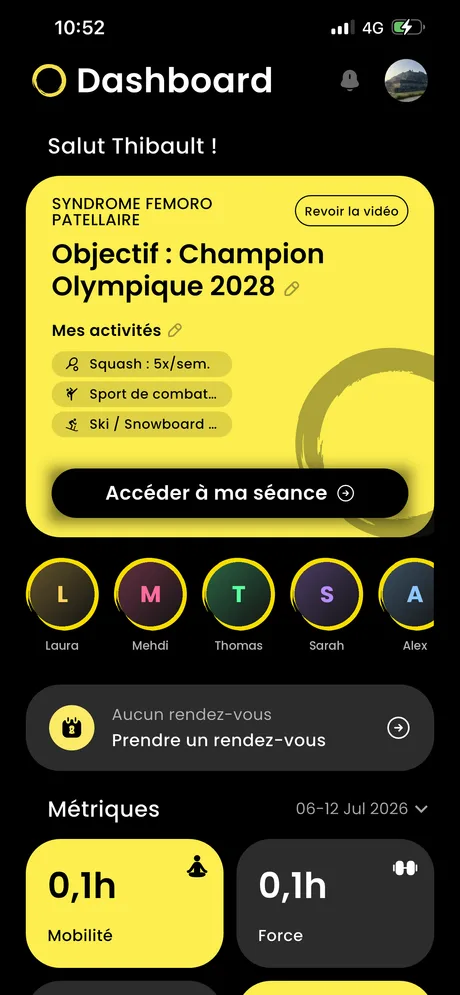
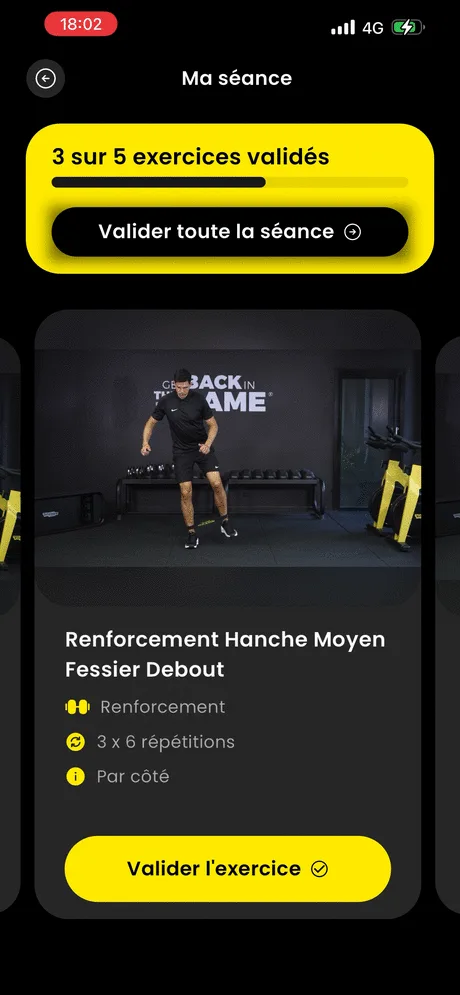
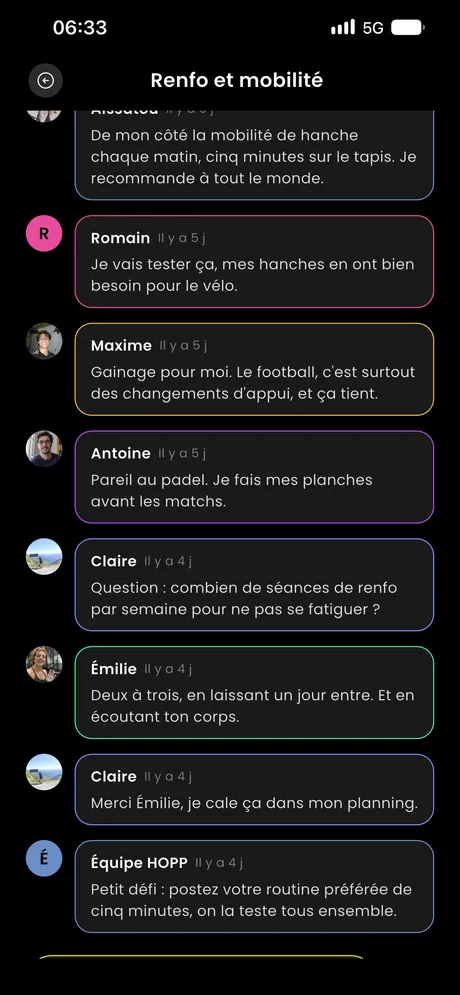
A programme that adapts to you every day
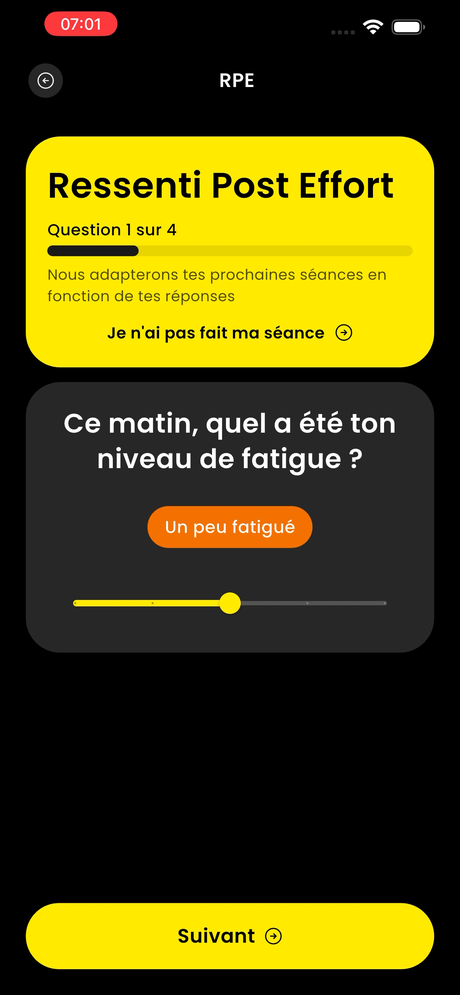
Every day, how you feel (RPE) is factored in to automatically adjust the rest of your programme: more load if all is well, a bit less if your elbow is complaining. This daily personalisation is what makes the difference compared to a fixed, paper-based programme.

Ready to start your programme?
Join the HOPP support programme designed by sports physios.
Keep these pointers close at hand
The distal biceps tendinitis guide covers recovery times, the right moves and the traps to avoid. You get it by email within a minute.

F.A.Q
Does the HOPP programme replace a medical consultation?
No. HOPP is a support and rehab tool designed by sports physiotherapists, but it doesn’t replace a doctor’s opinion. If in doubt, or if the pain persists, see a health professional.
Is the programme suited to all sporting levels?
Yes. Every programme is personalised to your sport, your level and how you feel each day, whether you’re a recreational athlete or preparing for competition.
Can I keep playing sport with this tendinopathy?
In most cases, yes, by temporarily adapting the flexion and supination movements that reproduce the pain, while starting strengthening in parallel.
How long does it take to recover?
A structured programme generally brings clear improvement within a few weeks, with a full return to sport after several weeks of progressive strengthening.
What’s the difference with long head of biceps tendinopathy?
Long head of biceps tendinopathy concerns the upper attachment of the tendon, at the shoulder, whereas distal biceps tendinopathy at the elbow concerns its lower attachment, on the radius.
What are the signs of a distal biceps tendon rupture?
A rupture shows up as sharp, sudden pain at the crease of the elbow, often with an audible pop, a visible deformity of the muscle, and a clear loss of strength in flexion and supination. In this case, prompt medical attention is needed.
Can distal biceps tendinopathy affect both arms?
Yes, especially if both arms are worked symmetrically in your sport, such as in weight training or climbing. It’s then worth adapting training on both sides in parallel rather than compensating solely with the unaffected arm.