

What is tennis elbow (epicondylitis)?
Lateral epicondyle anatomy
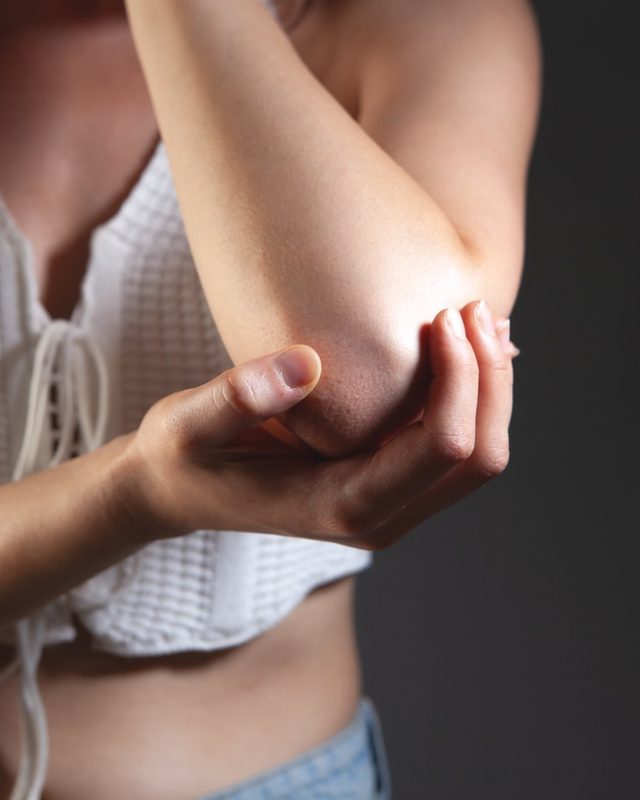
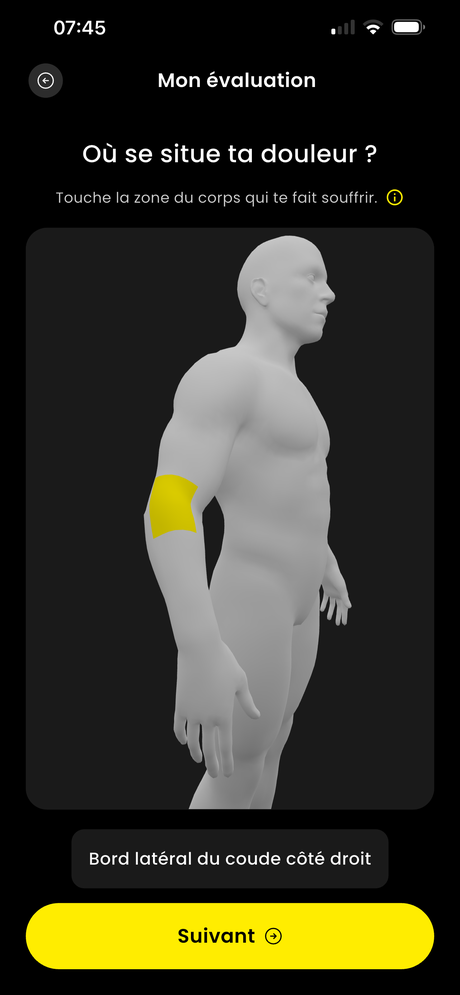
The lateral epicondyle is the small bony prominence on the outer side of the elbow, where the tendons of the wrist and finger extensor muscles attach. Epicondylitis, better known as “tennis elbow”, is a painful condition of these tendons at their attachment, linked to repeated overload.
Why does this area become painful?
Pain appears when the wrist extensor tendons are subjected to too much repeated load, typically during repeated extension and gripping movements (a tennis backhand, screwing/tool use, manual work). Despite its name, tennis elbow mostly affects non-tennis players, often in a work or household context.
Epicondylitis or epicondylalgia: what’s the difference?
The term “epicondylitis” implies inflammation, whereas research shows this is primarily an overload tendinopathy, with no active inflammation in most chronic cases.[1] The current medical term, “lateral epicondylalgia”, is more precise, but “epicondylitis” and “tennis elbow” remain widely used in everyday language to describe the same condition.
The extensor muscles involved
Several tendons attach to the lateral epicondyle, with one tendon mainly responsible :
- The extensor carpi radialis brevis (ECRB), affected in the vast majority of cases
- The extensor carpi radialis longus
- The extensor digitorum communis
- The extensor carpi ulnaris
Symptoms and diagnosis of tennis elbow
Typical pain and its triggers
The pain is located on the outer side of the elbow, sometimes radiating into the forearm. It’s typically triggered by gripping (shaking hands, carrying a bag, using a screwdriver), extending the wrist against resistance, or a tennis backhand. In long-standing cases, everyday actions as simple as holding a cup can be enough to trigger the pain.
How symptoms progress without treatment
Without treatment, the pain tends to be triggered by increasingly smaller efforts, eventually interfering with very simple everyday movements. Athletes or manual workers often compensate by relying more on the shoulder or wrist, which can create associated tension.
Differential diagnosis
Several elbow conditions can resemble tennis elbow :
- The golfer’s elbow (medial epicondylitis): the same condition but on the inner side of the elbow, affecting the wrist flexors
- Radial tunnel syndrome: nerve compression causing more diffuse pain, sometimes at night
- Referred neck pain: a cervical spine issue can refer pain down to the elbow
- Elbow osteoarthritis, less common in younger athletes
Causes and risk factors
Tennis elbow results from repeated overload of the extensor tendons, which exceeds their capacity to recover between bouts of use.
Biomechanical and personal factors
- Poor backhand technique in tennis, particularly a “broken” wrist at impact
- An unsuitable tool or racquet grip (too small, gripped too tightly)
- A lack of overall forearm strength
- Being between 40 and 50 years old, a period of lower tendon tolerance
- A sudden increase in manual or sporting activity
Which sports contribute to tennis elbow?
All sports and activities that heavily load wrist extension and gripping carry a risk of this condition:
- Tennis, particularly the backhand
- Squash and badminton
- Climbing and grip-intensive sports
- Golf
- Weight training with heavy grip exercises
- Repetitive manual activities (DIY, gardening)
Why does elbow pain appear without an obvious cause?
Tennis elbow actually affects a majority of non-athletes : it’s above all a cumulative overload injury, linked to repeated movements at work or at home rather than a single impact or effort. The tendon wears down gradually until it reaches a painful threshold, with no single identifiable event.
Treating tennis elbow in rehab with a sports physio
The goal of treatment is to progressively strengthen the wrist extensor tendons to restore their capacity to absorb load, while correcting the movement causing the overload.
Phase 1 – Reducing pain (isometric exercises)
In the first few days, isometric contractions of the wrist extensors (pushing against a fixed resistance, without moving) often provide quick pain relief while keeping the tendon active.
Phase 2 – Progressive strengthening (eccentric)
Eccentric strengthening of the wrist extensors is the most scientifically validated basis for this type of tendinopathy : this is the work that allows the tendon to regain its capacity to handle load.
Phase 3 – Return to sport or activity
The final phase gradually reintroduces specific movements (backhand, gripping tools) before a full return to sporting or work activity.
In practice, this programme breaks down into 10 concrete steps :
- 1Reducing pain and managing load
- 2Elbow and wrist mobility
- 3Isometric strengthening
- 4Progressive concentric strengthening
- 5Eccentric strengthening
- 6Overall forearm work
- 7Correcting sporting technique
- 8Strengthening under sport-specific load
- 9Progressive return to your sport
- 10Return to competition
“It’s not that the tendon is fragile, it’s that the load needs to be better dosed and distributed.”
Eccentric strengthening, the cornerstone of treatment
Strengthening the wrist extensors, particularly eccentrically, is the most scientifically validated basis for treating epicondylitis. It’s complemented by overall forearm work and, if needed, correcting technique (racquet grip, work-related movement).
In brief
- Eccentric strengthening of the wrist extensors
- Progressive overall forearm strengthening
- Correcting technique if needed
- Gradual return: mobility, then load, then sport
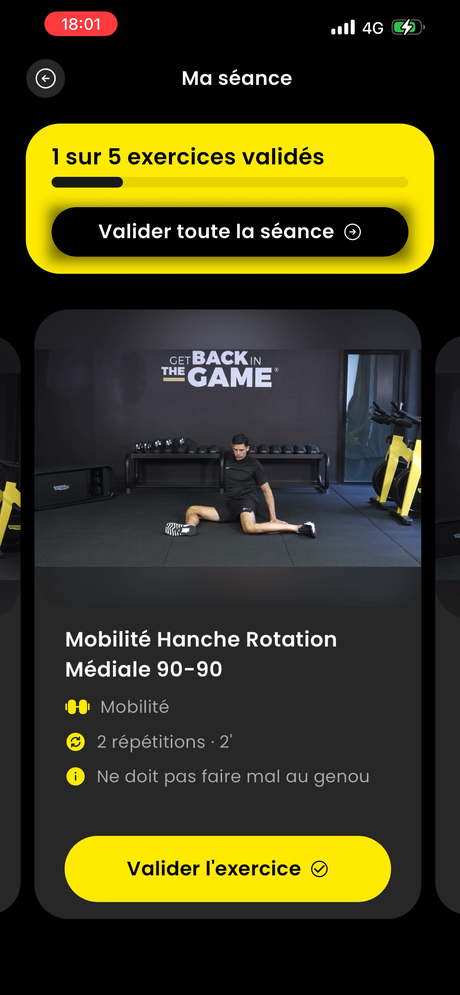
Ready to take your tennis elbow (epicondylitis) seriously?
Start the HOPP programme designed by sports physios.
Should you rest or keep playing sport?
Total rest is generally not the most effective solution. It’s better to temporarily adapt the movements that clearly reproduce the pain, while starting eccentric strengthening as soon as possible.
Think you might have a different elbow injury?
Take your free test in 3 minutes flat.
When should you see a specialist for tennis elbow?
If pain persists for more than four to six weeks despite adapting your activities and a well-conducted strengthening programme, a medical opinion is recommended to consider further treatments.
Recovery time: how long does it take to recover from tennis elbow?
Tennis elbow is one of the slowest tendinopathies to heal. A clear improvement in everyday pain is often seen after 6 to 8 weeks of rehab, but a full, confident return to full-intensity movements more typically takes 3 to 6 months, sometimes longer for cases that have been present for over a year.
Factors that speed up or slow down healing
- How long the pain was present before treatment began
- Consistency with eccentric strengthening
- Correcting the technique or equipment responsible
- Following a gradual load progression, without returning to full-intensity movements too quickly
Preventing relapse
Tennis elbow relapses easily if strengthening isn’t continued and if the movement or equipment responsible isn’t corrected.
The 10% progression rule
Not increasing your training or manual activity volume by more than 10% per week protects the tendon from further overload over the long term.
The Tyler Twist exercise
The Tyler Twist is a research-validated benchmark exercise for preventing and treating tennis elbow.[3] Using a FlexBar-type bar held with both hands, the exercise involves twisting the bar and then slowly bringing the wrist back into controlled extension (the eccentric phase), for several sets a day. Kept up as maintenance even after recovery, particularly before the start of a new season, it helps the tendon maintain its capacity to handle load.
The HOPP care programmes to treat your tennis elbow and get back to sport
This epicondylitis requires rigorous, progressive eccentric strengthening. HOPP offers you a precise exercise programme, allowing you to get back to your activities as quickly as possible.
The programme runs from 3 to 9 weeks depending on the injury and ends with a reconditioning phase allowing a return to competition in the best possible conditions. Each programme is designed by the HOPP team, made up of two sports physiotherapists who are experts in assessing and treating athletes. You’ll also find theoretical content throughout your progression, so you master every aspect of your recovery and can adjust your treatment independently. If needed, our team of physiotherapists is on hand to support you.
Essential
FROM INJURY TO
BACK TO YOUR ACTIVITIES
59€
One-time payment
“AT YOUR OWN PACE WITH
DAILY ADAPTATION”
- 100% of the treatment programme
- Daily personalisation
- Flexibility / Mobility
- Strengthening
- Proprioception
- Progress tracking
- Return-to-running programme
- Theoretical content included
Performance
TO GET BACK TO SPORT
IN THE BEST CONDITIONS
79€
One-time payment
“GET BACK TO YOUR LEVEL
WITHOUT RISK OF RELAPSE”
- 100% of the treatment programme
- Daily personalisation
- Flexibility / Mobility
- Strengthening
- Proprioception
- Progress tracking
- Return-to-running programme
- Theoretical content included
- + 4-week return-to-play plan with 6 difficulty levels
Expert
PERSONALISED VIDEO-CALL
SUPPORT, ANY TIME
149€
One-time payment
“A PHYSIO
WHENEVER YOU NEED”
- 100% of the treatment programme
- Daily personalisation
- Flexibility / Mobility, Strengthening, Proprioception
- Progress tracking
- Return-to-running programme
- Theoretical content included
- + 4-week return-to-play plan with 6 difficulty levels
- + 2 video calls with an expert sports physio / return check-up
A programme that adapts to you every day
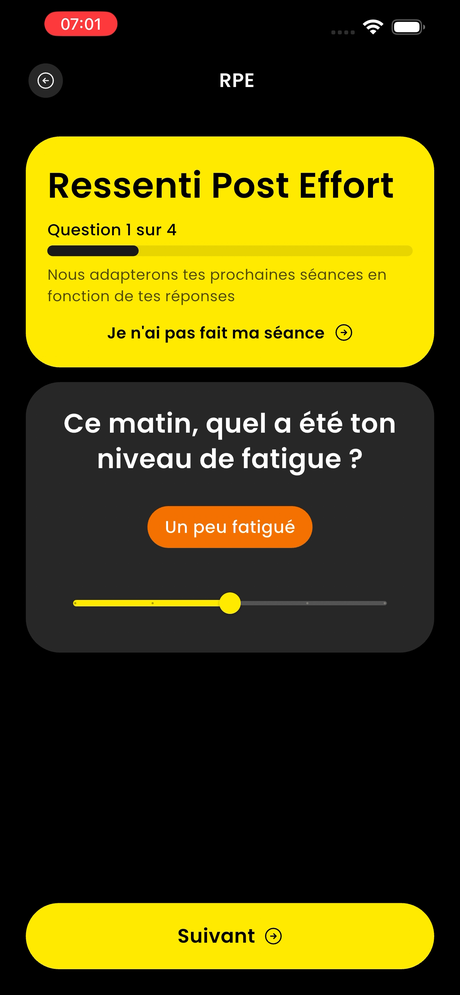
Every day, how you feel (RPE) is factored in to automatically adjust the rest of your programme : more load if all is well, a bit less if your elbow is complaining. This daily personalisation is what makes the difference compared to a fixed, paper-based programme.

Ready to start your programme?
Join the HOPP support programme designed by sports physios.
F.A.Q
Does the HOPP programme replace a medical consultation?
No. HOPP is a support and rehab tool designed by sports physiotherapists, but it doesn’t replace a doctor’s opinion. If in doubt, or if the pain persists, see a health professional.
Is the programme suited to all sporting levels?
Yes. Every programme is personalised to your sport, your level and how you feel each day, whether you’re a recreational athlete or preparing for competition.
Should I stop tennis with this epicondylitis?
Not necessarily a complete stop, but a temporary adaptation of your volume and sometimes your technique (particularly the backhand), while starting eccentric strengthening in parallel.
How long does it take to recover from tennis elbow?
Lateral epicondylitis can take longer to heal than other tendinopathies, with gradual improvement over several weeks to a few months depending on how long the symptoms have been present.
Can a brace help?
A counterforce brace can temporarily relieve pain by reducing tension on the tendons, but it doesn’t replace progressive strengthening, which remains the underlying treatment.
What grip size should you choose to avoid tennis elbow?
A grip that’s too small forces you to squeeze the racquet harder, which increases tension on the extensor tendons. A slightly larger grip, suited to your hand size, reduces this strain.
Are cortisone injections effective against tennis elbow?
They can provide quick short-term relief, but several studies show worse medium-term results compared with rehab alone, along with a higher risk of relapse.[2] They’re reserved for specific situations, to be discussed with a doctor.