

What is plantar fasciitis?
The anatomy of the plantar fascia
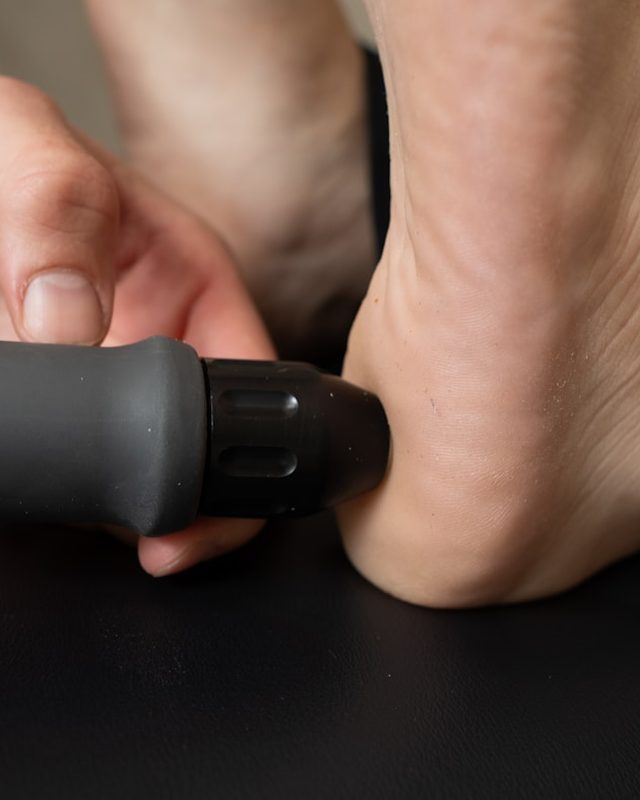
The plantar fascia is a thick band of fibrous tissue that runs from the heel to the base of the toes, under the arch of the foot. It plays a key role as a shock absorber and spring with every step, particularly when running. Plantar fasciitis is a painful condition affecting this structure, most often at its attachment to the heel, linked to repeated mechanical overload.
Why does this structure become painful?
Pain appears when the plantar fascia is repeatedly loaded beyond its capacity to adapt. A running volume increased too quickly, a stiff calf, a very high or very flat arch, or a change of shoes are common contributing factors.
Symptoms and diagnosis of plantar fasciitis
Typical pain and its triggers
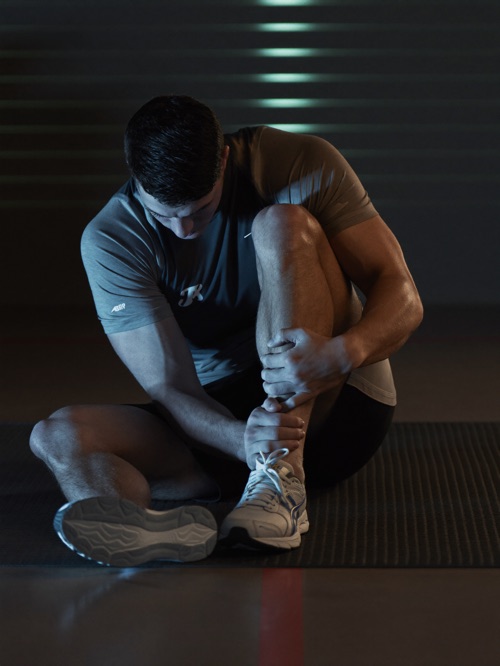
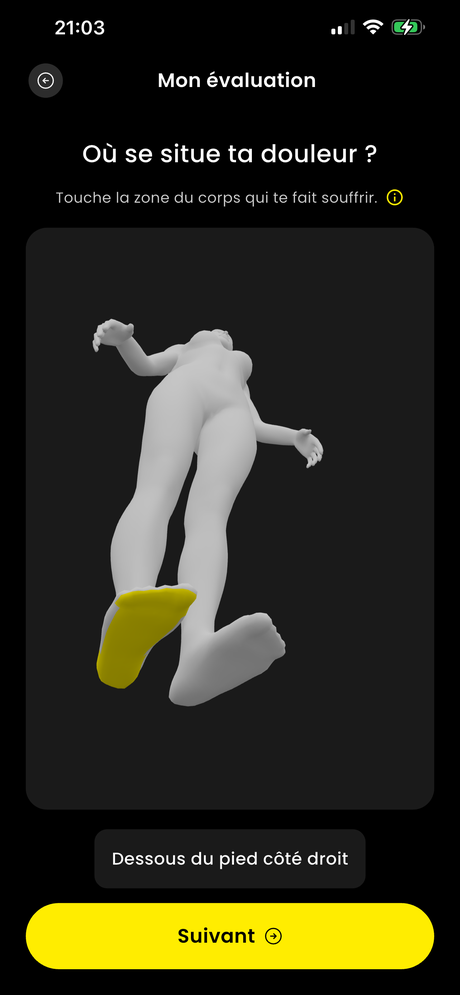
The pain is located under the heel, sometimes extending along the arch of the foot. It’s typically worst with the first steps in the morning, eases with warming up, then can return later in the day or after prolonged activity.[1]
How symptoms progress without treatment
Without treatment, the characteristic morning pain tends to spread across more of the day, with a risk of changing the way you walk to compensate, which can create tension elsewhere (calf, knee).
Differential diagnosis
Several types of heel or foot pain can resemble plantar fasciitis:
- Achilles tendinopathy, a more posterior pain, on the tendon itself
- Sever’s disease, in growing children and teenagers
- Morton’s neuroma, pain that’s more between the toes, in the forefoot
Causes and risk factors
Plantar fasciitis results from repeated overload of the fascia, often driven by biomechanical factors.
Biomechanical and personal factors
- A stiff calf (gastrocnemius, soleus)
- A very high or very flat arch
- A recent change of shoes or training surface
- A running volume increased too quickly
Which sports contribute to plantar fasciitis?
All sports involving repeated impact with the ground carry a particular risk:
- Running, especially on hard surfaces
- Trail running and hiking
- Football and other running/jumping sports
- Basketball and volleyball
- Dance
- Jobs involving prolonged standing
Why does this pain appear without an obvious cause?
As with most tendinopathies, this pain most often results from progressive overload, linked to an increase in running volume or a change of terrain, without any single identifiable event.
Treating plantar fasciitis in rehab with a sports physio
The goal of treatment is to progressively strengthen the fascia and foot muscles, while working on calf flexibility, which is often involved in this condition.
Phase 1 – Pain reduction (isometric)
In the first few days, isometric work and calf stretching often bring quick relief, particularly for morning pain.
Phase 2 – Progressive strengthening (eccentric)
Eccentric strengthening of the small intrinsic foot muscles and the calf is the foundation of the underlying treatment, often through progressive heel raises.[3]
Phase 3 – Return to running
The final phase progressively reintroduces running and ground impact before a full return to training.
In practice, this programme breaks down into 10 concrete steps:
- 1Reducing pain and managing load
- 2Foot and ankle mobility
- 3Isometric strengthening
- 4Progressive concentric strengthening
- 5Eccentric strengthening
- 6Foot proprioceptive work
- 7Correcting movement and footing
- 8Strengthening under sport-specific load
- 9Progressive return to running
- 10Return to competition
DEMONSTRATION
Video by Hemrick, co-founder of HOPP.
“It’s not that the fascia is fragile: it’s the load that needs to be better dosed and distributed.”
Strengthening, the cornerstone of treatment
Strengthening the small intrinsic muscles of the foot and stretching the calf, which is often tight, helps reduce tension on the plantar fascia with every step. Progressive loaded work, particularly rising onto the toes, is particularly effective for this condition.
In brief
- Strengthening the intrinsic foot muscles
- Calf stretching
- Progressive loaded strengthening
- Gradual return: mobility, then load, then sport
Ready to take your plantar fasciitis seriously?
Start the HOPP programme designed by sports physios.
Should you rest or keep playing sport?
Complete rest generally isn’t necessary. It’s better to temporarily adjust the running or impact volume that clearly reproduces the pain, while starting strengthening as soon as possible.
Think you might have a different foot injury?
Take your free test in 3 minutes flat.
When should you see a specialist for plantar fasciitis?
If the pain persists for more than four to six weeks despite adjusting your activities and following a well-run strengthening programme, a medical opinion is recommended to consider additional treatment options.
Recovery time: how long does it take to get over plantar fasciitis?
Plantar fasciitis is one of the slowest tendinopathies to heal. Noticeable improvement is often seen after 6 to 8 weeks of rehab, but a full, pain-free return, without morning pain, can take 3 to 6 months for cases that have been present for a long time.
Factors that speed up or slow down healing
- How long the pain was present before starting treatment
- Consistency with eccentric strengthening and calf stretching
- Following a gradual return to running load
- Adjusting footwear if needed
Preventing relapse
Plantar fasciitis relapses easily if strengthening isn’t continued and calf flexibility isn’t maintained.
The 10% progression rule
Not increasing your running volume by more than 10% per week durably protects the fascia from being overloaded again.
Targeted stretching for the fascia
A targeted stretch, toes pulled up against a wall or with your hand for 30 seconds, combined with regular calf stretching, helps maintain the flexibility of the plantar fascia even after you’ve healed, particularly before increasing your running volume again.[2]
The HOPP care programmes to treat your plantar fasciitis and get back to sport
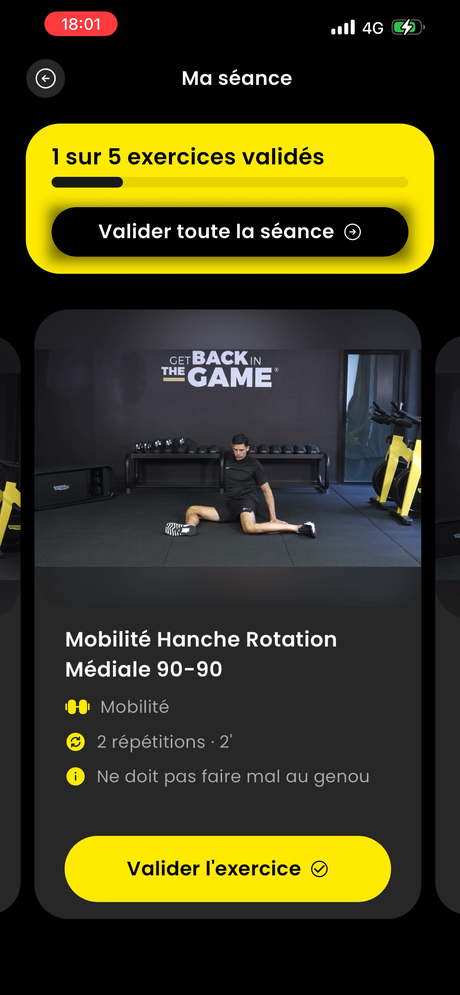
This condition requires progressive strengthening and calf flexibility work. HOPP offers you a precise exercise programme, allowing you to get back to your activities as quickly as possible.
The programme runs from 3 to 9 weeks depending on the injury and ends with a reconditioning phase allowing a return to competition in the best possible conditions. Each programme is designed by the HOPP team, made up of two sports physiotherapists who are experts in assessing and treating athletes. You’ll also find theoretical content throughout your progression, so you master every aspect of your recovery and can adjust your treatment independently. If needed, our team of physiotherapists is on hand to support you.
Essential
FROM INJURY TO
BACK TO YOUR ACTIVITIES
59€
One-time payment
“AT YOUR OWN PACE WITH
DAILY ADAPTATION”
- 100% of the treatment programme
- Daily personalisation
- Flexibility / Mobility
- Strengthening
- Proprioception
- Progress tracking
- Return-to-running programme
- Theoretical content included
Performance
TO GET BACK TO SPORT
IN THE BEST CONDITIONS
79€
One-time payment
“GET BACK TO YOUR LEVEL
WITHOUT RISK OF RELAPSE”
- 100% of the treatment programme
- Daily personalisation
- Flexibility / Mobility
- Strengthening
- Proprioception
- Progress tracking
- Return-to-running programme
- Theoretical content included
- + 4-week return-to-play plan with 6 difficulty levels
Expert
PERSONALISED VIDEO-CALL
SUPPORT, ANY TIME
149€
One-time payment
“A PHYSIO
WHENEVER YOU NEED”
- 100% of the treatment programme
- Daily personalisation
- Flexibility / Mobility, Strengthening, Proprioception
- Progress tracking
- Return-to-running programme
- Theoretical content included
- + 4-week return-to-play plan with 6 difficulty levels
- + 2 video calls with an expert sports physio / return check-up
A programme that adapts to you every day
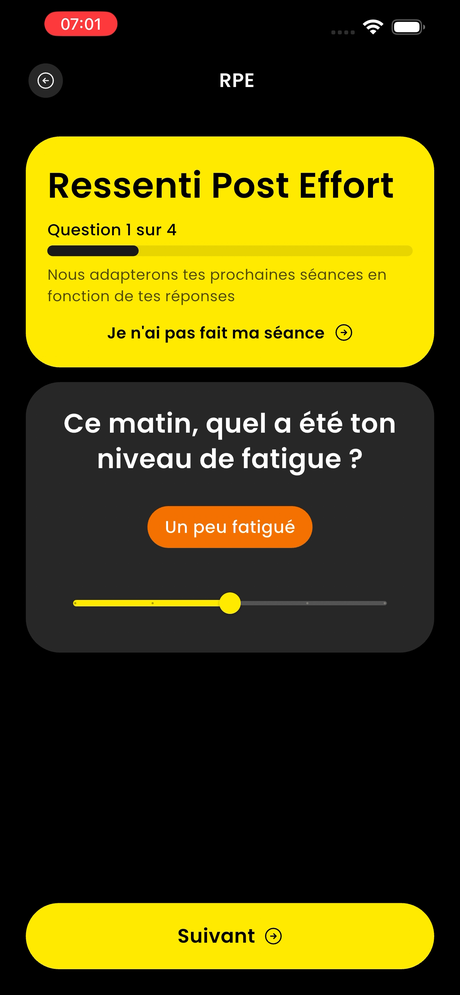
Every day, how you feel (RPE) is factored in to automatically adjust the rest of your programme: more load if all is well, a bit less if your foot is complaining. This daily personalisation is what makes the difference compared to a fixed, paper-based programme.

Ready to start your programme?
Join the HOPP support programme designed by sports physios.
Not sure if it’s plantar fasciitis?
Take the quiz to check if your foot pain really matches.
F.A.Q
Does the HOPP programme replace a medical consultation?
No. HOPP is a support and rehab tool designed by sports physiotherapists, but it doesn’t replace a doctor’s opinion. If in doubt, or if the pain persists, see a health professional.
Is the programme suited to all sporting levels?
Yes. Every programme is personalised to your sport, your level and how you feel each day, whether you’re a recreational athlete or preparing for competition.
Can I keep running with plantar fasciitis?
In most cases, yes, by temporarily adjusting your volume and terrain, while starting strengthening and calf stretching alongside it.
How long does it take to recover from plantar fasciitis?
This condition can take longer to heal than other tendinopathies, with gradual improvement over several weeks to a few months depending on how long the symptoms have been present.
Can a heel cup help?
A heel cup or insole can temporarily relieve pain by reducing tension on the fascia, but it doesn’t replace progressive strengthening, which remains the underlying treatment.
Why does my heel only hurt in the morning?
During rest at night, the fascia tightens slightly. Your first steps stretch it suddenly, causing this characteristic pain, which then eases as you warm up.
Is a heel spur the cause of the pain?
Not necessarily. Many people have a heel spur visible on imaging with no pain at all, and vice versa. It’s mainly the inflammation of the fascia itself that’s responsible for the symptoms.[4]