

What is Achilles tendinopathy?
The anatomy of the Achilles tendon
The Achilles tendon is the strongest tendon in the human body.[1] It connects the calf muscles (gastrocnemius and soleus) to the heel (calcaneus) and drives propulsion with every step, stride and jump. Mid-portion tendinopathy is distinguished from insertional tendinopathy, closer to the heel, which is managed slightly differently.
Why does this tendon become painful?
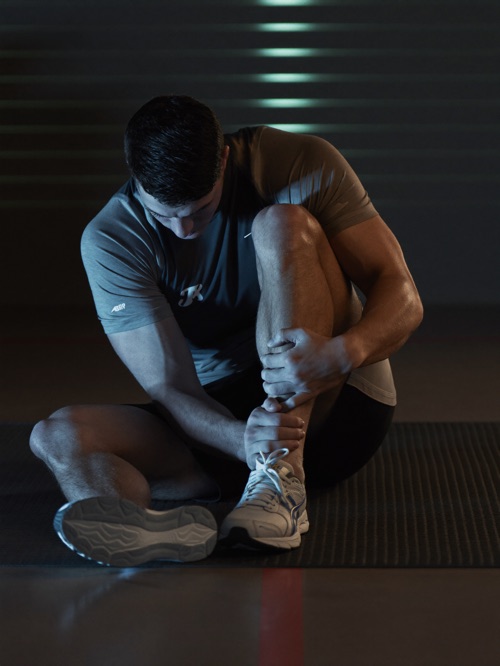
Pain appears when the Achilles tendon is repeatedly loaded beyond its capacity to adapt, particularly during running and jumping activities. A training volume increased too quickly, a stiff calf, or a change of terrain or shoes are the most common causes of tendon overload.
Symptoms and diagnosis of Achilles tendinopathy
Typical pain and its triggers
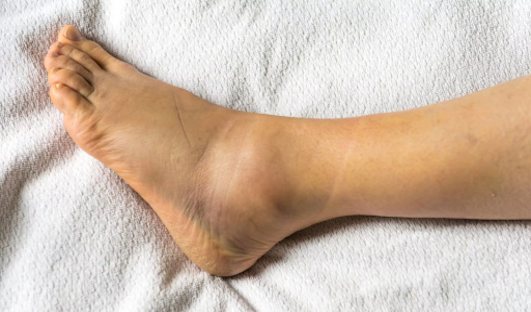
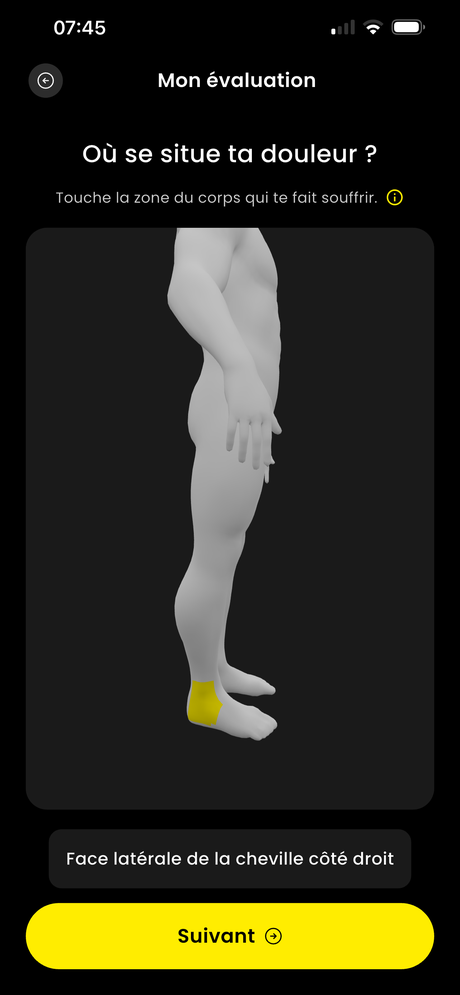
The pain is located on the Achilles tendon, often accompanied by noticeable morning stiffness that eases after a few minutes of walking. It’s triggered or worsened by running, especially uphill or downhill, and by climbing stairs. A localised thickening of the tendon may be palpable, sometimes with tenderness to touch.
Differential diagnosis
Several types of ankle and calf pain can look like Achilles tendinopathy:
- Sever’s disease, which mainly affects growing adolescents at the heel
- Calf muscle strain, with pain higher up, in the muscle belly
- Plantar fasciitis, with pain under the heel rather than on the tendon
Causes and risk factors
Achilles tendinopathy develops when load accumulates faster than the tendon can absorb it.[3]
Biomechanical and personal factors
- A too-rapid increase in training volume or intensity
- A stiff calf or limited ankle dorsiflexion mobility
- A recent change of terrain, footwear or running style
- A strength imbalance between the two legs
Which sports contribute to Achilles tendinopathy?
All sports involving repeated impact and propulsion place particular strain on this tendon:
- Running, especially on hard surfaces or uphill
- Football and basketball (jumping, sprinting)
- Tennis and racquet sports
- Hiking and trail running
- Dance
- Volleyball
Treating Achilles tendinopathy in rehab with a sports physio
The goal of treatment is to progressively strengthen the Achilles tendon to restore its capacity to absorb load, particularly through eccentric training, which is well documented scientifically for this condition.
- 1Reducing pain and managing load
- 2Ankle mobility
- 3Isometric strengthening
- 4Progressive concentric strengthening
- 5Eccentric strengthening
- 6Ankle proprioceptive work
- 7Correcting movement and footing
- 8Strengthening under sport-specific load
- 9Progressive return to running
- 10Return to competition
DEMONSTRATION
Video by Hemrick, co-founder of HOPP.
“It’s not that the tendon is fragile, it’s that the load needs to be better dosed and distributed.”
Eccentric strengthening, the cornerstone of treatment
Eccentric calf strengthening, particularly slow single-leg heel drops, is the most scientifically documented protocol for Achilles tendinopathy.[2] It’s complemented by broader work on the posterior chain and ankle stability.
In brief
- Eccentric calf strengthening
- Broader work on the posterior chain
- Progressive correction of running load
- Gradual return: mobility, then load, then sport
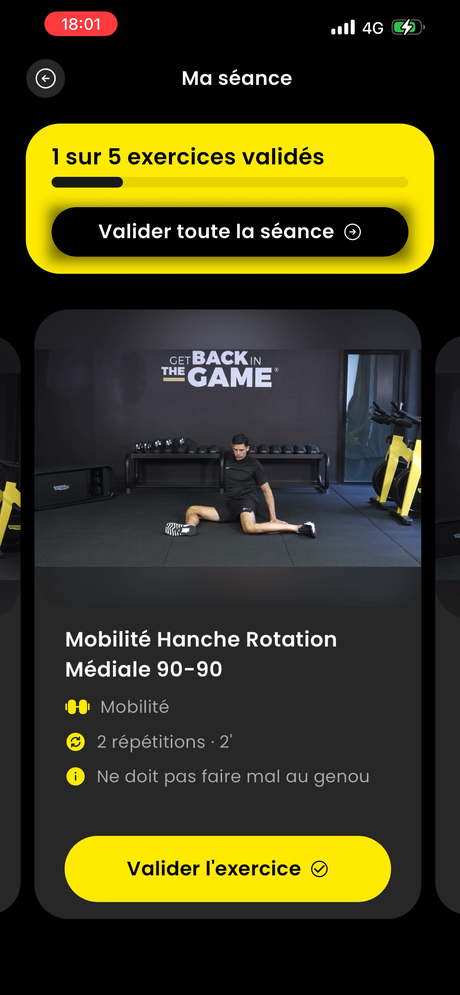
Ready to take your Achilles tendinopathy seriously?
Start the HOPP programme designed by sports physios.
Should you rest or keep playing sport?
Complete rest generally isn’t necessary and isn’t the most effective solution. It’s better to temporarily adjust the running or jumping volume that clearly reproduces the pain, while starting eccentric strengthening as soon as possible.
Think you might have a different ankle injury?
Take your free test in 3 minutes flat.
When should you see a specialist for Achilles tendinopathy?
If the pain persists for more than four to six weeks despite adjusting your activities and following a well-run strengthening programme, or if you feel a “snap” suggestive of a rupture, a medical opinion is recommended.
Expected recovery timeline for Achilles tendinopathy
This tendinopathy calls for patience: the Achilles tendon responds more slowly to treatment than other tendons, with gradual improvement typically spread over several weeks to a few months depending on how long the symptoms have been present.[4] How consistently you do the eccentric strengthening is the biggest factor in how fast you recover.
Preventing recurrence
Once the pain is under control, a few measures help stop it coming back:
- Keep up maintenance eccentric calf strengthening, even once symptoms are gone
- Increase training volume gradually, staying under around 10% per week
- Maintain good ankle dorsiflexion mobility
- Adapt terrain and footwear when returning to activity after a break
The HOPP care programmes to treat your Achilles tendinopathy and get back to sport
This tendinopathy requires rigorous, progressive eccentric strengthening. HOPP offers you a precise exercise programme, allowing you to get back to your activities as quickly as possible.
The programme runs from 3 to 9 weeks depending on the injury and ends with a reconditioning phase allowing a return to competition in the best possible conditions. Each programme is designed by the HOPP team, made up of two sports physiotherapists who are experts in assessing and treating athletes. You’ll also find theoretical content throughout your progression, so you master every aspect of your recovery and can adjust your treatment independently. If needed, our team of physiotherapists is on hand to support you.
Essential
FROM INJURY TO
BACK TO YOUR ACTIVITIES
59€
One-time payment
“AT YOUR OWN PACE WITH
DAILY ADAPTATION”
- 100% of the treatment programme
- Daily personalisation
- Flexibility / Mobility
- Strengthening
- Proprioception
- Progress tracking
- Return-to-running programme
- Theoretical content included
Performance
TO GET BACK TO SPORT
IN THE BEST CONDITIONS
79€
One-time payment
“GET BACK TO YOUR LEVEL
WITHOUT RISK OF RELAPSE”
- 100% of the treatment programme
- Daily personalisation
- Flexibility / Mobility
- Strengthening
- Proprioception
- Progress tracking
- Return-to-running programme
- Theoretical content included
- + 4-week return-to-play plan with 6 difficulty levels
Expert
PERSONALISED VIDEO-CALL
SUPPORT, ANY TIME
149€
One-time payment
“A PHYSIO
WHENEVER YOU NEED”
- 100% of the treatment programme
- Daily personalisation
- Flexibility / Mobility, Strengthening, Proprioception
- Progress tracking
- Return-to-running programme
- Theoretical content included
- + 4-week return-to-play plan with 6 difficulty levels
- + 2 video calls with an expert sports physio / return check-up
A programme that adapts to you every day
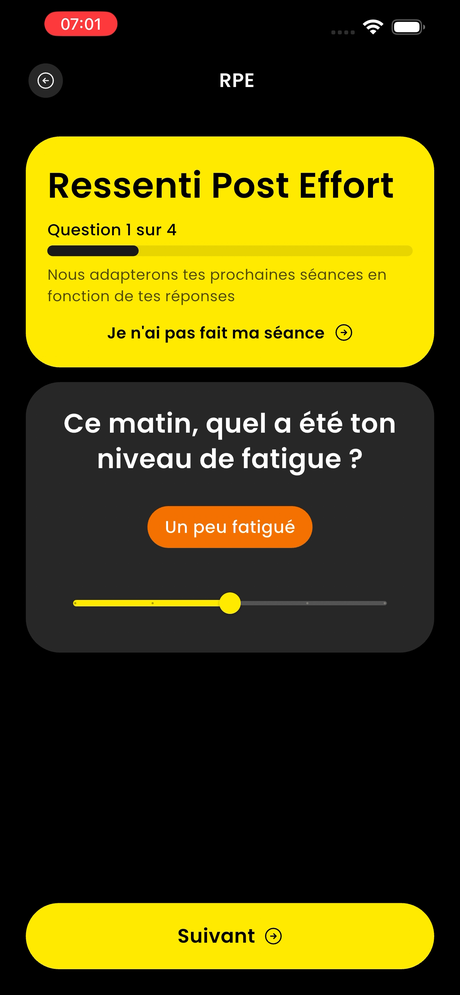
Every day, how you feel (RPE) is factored in to automatically adjust the rest of your programme: more load if all is well, a bit less if your ankle is complaining. This daily personalisation is what makes the difference compared to a fixed, paper-based programme.

Ready to start your programme?
Join the HOPP support programme designed by sports physios.
F.A.Q
Does the HOPP programme replace a medical consultation?
No. HOPP is a support and rehab tool designed by sports physiotherapists, but it doesn’t replace a doctor’s opinion. If in doubt, or if the pain persists, see a health professional.
Is the programme suited to all sporting levels?
Yes. Every programme is personalised to your sport, your level and how you feel each day, whether you’re a recreational athlete or preparing for competition.
Can I keep running with Achilles tendinopathy?
In most cases, yes, by temporarily adjusting your volume and terrain, while starting eccentric strengthening alongside it.
How long does it take to heal?
This tendinopathy can take longer to heal than others, with gradual improvement over several weeks to a few months depending on how long the symptoms have been present.
Is there a risk of rupture?
The risk mainly exists with a long-standing, neglected tendinopathy combined with a sudden intense effort.[4] That’s why it’s important to address the pain as soon as it appears rather than letting it settle in.
Should you wear heel lifts for Achilles tendinopathy?
They can temporarily ease insertional tendinopathy by reducing tension on the tendon, but they don’t replace eccentric strengthening, which remains the core treatment.
Can you prevent Achilles tendinopathy before it starts?
Yes, by increasing training loads gradually and keeping the calf strong and mobile, especially for runners returning after a break or ramping up volume quickly.
Scientific references
- Wong M, Jardaly AH, Kiel J. Anatomy, Bony Pelvis and Lower Limb: Achilles Tendon. StatPearls, NCBI Bookshelf, National Library of Medicine (NIH). ncbi.nlm.nih.gov/books/NBK499917
- Alfredson H, Pietilä T, Jonsson P, Lorentzon R. Heavy-load eccentric calf muscle training for the treatment of chronic Achilles tendinosis. American Journal of Sports Medicine, 1998;26(3):360-366. PubMed : pubmed.ncbi.nlm.nih.gov/9617396
- van der Vlist AC, Breda SJ, Oei EHG, Verhaar JAN, de Vos RJ. Clinical risk factors for Achilles tendinopathy: a systematic review. British Journal of Sports Medicine, 2019;53(21):1352-1361. PMC : pmc.ncbi.nlm.nih.gov/articles/PMC6837257
- Medina Pabón MA, Bergman R, Naqvi U. Achilles Tendinopathy. StatPearls, NCBI Bookshelf, National Library of Medicine (NIH). ncbi.nlm.nih.gov/books/NBK538149
This page is based on peer-reviewed scientific publications. It remains a general self-assessment tool and does not replace medical advice.