

What is Sever’s disease?
Heel growth plate anatomy
In growing children and teenagers, the heel bone (calcaneus) has a growth plate (apophysis) where the Achilles tendon attaches. Sever’s disease, or calcaneal apophysitis, is a painful inflammation of this growth zone, linked to repeated pulling of the Achilles tendon on a bone that’s still forming.
Why does this pain appear in young athletes?
Pain appears when sporting activity heavily loads the Achilles tendon at a time when the heel’s growth plate is particularly fragile, during a rapid growth spurt. A sudden increase in training volume, a recent growth spurt, or a tight calf are common contributing factors in young athletes aged roughly 8 to 14.[1]
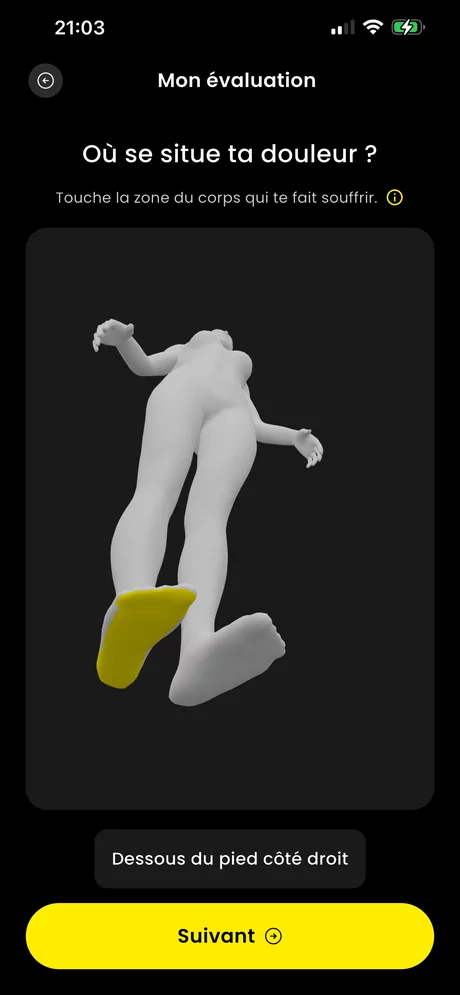
Symptoms and diagnosis of Sever’s disease
Typical signs
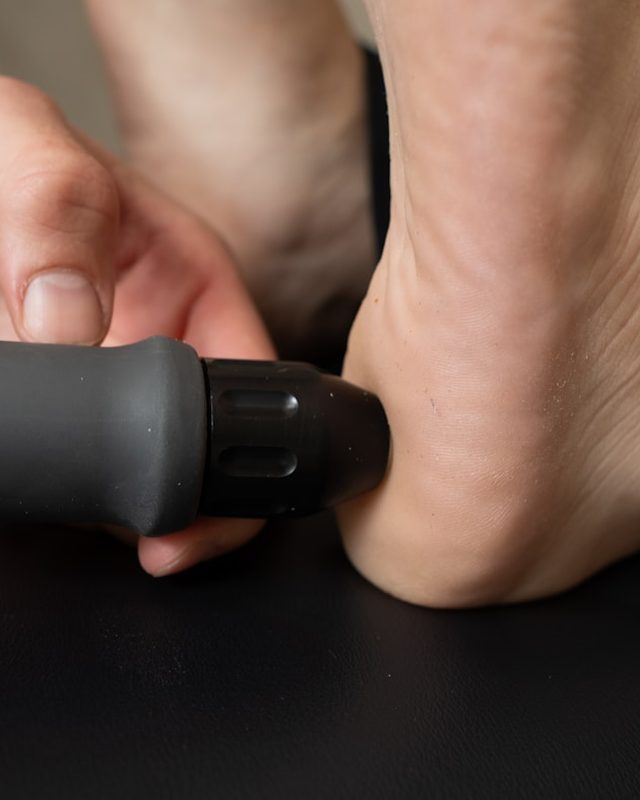
Heel pain, often bilateral, triggered or worsened at the end of activity or the day after intensive training, in a growing child aged roughly 8 to 14.[1] Pressing directly on the sides of the heel usually reproduces the pain.
Differential diagnosis
Other causes of heel pain can occur in young athletes:
- An Achilles tendinopathy, more centred on the tendon itself than the bone
- A calcaneal stress fracture, rarer, to consider if pain persists despite rest
Causes and risk factors
Sever’s disease occurs when sporting activity heavily loads a heel growth plate that’s still fragile.
Contributing factors
- A sudden increase in training volume
- A recent growth spurt
- A tight calf that increases the pull on the growth plate
- Sport involving repeated impact (running, jumping)
Which sports contribute to Sever’s disease?
All sports practised intensively by growing children and teenagers, involving repeated impact, are involved:
- Football
- Running and athletics
- Basketball and handball
- Dance
- Gymnastics
- Sports with repeated jumping and running
Managing Sever’s disease with a sports physio
The goal of care is to temporarily adapt training load to stay below the pain threshold, while working on calf flexibility and overall strengthening, until the heel finishes growing naturally.
- 1Managing pain and adapting load
- 2Gentle calf stretches
- 3Ankle mobility
- 4Light calf strengthening
- 5Progressive foot strengthening
- 6Age-appropriate proprioceptive work
- 7Progressive return to running
- 8Progressive return to jumping
- 9Progressive return to your sport
- 10Follow-up until the end of the growth period
“Sever’s disease isn’t cured, it’s managed, while growth does its work.”
Load management and flexibility, the cornerstones of care
Regularly stretching the calf, often shortened during growth spurts, reduces the pull on the heel’s growth plate. Light, age-appropriate strengthening, combined with smart management of training volume, helps keep sport comfortable during this period.
In brief
- Regular calf stretches
- Suitably managed training volume
- Light strengthening of the foot and calf
- Patience: the pain resolves once the heel finishes growing
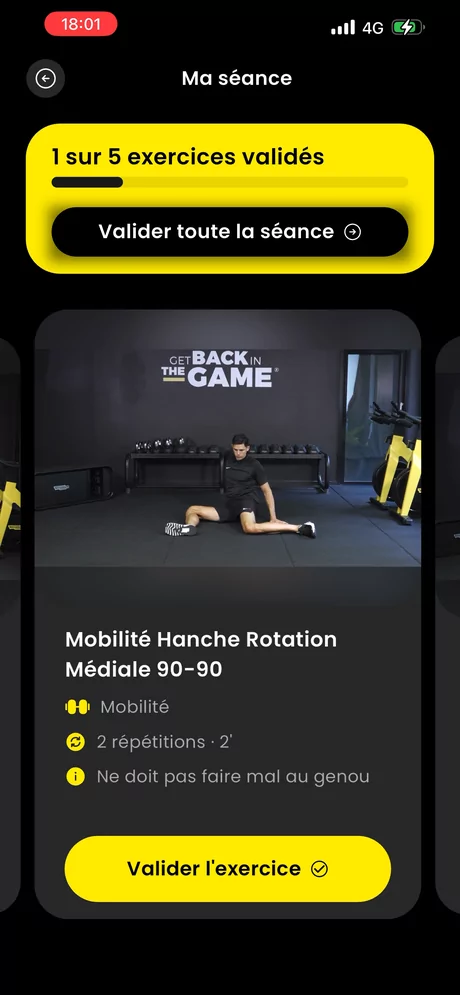
Ready to take your Sever’s disease seriously?
Start the HOPP programme designed by sports physios.
Should you rest or keep playing sport?
A complete stop to sport is generally neither necessary nor desirable for a child. It’s better to adapt training volume to stay below the pain threshold, rather than imposing a full stop that isn’t always well received at this age.
Think you might have a different foot injury?
Take your free test in 3 minutes flat.
When should you see a specialist for Sever’s disease?
A medical opinion is recommended to confirm what’s going on, especially when symptoms first appear, and to rule out other causes of heel pain in children. Pain that worsens despite adapting activity should also be reassessed.
Expected progression of Sever’s disease
Symptoms always resolve on their own once the heel has finished growing, generally around age 14-15. They can reappear in episodes during growth spurts, without this meaning things are getting worse.
Managing pain flare-ups
To limit discomfort during sensitive periods, several measures help:
- Stretch the calf regularly, especially after growth spurts
- Adapt training volume at the first signs of pain
- Avoid very hard surfaces for high-impact activities while pain is present
- Keep up regular sporting activity rather than a complete stop, which isn’t well received at this age
The HOPP care programmes to support Sever’s disease and keep the fun in sport
This growth condition requires patient support and smart management of sporting load. HOPP offers a suitable exercise programme, allowing your child to keep playing their sport in the best possible conditions during this period.
The programme runs from 3 to 9 weeks depending on the injury and ends with a reconditioning phase allowing a return to competition in the best possible conditions. Each programme is designed by the HOPP team, made up of two sports physiotherapists who are experts in assessing and treating athletes. You’ll also find theoretical content throughout your progression, so you master every aspect of your recovery and can adjust your treatment independently. If needed, our team of physiotherapists is on hand to support you.
Essential
FROM INJURY TO
BACK TO YOUR ACTIVITIES
59€
One-time payment
“AT YOUR OWN PACE WITH
DAILY ADAPTATION”
- 100% of the treatment programme
- Daily personalisation
- Flexibility / Mobility
- Strengthening
- Proprioception
- Progress tracking
- Return-to-running programme
- Theoretical content included
Performance
TO GET BACK TO SPORT
IN THE BEST CONDITIONS
79€
One-time payment
“GET BACK TO YOUR LEVEL
WITHOUT RISK OF RELAPSE”
- 100% of the treatment programme
- Daily personalisation
- Flexibility / Mobility
- Strengthening
- Proprioception
- Progress tracking
- Return-to-running programme
- Theoretical content included
- + 4-week return-to-play plan with 6 difficulty levels
Expert
PERSONALISED VIDEO-CALL
SUPPORT, ANY TIME
149€
One-time payment
“A PHYSIO
WHENEVER YOU NEED”
- 100% of the treatment programme
- Daily personalisation
- Flexibility / Mobility, Strengthening, Proprioception
- Progress tracking
- Return-to-running programme
- Theoretical content included
- + 4-week return-to-play plan with 6 difficulty levels
- + 2 video calls with an expert sports physio / return check-up
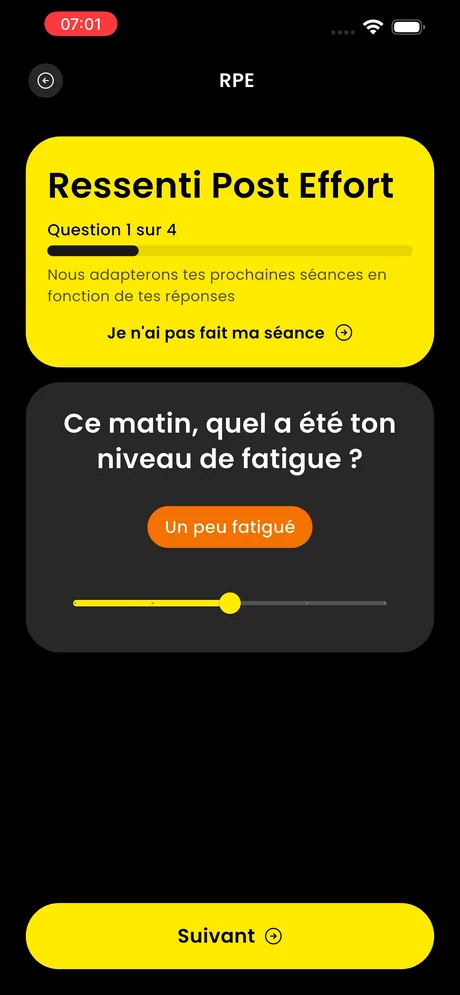
A programme that adapts to you every day
Every day, how you feel (RPE) is factored in to automatically adjust the rest of your programme: more load if all is well, a bit less if your heel is complaining. This daily personalisation is what makes the difference compared to a fixed, paper-based programme.

Ready to start your programme?
Join the HOPP support programme designed by sports physios.
F.A.Q
Does the HOPP programme replace a medical consultation?
No. HOPP is a support and rehab tool designed by sports physiotherapists, but it doesn’t replace a doctor’s opinion. If in doubt, or if the pain persists, see a health professional.
Is the programme suited to all sporting levels?
Yes. Every programme is personalised to your sport, your level and how you feel each day, whether you’re a recreational athlete or preparing for competition.
Does my child need to stop sport?
A complete stop is generally not necessary. It’s more effective to adapt training volume to stay below the pain threshold, while working on calf flexibility.
How long does Sever’s disease last?
Symptoms always resolve on their own once the heel has finished growing, generally around age 14-15, but can reappear in episodes during growth spurts.
Is it serious for my child’s sporting future?
No, Sever’s disease is a benign, temporary growth condition that leaves no lasting effects once the growth period is over.
How can you tell Sever’s disease apart from Achilles tendinopathy in a child?
Sever’s disease causes pain when pressing on the sides of the heel, on the bony area, whereas Achilles tendinopathy shows up more as pain along the tendon itself, a little higher up.
Can both heels be affected at the same time?
Yes, it’s actually common: Sever’s disease affects both heels in about one child in two, even though the pain can be more pronounced on one side.