

What is pes anserine tendinopathy?
Pes anserine anatomy
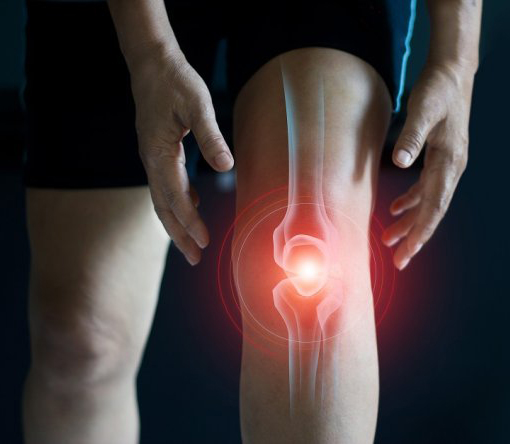
The pes anserine is the area where three tendons (gracilis, semitendinosus and sartorius) attach together on the inner side of the shin, just below the knee.[1] This shared, fan-shaped attachment resembles the shape of a goose’s foot, hence its name (“pes anserinus” in Latin). It plays a role in the knee’s inner stability and in knee flexion.
Why does this area become painful?
Tendinopathy appears when this attachment area is subjected to repeated friction or strain, particularly during running with the knee slightly rotated inward (valgus), or during repeated knee flexion movements against resistance. A lack of flexibility in the muscles involved increases tension on this shared attachment.
The 3 pes anserine muscles
- The gracilis, the longest of the three, running from the groin down to the shin
- The semitendinosus, one of the hamstrings
- The sartorius, the longest muscle in the human body[2]
Symptoms and diagnosis of pes anserine tendinopathy
Typical pain and its triggers
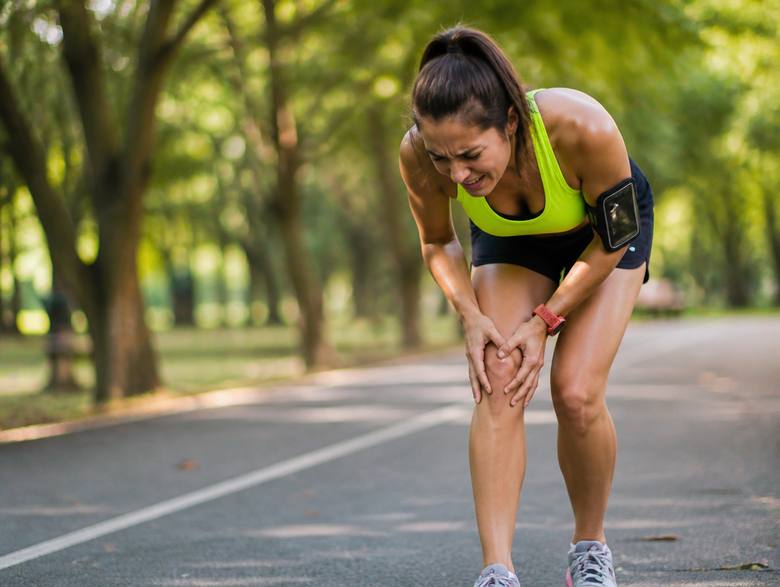
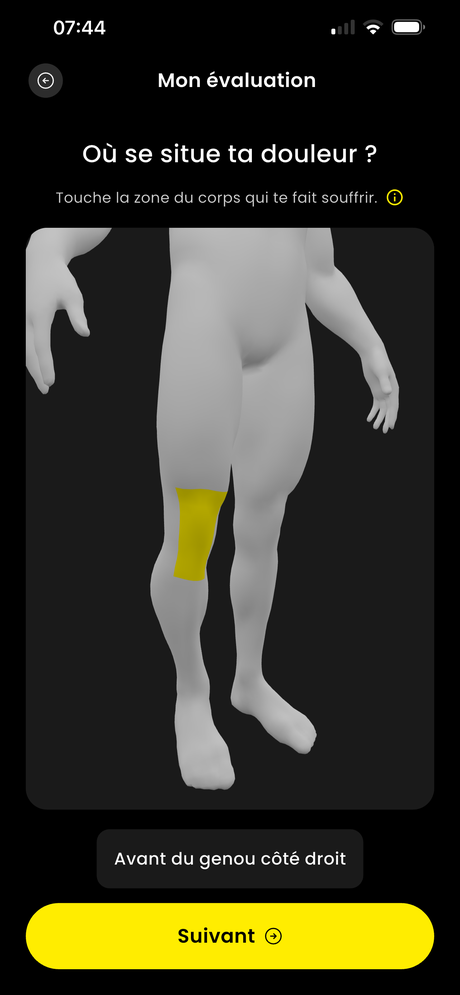
The pain sits on the inner side of the shin, just below the knee joint line, lower down and more forward than ligament pain. It’s classically triggered by running (especially downhill or with a valgus knee), breaststroke swimming, or knee flexion against resistance.
How symptoms progress without treatment
Without proper care, the pain tends to kick in after shorter and shorter running distances, or sooner during swimming, until it limits sports practice altogether.
Differential diagnosis
Several types of inner knee pain can resemble pes anserine tendinopathy:
- An MCL sprain, which follows a specific trauma, unlike the gradual overload of tendinopathy
- An inner meniscus injury, with deeper pain and sometimes locking
- Pes anserine bursitis, an inflammation of the small fluid-filled sac beneath the tendons
Causes and risk factors
Pes anserine tendinopathy results from repeated overload of this shared attachment area, often driven by lower-limb alignment issues.
Biomechanical and personal factors
- A dynamic valgus knee (that drifts inward under load)
- A lack of flexibility in the hamstrings, gracilis, or sartorius
- An unsuitable saddle position in cycling
- A breaststroke technique that places excessive demand on the whip-kick motion
Which sports contribute to pes anserine tendinopathy?
Sports involving repeated running or rotational knee flexion movements carry a particular risk:
- Running, particularly with a valgus knee
- Swimming, especially breaststroke (the whip-kick motion)
- Cycling with an unsuitable saddle position
- Football (striking, changes of direction)
- Sports with a lot of knee flexion against resistance
Why does inner knee pain appear for no apparent reason?
As with most tendinopathies, this pain most often results from a gradual overload of the attachment area, linked to an increase in running or swimming volume, with no single identifiable event.
Treating pes anserine tendinopathy in rehab with a sports physio
The goal of treatment is twofold: quickly ease the local pain, then restore this attachment area’s capacity to withstand the demands of your sport, without lasting effects.
Phase 1 – Pain reduction (isometric)
In the first few days, isometric work and temporarily reducing the movements that trigger pain most (breaststroke, running with valgus) often brings quick relief.
Phase 2 – Progressive strengthening (eccentric)
Eccentric strengthening of the pes anserine muscles, combined with correcting knee alignment, is the foundation of long-term treatment.
Phase 3 – Return to sport
The final phase progressively reintroduces running or swimming at full intensity before a complete return to training.
In practice, this programme breaks down into 10 concrete steps:
- 1Reducing local irritation
- 2Hip and knee mobility
- 3Targeted stretching of the muscles involved
- 4Pain-relieving isometric strengthening
- 5Progressive eccentric strengthening
- 6Correcting knee alignment under load
- 7Progressive reintroduction of running
- 8Working on swimming technique if relevant
- 9Progressive return to your sport
- 10Return to competition
“It’s not that the tendon is fragile, it’s that the load exceeded its capacity to adapt at a given moment.”
Strengthening, the cornerstone of treatment
Isometric then eccentric strengthening of the pes anserine muscles progressively restores this tendon attachment’s capacity to withstand load. Working on knee alignment under load (often linked to the hip) helps reduce the repeated strain behind the irritation.
In brief
- Isometric work first to calm the pain
- Progressive eccentric work to strengthen the tendon
- Correcting knee alignment under load
- Gradual return: mobility, then load, then sport
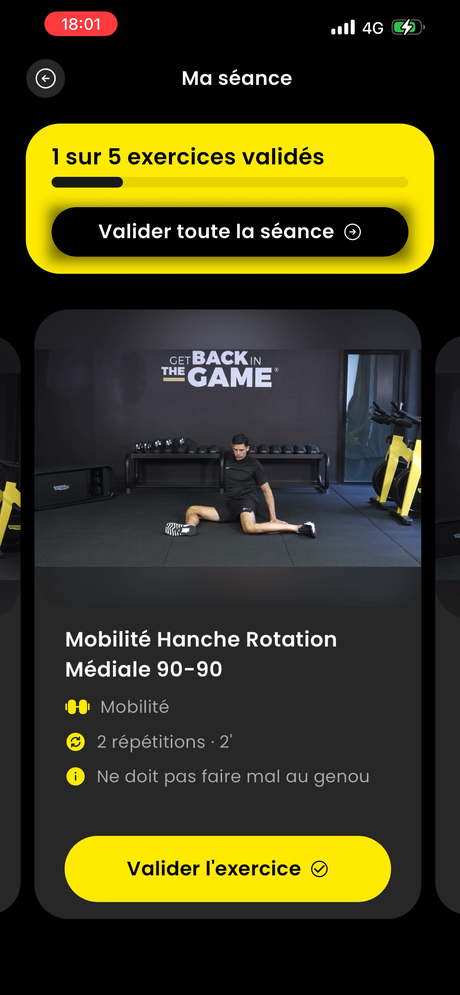
Ready to take your pes anserine tendinopathy seriously?
Start the HOPP programme designed by sports physios.
Should you rest or keep playing sport?
Total rest isn’t the solution. It’s better to adapt your activity during the acute phase: limit the movements that clearly reproduce the pain (running, breaststroke kick), while staying physically active and starting strengthening as soon as possible.
Think you might have a different knee injury?
Take your free test in 3 minutes flat.
When should you see a specialist for pes anserine tendinopathy?
If the pain persists for more than two to three weeks despite adapting your activities, or if you’re unsure about the exact cause of the inner knee pain, a medical opinion is recommended to rule out another cause, such as an issue with the medial collateral ligament or meniscus.
Recovery time: how long does it take to recover from pes anserine tendinopathy?
Most athletes see clear improvement within 4 to 8 weeks of well-run rehab, with a full return to running or swimming typically between 8 and 10 weeks.
Factors that speed up or slow down recovery
- How long the pain had been present before treatment started
- How consistently you keep up eccentric strengthening
- Correcting knee alignment or swimming technique
- Following the load progression properly when running
Preventing relapses
This tendinopathy comes back easily if strengthening isn’t kept up once the pain has gone.
The 10% progression rule
Not increasing your running or swimming volume by more than 10% per week gives this tendon attachment lasting protection.
Ongoing strengthening and flexibility
Regular hamstring strengthening and stretching of the pes anserine muscles, kept up even after you’ve recovered, helps prevent recurrence, particularly in runners with a dynamic knee valgus.
The HOPP care programmes to treat your pes anserine tendinopathy and get back to sport
Pes anserine tendinopathy requires a complete, progressive programme of care to heal durably. HOPP offers you a precise exercise programme, allowing you to get back to your activities as quickly as possible. By combining stretching, mobility, isometric and eccentric strengthening, and training management, HOPP supports you all the way back to the field.
The programme runs from 3 to 9 weeks depending on the injury and ends with a reconditioning phase allowing a return to competition in the best possible conditions. Each programme is designed by the HOPP team, made up of two sports physiotherapists who are experts in assessing and treating athletes. You’ll also find theoretical content throughout your progression, so you master every aspect of your recovery and can adjust your treatment independently. If needed, our team of physiotherapists is on hand to support you.
Essential
FROM INJURY TO
BACK TO YOUR ACTIVITIES
59€
One-time payment
“AT YOUR OWN PACE WITH
DAILY ADAPTATION”
- 100% of the treatment programme
- Daily personalisation
- Flexibility / Mobility
- Strengthening
- Proprioception
- Progress tracking
- Return-to-running programme
- Theoretical content included
Performance
TO GET BACK TO SPORT
IN THE BEST CONDITIONS
79€
One-time payment
“GET BACK TO YOUR LEVEL
WITHOUT RISK OF RELAPSE”
- 100% of the treatment programme
- Daily personalisation
- Flexibility / Mobility
- Strengthening
- Proprioception
- Progress tracking
- Return-to-running programme
- Theoretical content included
- + 4-week return-to-play plan with 6 difficulty levels
Expert
PERSONALISED VIDEO-CALL
SUPPORT, ANY TIME
149€
One-time payment
“A PHYSIO
WHENEVER YOU NEED”
- 100% of the treatment programme
- Daily personalisation
- Flexibility / Mobility, Strengthening, Proprioception
- Progress tracking
- Return-to-running programme
- Theoretical content included
- + 4-week return-to-play plan with 6 difficulty levels
- + 2 video calls with an expert sports physio / return check-up
A programme that adapts to you every day
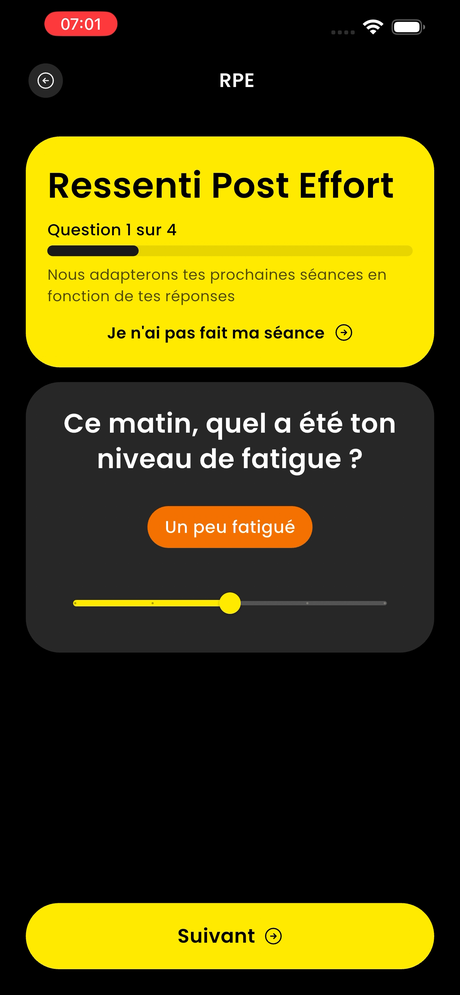
Every day, how you feel (RPE) is factored in to automatically adjust the rest of your programme: more load if all is well, a bit less if your tendon is complaining. This daily personalisation is what makes the difference compared to a fixed, paper-based programme.

Ready to start your programme?
Join the HOPP support programme designed by sports physios.
F.A.Q
Pes anserine tendinopathy or an MCL sprain, how can you tell the difference?
Both cause pain on the inner side of the knee, but pes anserine tendinopathy is lower down on the shin and linked to overuse, whereas an MCL sprain follows a specific trauma. A sports physio can tell the difference through palpation and examination.
Can I keep playing sport with pes anserine tendinopathy?
Yes, in most cases, by temporarily adapting the movements that reproduce the pain and starting strengthening as soon as possible rather than stopping completely.
How long does it take to recover from pes anserine tendinopathy?
It depends on how long you’ve had the pain. A structured programme generally brings clear improvement within a few weeks, followed by a full, progressive return to sport.
Do you need to change your breaststroke technique?
Not necessarily change it completely, but temporarily reducing the amplitude of the whip-kick motion and reviewing your knee placement with a coach can help limit the overload on this tendon attachment.
Can knee valgus be corrected?
Strengthening the hip muscles and motor control work often reduce excessive dynamic valgus under load, even though it doesn’t always disappear completely.
Does the HOPP programme replace a medical consultation?
No. HOPP is a support and rehab tool designed by sports physiotherapists, but it doesn’t replace a doctor’s opinion. If in doubt, or if the pain persists, see a health professional.
Is the programme suited to all sporting levels?
Yes. Every programme is personalised to your sport, your level and how you feel each day, whether you’re a recreational athlete or preparing for competition.
Scientific references
- Mohseni M, Mabrouk A, Li D. Pes Anserine Bursitis. StatPearls, NCBI Bookshelf, National Library of Medicine (NIH). ncbi.nlm.nih.gov/books/NBK532941
- Walters BB, Varacallo MA. Anatomy, Bony Pelvis and Lower Limb: Thigh Sartorius Muscle. StatPearls, NCBI Bookshelf, National Library of Medicine (NIH). ncbi.nlm.nih.gov/books/NBK532889
This page is based on peer-reviewed scientific publications. It remains a general self-assessment tool and does not replace medical advice.