


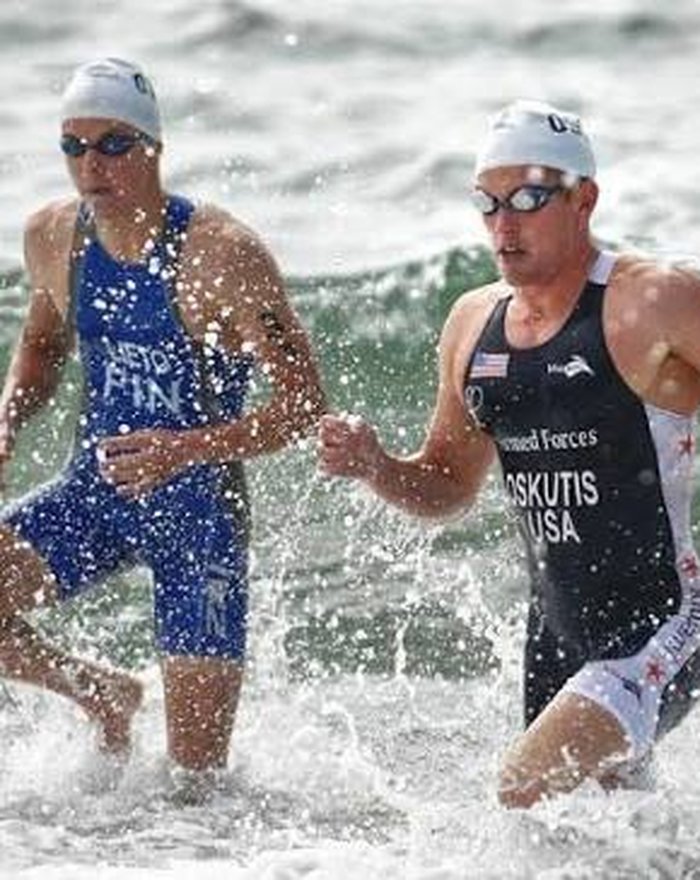
Triathlon stacks the strain of three sports with very different injury mechanisms: the shoulder in swimming, the knee and back in cycling, the tendons and weight-bearing joints in running. That’s what makes it a complete sport, but one where the body never really gets full recovery time between disciplines. HOPP was designed by FIFA-certified sports physios to help you understand your injury and get back to it without getting hurt a second time.
The most common triathlon injuries
The combination of the three disciplines exposes you to a range of overuse injuries, affecting the shoulder as much as the knee or the Achilles tendon.
The most common, and why
Patellofemoral pain syndrome
— knee overload combined from cycling and running.Achilles tendinopathy
— common on the run leg, especially straight off the bike (brick sessions).Supraspinatus tendinopathy
— linked to swim volume, often the least technically mastered discipline.Shin splints
— common when returning to running too intensely after a bike-dominant phase.Iliotibial band syndrome
— outer knee overuse, combined from cycling and running.

Find your triathlon injury
9 triathlon-related injuries are covered by the HOPP app. Select the one that matches your situation to access dedicated content: how the injury happens, the likely cause, and a suitable programme.
Not sure exactly what you have?
Take the HOPP test and get a clear answer about your injury.
Cause #1: poorly managed combined load across the three disciplines
Poorly adjusted equipment, imperfect technique in one discipline: these factors play a role, but the most common cause of triathlon injuries lies elsewhere. In the vast majority of cases, it’s the TOTAL training volume (swim + bike + run combined) that exceeds recovery capacity, far more than any single discipline taken in isolation.
The most common pacing mistakes
Adding up the volumes of all three disciplines without reducing one when another increases
Stacking brick sessions (bike then run) too early in training
Neglecting the least technically mastered discipline (often swimming)
Not allowing enough full recovery days between training blocks
HOPP physio tip
before blaming just one discipline, the first question to ask yourself is almost always the same: what is my TOTAL training volume for the week, across all disciplines combined? That’s the factor most often at fault, and also the easiest to fix once identified.
The risks of doing nothing
Continuing to train without understanding what’s going on is never a good strategy. Without proper care, a triathlon injury almost always follows the same script.
What you risk without proper care
An injury that gets worse if you keep training without adjusting your overall load
A longer recovery period than with prompt care
A higher risk of relapse on your return, if the cause hasn’t been treated
HOPP takes care of every triathlete profile
An athlete training for an Ironman, a beginner on a sprint-distance event, someone new to this three-sport combination: every profile has different needs, but none is left out by HOPP.
The profiles HOPP supports
How HOPP supports you, day after day
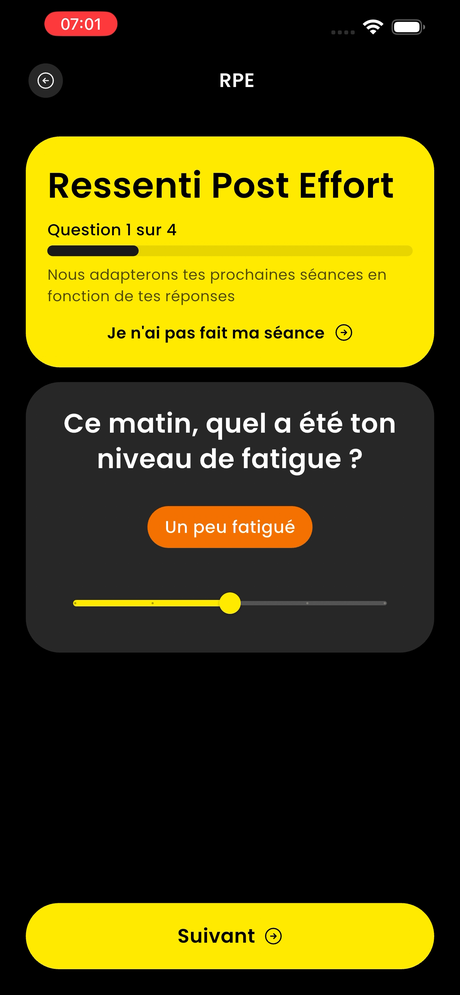
Since combined load across the three disciplines is the leading cause of triathlon injuries, it’s also the first thing HOPP helps you manage better. Every morning, you indicate how you feel, and your programme adjusts accordingly: a bit more load if all is well, a bit less if an area is complaining, across all disciplines. The programme helps you find the right balance, week after week.

Good to know
HOPP is an injury information tool designed by sports physiotherapists. It doesn’t replace a doctor’s opinion.
Frequently asked questions
Does HOPP replace a medical consultation?
No. HOPP is an injury information tool designed by sports physiotherapists, it doesn’t replace a doctor’s opinion. It gives you clear, quick guidance to understand your situation and know how to act, and directs you to a professional if needed.
Do I need to stop triathlon completely during the programme?
Not necessarily. The programme adapts to your injury and how you feel each day: depending on the case, just one discipline may be temporarily reduced while the other two continue, rather than stopping everything at once.
I’m just starting out in triathlon, is HOPP right for me?
Yes. The programme is calibrated to your actual practice, whether you’re just starting out or have been training for long-distance events for years. It’s not designed only for experienced triathletes.
How long before I feel an improvement?
It depends on the injury and how long you’ve had it. You get a first clear explanation in 3 minutes, then the care programme gives you a realistic return trajectory, adjusted every day based on how you feel.
What if my condition doesn’t improve with the programme?
You can talk it through by teleconsultation with an expert sports physiotherapist to review your situation. HOPP also directs you to a medical consultation if your symptoms require it.
Is the 3-minute test really free?
Yes, the test that explains your injury is free and with no commitment. You then freely choose whether you want to start a suitable care programme.
Ready to get back to triathlon without delay?
Start your personalised programme today, without waiting.