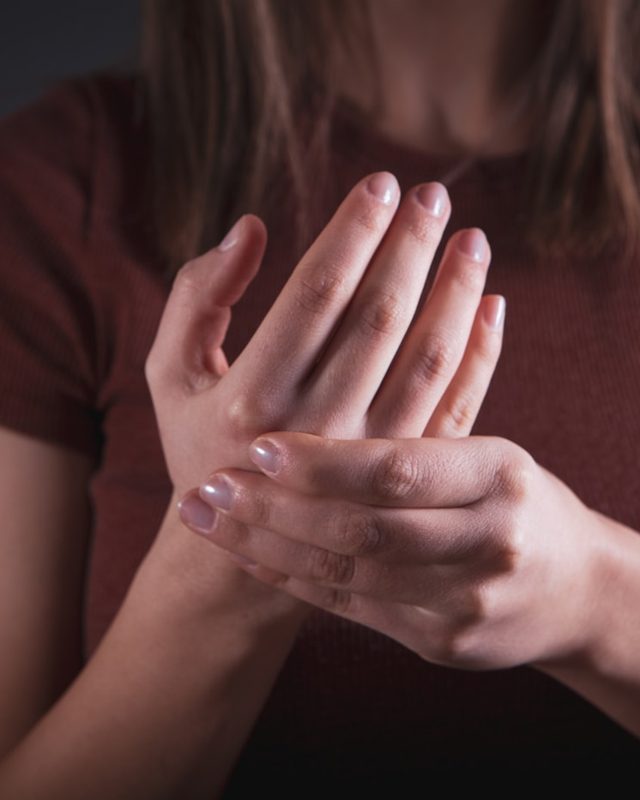


What are long-term after-effects on the wrist?
Understanding where your pain really comes from
Pain that shows up in the wrist doesn’t always start in the wrist. An old elbow injury, even one that seems to have healed well, can leave residual stiffness in rotation (pronation-supination) that quietly changes how the wrist handles every weight-bearing or gripping movement. We talk about “long-term after-effects” when the consequence of an old injury shows up, months or years later, in a different area from the one originally affected.[1]
Why does the pain appear in the wrist rather than the elbow?
After an old elbow injury, even one well treated at the time, residual stiffness in forearm rotation can persist without ever causing pain in the elbow itself. The wrist then has to compensate for this lack of rotation with every gripping or weight-bearing movement: it’s this repeated overload, transmitted from one joint to another, that eventually becomes painful in the wrist, long after the elbow was declared healed.[2]
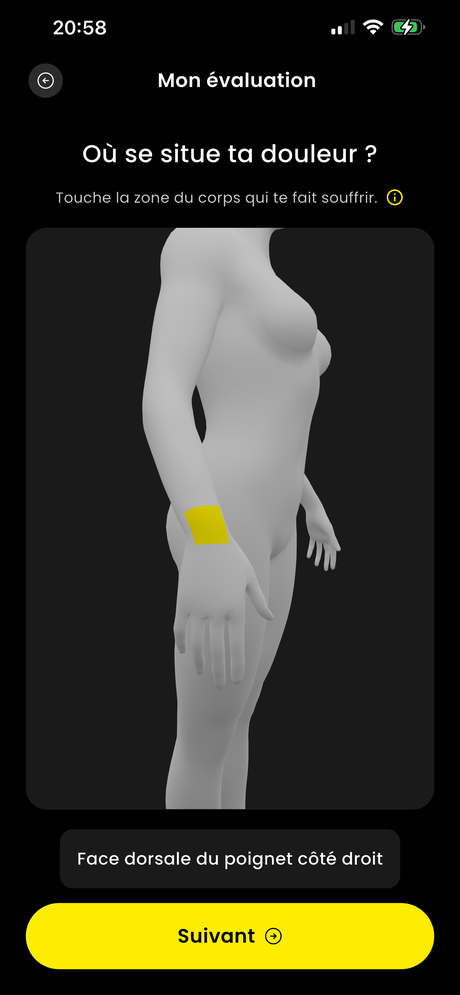
Which sports most often reveal this pain?
Any sport that places intense demand on the wrist, particularly weight-bearing or gripping, can reveal this old deficit carried over from the elbow to the wrist:
- Gymnastics
- CrossFit and weightlifting
- Skateboarding and other board sports
- Tennis and racquet sports
- Handball and basketball
- Combat sports
Symptoms and diagnosis
Warning signs to watch for
This wrist after-effect has a few characteristic signs: wrist pain that appears under load (push-ups, planks, landing) or during a strong grip, while the elbow itself stays pain-free at rest and on palpation. You’ll often find reduced grip strength on the affected side, along with forearm rotation stiffness (pronation-supination) that athletes rarely notice on their own, since it’s built up so gradually since the old injury.
Differential diagnosis
Other wrist conditions can cause similar pain and are worth ruling out before concluding on a referred cause: a wrist joint condition, carpal tunnel syndrome, or De Quervain’s tendinopathy. The comparative forearm rotation assessment described above usually settles the question by revealing the residual elbow deficit.
Causes and risk factors
An old elbow injury that wasn’t fully recovered
The most common cause is a fracture, dislocation or severe sprain of the elbow that was properly treated at the time, but whose full rotation recovery was never checked at the end of the initial rehab. The residual deficit, often minor and painless, then goes unnoticed until a sport that places heavy demand on the wrist reveals it, sometimes months or years later.[2]
Sports that place heavy compensatory demand on the wrist
Sports involving straight-arm weight-bearing, strong grip or repeated forearm rotation (like those listed above) increase the load transmitted to the wrist when the elbow no longer plays its full part in rotation. The more intensive the practice, the earlier the wrist starts compensating, and the more likely pain becomes.
Treating this referred pain in rehab with a sports physio
The goal of treatment isn’t to focus solely on the painful wrist, but to identify and treat the underlying residual elbow deficit, removing the cause of the overload rather than just relieving the symptom.
- 1Assessing current function
- 2Recovering full mobility
- 3Isometric strengthening
- 4Progressive concentric strengthening
- 5Proprioceptive work
- 6Eccentric strengthening
- 7Correcting established compensations
- 8Strengthening under sport-specific load
- 9Progressive return to your sport
- 10Return to competition
“Pain sometimes shows up far from where the problem actually began.”
Recovering elbow mobility, the cornerstone of treatment
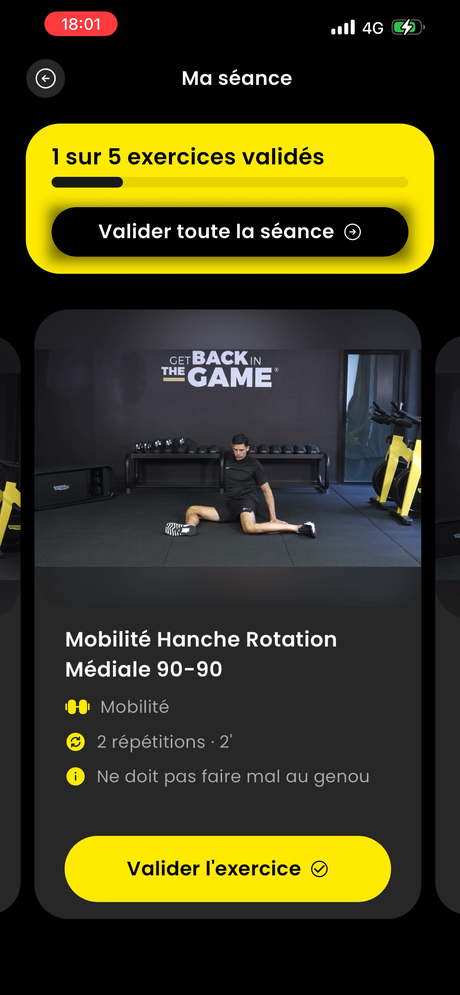
Working on forearm rotation mobility restores the range of motion that’s been missing since the old elbow injury, which directly reduces the overload transmitted to the wrist with every grip or weight-bearing movement.
In brief
- Full assessment of the elbow, the real root of the problem
- Recovering forearm rotation
- Correcting the established compensation at the wrist
- Gradual return: mobility, then load, then sport
Ready to take this old, referred injury seriously?
Start the HOPP programme designed by sports physios.
Should you rest or keep playing sport?
Resting the wrist alone generally isn’t enough if the underlying elbow deficit isn’t treated: it’s targeted work on the elbow, combined with suitably managed load, that resolves the pain for good.
Think you might have a different wrist or hand injury?
Take your free test in 3 minutes flat.
When should you see a specialist for this pain?
If the wrist pain persists despite work on the elbow, or is accompanied by swelling, mechanical locking or clear instability when bearing weight, a medical opinion is recommended to rule out another local cause.
Recovery time and preventing recurrence
Once the elbow rotation deficit is identified, recovering it usually takes a few weeks of consistent work before the wrist stops being called on to compensate. Wrist pain generally eases off before elbow mobility is fully restored, which can tempt you to stop the work too soon: that’s exactly the phase where relapse happens, as long as full range hasn’t been regained on both sides.
To prevent this type of after-effect from happening again, it’s worth regularly comparing the rotation of both forearms after any elbow injury, even a minor one, and not considering rehab finished while a residual deficit remains, whether it’s painful or not.
The HOPP care programmes to treat the root of your pain and get back to sport
This pain requires treating the elbow, the real root of the problem, not just the wrist. HOPP offers you a precise exercise programme, allowing you to get back to your activities as quickly as possible.
The programme runs from 3 to 9 weeks depending on the injury and ends with a reconditioning phase allowing a return to competition in the best possible conditions. Each programme is designed by the HOPP team, made up of two sports physiotherapists who are experts in assessing and treating athletes. You’ll also find theoretical content throughout your progression, so you master every aspect of your recovery and can adjust your treatment independently. If needed, our team of physiotherapists is on hand to support you.
Essential
FROM INJURY TO
BACK TO YOUR ACTIVITIES
59€
One-time payment
“AT YOUR OWN PACE WITH
DAILY ADAPTATION”
- 100% of the treatment programme
- Daily personalisation
- Flexibility / Mobility
- Strengthening
- Proprioception
- Progress tracking
- Return-to-running programme
- Theoretical content included
Performance
TO GET BACK TO SPORT
IN THE BEST CONDITIONS
79€
One-time payment
“GET BACK TO YOUR LEVEL
WITHOUT RISK OF RELAPSE”
- 100% of the treatment programme
- Daily personalisation
- Flexibility / Mobility
- Strengthening
- Proprioception
- Progress tracking
- Return-to-running programme
- Theoretical content included
- + 4-week return-to-play plan with 6 difficulty levels
Expert
PERSONALISED VIDEO-CALL
SUPPORT, ANY TIME
149€
One-time payment
“A PHYSIO
WHENEVER YOU NEED”
- 100% of the treatment programme
- Daily personalisation
- Flexibility / Mobility, Strengthening, Proprioception
- Progress tracking
- Return-to-running programme
- Theoretical content included
- + 4-week return-to-play plan with 6 difficulty levels
- + 2 video calls with an expert sports physio / return check-up
A programme that adapts to you every day
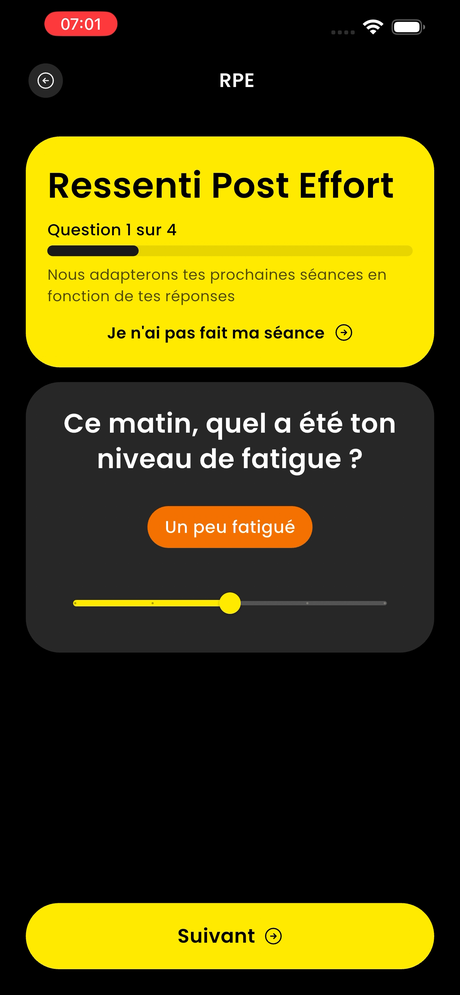
Every day, how you feel (RPE) is factored in to automatically adjust the rest of your programme: more load if all is well, a bit less if your wrist is complaining. This daily personalisation is what makes the difference compared to a fixed, paper-based programme.

Ready to start your programme?
Join the HOPP support programme designed by sports physios.
F.A.Q
Does the HOPP programme replace a medical consultation?
No. HOPP is a support and rehab tool designed by sports physiotherapists, but it doesn’t replace a doctor’s opinion. If in doubt, or if the pain persists, see a health professional.
Is the programme suited to all sporting levels?
Yes. Every programme is personalised to your sport, your level and how you feel each day, whether you’re a recreational athlete or preparing for competition.
Why does my wrist hurt when the problem is actually my elbow?
Forearm rotation stiffness, even old and painless, forces the wrist to constantly compensate for this lack of movement. This repeated overload eventually becomes painful in the wrist, long after the elbow appeared to have healed.
Should I treat my wrist or my elbow?
Both: relieve the wrist pain in the short term, but above all treat the underlying elbow deficit to stop the pain coming back.
How can I know if my elbow is really the cause?
A side-to-side comparison of forearm rotation generally reveals the residual deficit behind the overload at the wrist.
How long does it take for wrist pain to go away?
The pain often eases within a few weeks once the elbow rotation deficit is addressed, but it’s important to keep working until full range of motion is recovered to avoid a relapse.
Can I keep playing sport while rehabbing my elbow?
In most cases, yes, by temporarily adapting the movements that reproduce the wrist pain, until elbow mobility is restored and the compensation disappears.