

What is shoulder bursitis?
Subacromial bursa anatomy
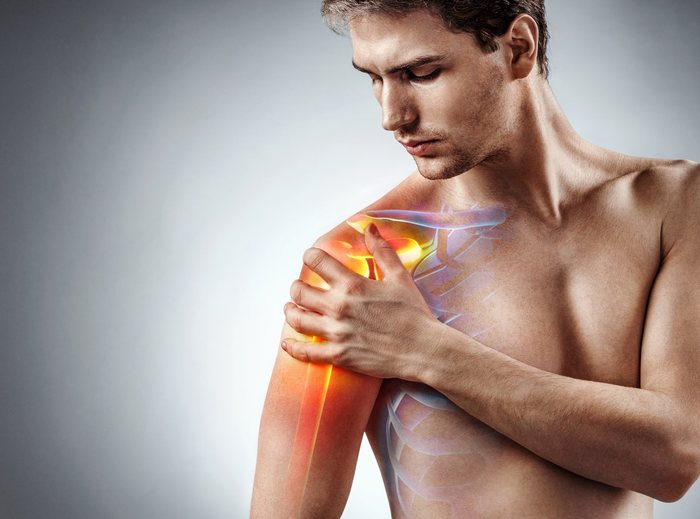
The subacromial bursa is a small fluid-filled sac located between the supraspinatus tendon and the acromion. Its role is to limit friction between these structures during shoulder movements. Bursitis is inflammation of this sac, often secondary to overload or repeated friction in the subacromial space.[1]
Why does this bursa become inflamed?
Bursitis most often appears alongside subacromial impingement or rotator cuff tendinopathy: the narrowed subacromial space increases friction on the bursa with every arm-raising movement.[1] Repeated overload, a shoulder muscle imbalance, or sometimes a direct blow can also trigger the inflammation.
Symptoms and diagnosis of shoulder bursitis
Typical pain and its triggers
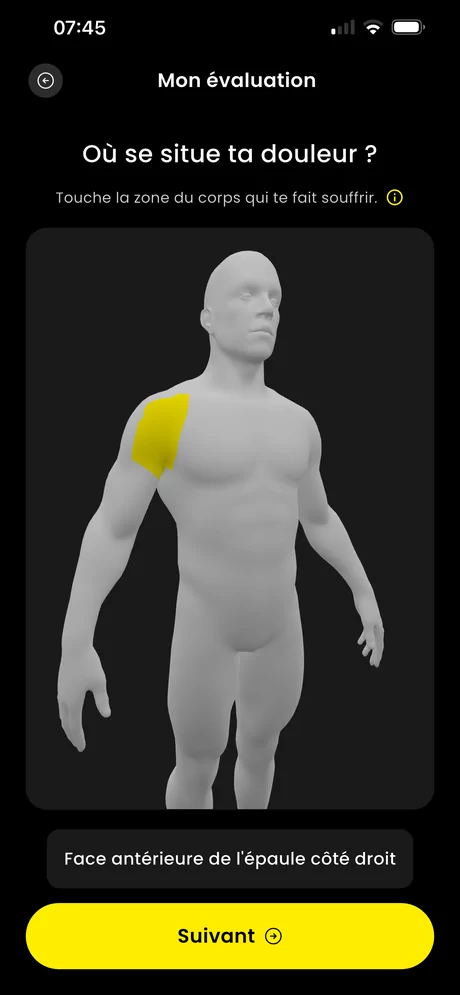
The pain classically kicks in during a “painful arc” between 60° and 120° of raising the arm out to the side, sometimes accompanied by a feeling of local swelling or warmth.[2]
How symptoms progress without treatment
Without addressing the underlying cause, bursitis tends to come back as soon as the arm is used in elevation again, and an inflammation-pain-avoidance cycle can set in.
Differential diagnosis
Several shoulder conditions can look like bursitis :
- Supraspinatus tendinopathy, often associated with bursitis rather than entirely separate from it
- Frozen shoulder, with more pronounced overall stiffness than isolated bursitis
- Infectious bursitis, rarer, to consider if there’s associated redness, warmth and fever
Causes and risk factors
Shoulder bursitis is rarely isolated : it most often accompanies a subacromial space that’s been narrowed by other factors.
Biomechanical and personal factors
- A lack of strength or control in the rotator cuff
- Rounded shoulder posture that narrows the subacromial space
- Too rapid an increase in the volume of overhead movements
- A history of subacromial impingement or rotator cuff tendinopathy
Which sports contribute to shoulder bursitis?
Any sport that repeatedly raises the arm exposes you to this bursitis[3]:
- Swimming and water polo
- Tennis and badminton
- Volleyball and handball
- Weight training with overhead presses
- Weightlifting
- CrossFit with repeated overhead movements
Why does shoulder pain appear without an obvious reason?
Bursitis most often results from a gradual overload of the subacromial space, linked to an increase in the volume of overhead movements, rather than an identifiable blow.
Treating shoulder bursitis in rehab with a sports physio
The goal of treatment is to reduce local inflammation and, above all, increase the subacromial space to remove the cause of the friction, by working on mobility and rotator cuff strengthening.
- 1Reducing pain and managing load
- 2Shoulder and shoulder-blade mobility
- 3Isometric strengthening
- 4Progressive concentric strengthening
- 5Eccentric strengthening
- 6Rotator cuff work
- 7Correcting sporting technique
- 8Strengthening under sport-specific load
- 9Progressive return to your sport
- 10Return to competition
DEMONSTRATION
Video by Hemrick, co-founder of HOPP.
“Treating bursitis without treating its cause is treating the symptom and letting the problem come back.”
Strengthening, the cornerstone of treatment
Strengthening the rotator cuff and shoulder blade stabilisers increases the subacromial space and durably reduces friction on the bursa. Postural work is also useful for limiting the rounded-shoulder posture that worsens the impingement.
In brief
- Rotator cuff strengthening
- Strengthening the shoulder blade stabilisers
- Associated postural correction
- Gradual return: mobility, then load, then sport
Ready to take your shoulder bursitis seriously?
Start the HOPP programme designed by sports physios.
Should you rest or keep playing sport?
Total rest is generally not necessary. It’s better to temporarily adapt your activity by reducing the overhead movements that clearly reproduce the pain, while starting rotator cuff strengthening as soon as possible.
Think you might have a different shoulder injury?
Take your free test in 3 minutes flat.
When should you see a specialist for shoulder bursitis?
If the pain persists for more than three to four weeks despite adapting your activities, or if the shoulder becomes red, warm and very swollen (suggestive of infectious bursitis, rarer), a medical consultation is recommended.
Recovery time: how long does it take to recover from shoulder bursitis?
Most athletes notice a clear improvement within 4 to 6 weeks of well-managed rehab, with a full return to overhead movements typically between 6 and 10 weeks.
Factors that speed up or slow down recovery
- Addressing the underlying cause (cuff, posture)
- Consistency in rotator cuff strengthening
- Sticking to a gradual load progression on overhead movements
- Associated postural correction
Preventing recurrence
Bursitis comes back easily if its underlying cause isn’t thoroughly addressed.
The 10% progression rule
Not increasing your volume of overhead movements by more than 10% a week durably protects the subacromial space.
Maintaining rotator cuff strength
Regular work on the rotator cuff and shoulder blade stabilisers, kept up even after the pain disappears, helps maintain a sufficient subacromial space and prevent recurrence.
The HOPP care programmes to treat your shoulder bursitis and get back to sport
This bursitis requires working on its underlying cause to prevent recurrence. HOPP offers you a precise exercise programme, allowing you to get back to your activities as quickly as possible.
The programme runs from 3 to 9 weeks depending on the injury and ends with a reconditioning phase allowing a return to competition in the best possible conditions. Each programme is designed by the HOPP team, made up of two sports physiotherapists who are experts in assessing and treating athletes. You’ll also find theoretical content throughout your progression, so you master every aspect of your recovery and can adjust your treatment independently. If needed, our team of physiotherapists is on hand to support you.
Essential
FROM INJURY TO
BACK TO YOUR ACTIVITIES
59€
One-time payment
“AT YOUR OWN PACE WITH
DAILY ADAPTATION”
- 100% of the treatment programme
- Daily personalisation
- Flexibility / Mobility
- Strengthening
- Proprioception
- Progress tracking
- Return-to-running programme
- Theoretical content included
Performance
TO GET BACK TO SPORT
IN THE BEST CONDITIONS
79€
One-time payment
“GET BACK TO YOUR LEVEL
WITHOUT RISK OF RELAPSE”
- 100% of the treatment programme
- Daily personalisation
- Flexibility / Mobility
- Strengthening
- Proprioception
- Progress tracking
- Return-to-running programme
- Theoretical content included
- + 4-week return-to-play plan with 6 difficulty levels
Expert
PERSONALISED VIDEO-CALL
SUPPORT, ANY TIME
149€
One-time payment
“A PHYSIO
WHENEVER YOU NEED”
- 100% of the treatment programme
- Daily personalisation
- Flexibility / Mobility, Strengthening, Proprioception
- Progress tracking
- Return-to-running programme
- Theoretical content included
- + 4-week return-to-play plan with 6 difficulty levels
- + 2 video calls with an expert sports physio / return check-up
A programme that adapts to you every day
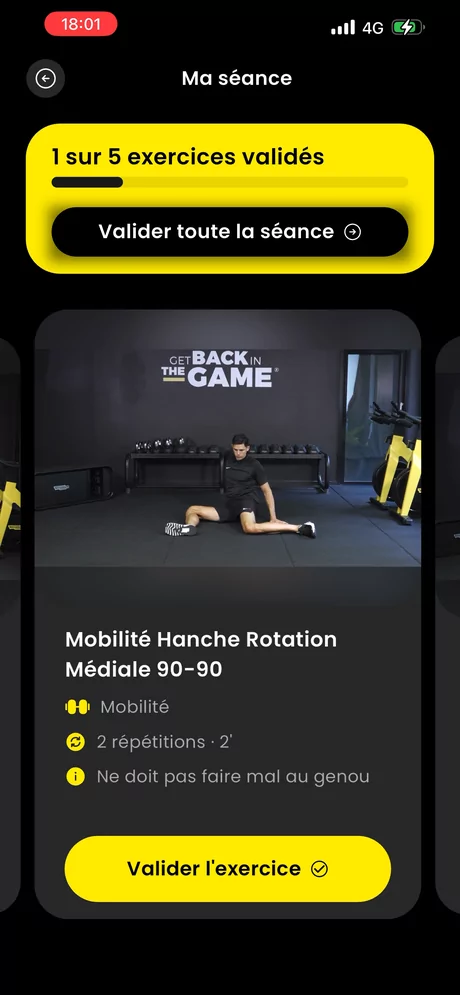
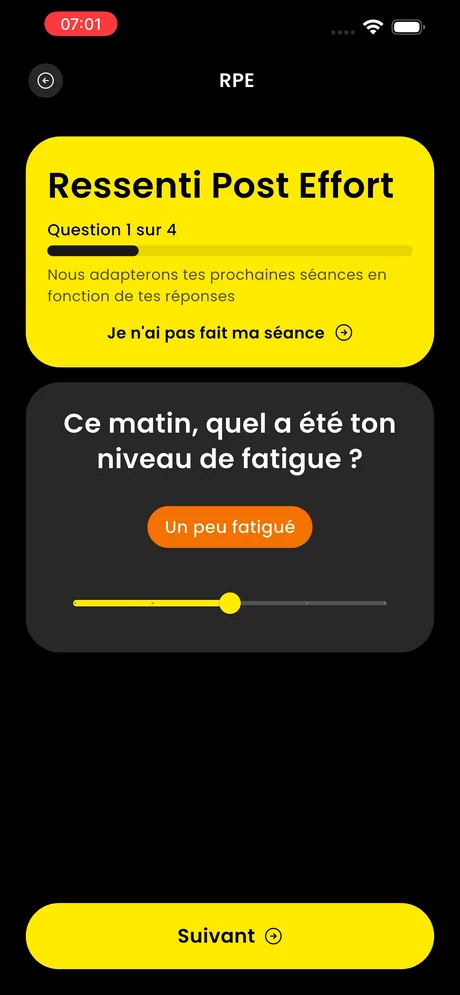
Every day, how you feel (RPE) is factored in to automatically adjust the rest of your programme: more load if all is well, a bit less if your shoulder is complaining. This daily personalisation is what makes the difference compared to a fixed, paper-based programme.

Ready to start your programme?
Join the HOPP support programme designed by sports physios.
F.A.Q
Does the HOPP programme replace a medical consultation?
No. HOPP is a support and rehab tool designed by sports physiotherapists, but it doesn’t replace a doctor’s opinion. If in doubt, or if the pain persists, see a health professional.
Is the programme suited to all sporting levels?
Yes. Every programme is personalised to your sport, your level and how you feel each day, whether you’re a recreational athlete or preparing for competition.
Can I keep playing sport with bursitis?
In most cases, yes, by temporarily adapting overhead movements, while starting rotator cuff strengthening in parallel.
How long does it take to recover from bursitis?
A structured programme generally brings clear improvement within a few weeks, with a full return to sport after several weeks of progressive strengthening.
Can bursitis come back?
Yes, if its cause (subacromial impingement, cuff imbalance) isn’t thoroughly addressed. That’s why muscle strengthening is essential, not just pain management.
Is bursitis always linked to rotator cuff tendinopathy?
Not always, but very often: both share the same narrowed subacromial space and the same risk factors. A precise assessment tells you whether both structures are involved.
Do you need anti-inflammatories for bursitis?
They can ease pain in the short term, but they don’t treat the mechanical cause. Their use should stay occasional and be discussed with a doctor.