

What is frozen shoulder?
Joint capsule anatomy
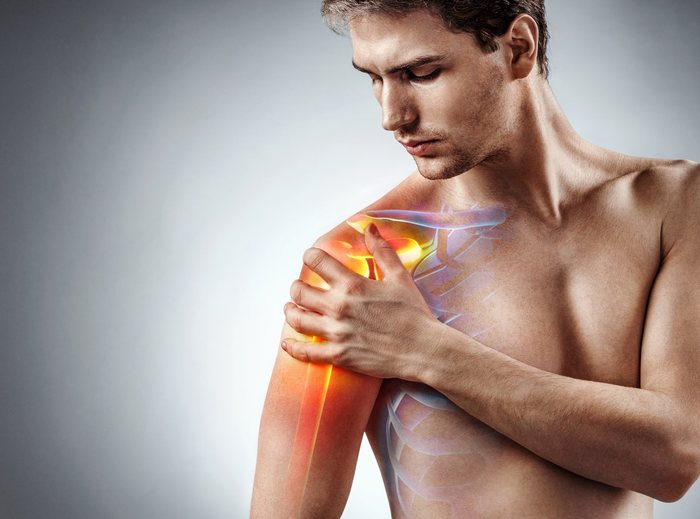
The joint capsule is a fibrous envelope surrounding the shoulder joint, containing the synovial fluid needed for lubrication. Frozen shoulder, also called adhesive capsulitis, is a progressive thickening and tightening of this capsule, causing a significant loss of shoulder mobility, often with pain, without any initial trauma.[1]
Why does this stiffness appear?
Frozen shoulder classically progresses through three phases: an initial painful phase, a stiffness phase where pain decreases but mobility remains very limited, then a gradual recovery phase.[1] Its exact cause often remains uncertain, but it’s more common after a period of immobilisation, in people with diabetes, or following significant stress.[2]
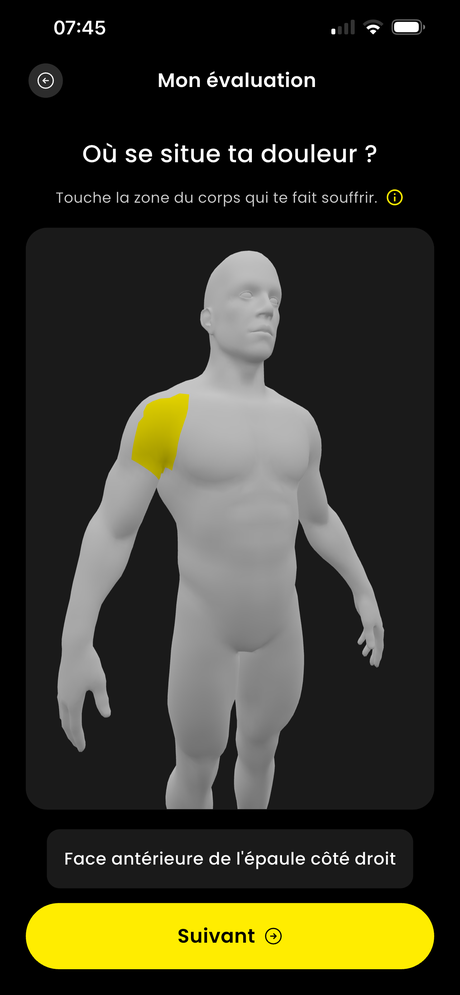
Symptoms and diagnosis of frozen shoulder
The 3 phases of frozen shoulder
Frozen shoulder classically progresses in three stages: a painful phase (often worse at night, with mobility gradually decreasing), a stiffness phase (pain eases but the shoulder stays very stiff in every direction), then a gradual recovery of mobility, which can take several months.[3]
Differential diagnosis
Several shoulder conditions can look like frozen shoulder in its early stages :
- Rotator cuff tendinopathy, where the loss of mobility is less global and more related to pain than to a true capsular block[3]
- Shoulder impingement, where some movements remain possible while others are painful
- Glenohumeral osteoarthritis, rarer, to consider particularly after age 60
Causes and risk factors
Who is affected by frozen shoulder?
Frozen shoulder affects athletes less specifically than other shoulder conditions, but certain factors increase the risk:
- Prolonged immobilisation after an injury or surgery[1]
- Diabetes and certain hormonal conditions[2]
- Stress or a difficult period in life
- An age between 40 and 60, more common in women[1]
- A history of frozen shoulder in the other shoulder[3]
Treating frozen shoulder in rehab with a sports physio
The goal of treatment is to adapt the intensity of rehab to the phase of frozen shoulder: gentle and pain-relieving in the painful phase, more active to regain mobility in the recovery phase.
- 1Managing pain in the acute phase
- 2Gentle, progressive passive mobility
- 3Targeted capsular stretches
- 4Assisted active mobility
- 5Light strengthening of the cuff
- 6Progressive overall strengthening
- 7Reintroducing everyday movements
- 8Reintroducing sporting movements
- 9Progressive return to your sport
- 10Return to full activity
DEMONSTRATION
Video by Hemrick, co-founder of HOPP.
“You don’t force a frozen shoulder, you support it phase by phase.”
Progressive mobility, the cornerstone of treatment
Mobility work must be adapted to the phase: gentle and pain-relieving early on, more active and sustained once pain has decreased. Muscle strengthening complements this work once mobility is on the way to recovery, to regain a fully functional shoulder.
In brief
- Mobility adapted to the phase of the frozen shoulder
- Progressive capsular stretches
- Strengthening once mobility is recovering
- Patience: progress is measured in months
Ready to take your frozen shoulder seriously?
Start the HOPP programme designed by sports physios.
Should you rest or keep playing sport?
Total rest is not the answer for frozen shoulder: gentle, regular movement, adapted to the phase, is essential to prevent the stiffness from worsening. That said, you should avoid forcing a very stiff shoulder abruptly during the painful phase.
Think you might have a different shoulder injury?
Take your free test in 3 minutes flat.
When should you see a specialist for frozen shoulder?
A medical opinion is recommended as soon as the first symptoms appear, to confirm what’s going on and rule out other causes of stiffness, and also if pain is very intense or there’s no improvement despite several months of suitable rehab.
The HOPP care programmes to treat your frozen shoulder and regain your mobility
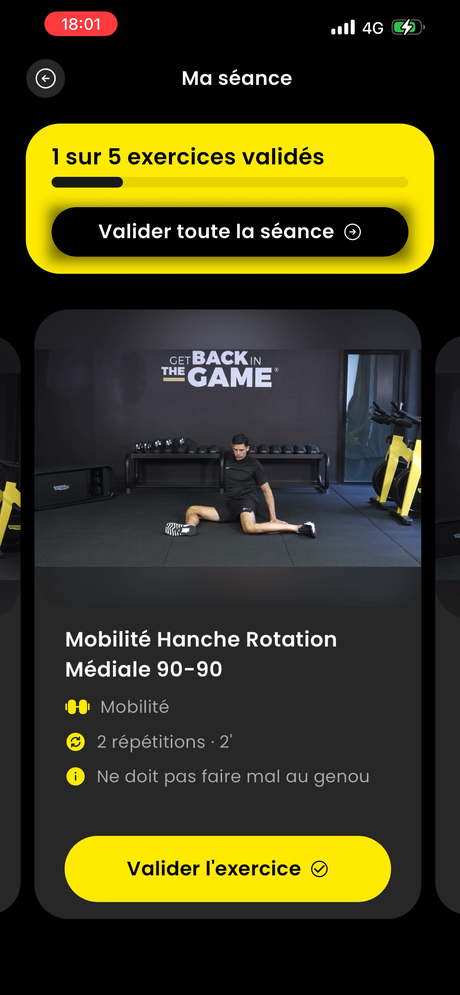
Frozen shoulder requires patient support adapted to each phase of its progression. HOPP offers you a precise exercise programme, adjusted to how you feel each day, to support you throughout this sometimes lengthy process.
The programme runs from 3 to 9 weeks depending on the injury and ends with a reconditioning phase allowing a return to competition in the best possible conditions. Each programme is designed by the HOPP team, made up of two sports physiotherapists who are experts in assessing and treating athletes. You’ll also find theoretical content throughout your progression, so you master every aspect of your recovery and can adjust your treatment independently. If needed, our team of physiotherapists is on hand to support you.
Essential
FROM INJURY TO
BACK TO YOUR ACTIVITIES
59€
One-time payment
“AT YOUR OWN PACE WITH
DAILY ADAPTATION”
- 100% of the treatment programme
- Daily personalisation
- Flexibility / Mobility
- Strengthening
- Proprioception
- Progress tracking
- Return-to-running programme
- Theoretical content included
Performance
TO GET BACK TO SPORT
IN THE BEST CONDITIONS
79€
One-time payment
“GET BACK TO YOUR LEVEL
WITHOUT RISK OF RELAPSE”
- 100% of the treatment programme
- Daily personalisation
- Flexibility / Mobility
- Strengthening
- Proprioception
- Progress tracking
- Return-to-running programme
- Theoretical content included
- + 4-week return-to-play plan with 6 difficulty levels
Expert
PERSONALISED VIDEO-CALL
SUPPORT, ANY TIME
149€
One-time payment
“A PHYSIO
WHENEVER YOU NEED”
- 100% of the treatment programme
- Daily personalisation
- Flexibility / Mobility, Strengthening, Proprioception
- Progress tracking
- Return-to-running programme
- Theoretical content included
- + 4-week return-to-play plan with 6 difficulty levels
- + 2 video calls with an expert sports physio / return check-up
A programme that adapts to you every day
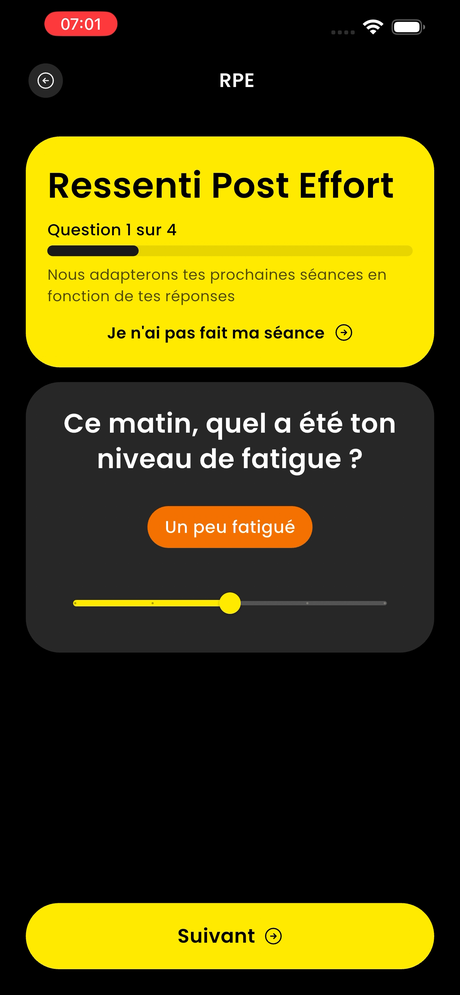
Every day, how you feel (RPE) is factored in to automatically adjust the rest of your programme: more load if all is well, a bit less if your shoulder is complaining. This daily personalisation is what makes the difference compared to a fixed, paper-based programme.

Ready to start your programme?
Join the HOPP support programme designed by sports physios.
F.A.Q
Does the HOPP programme replace a medical consultation?
No. HOPP is a support and rehab tool designed by sports physiotherapists, but it doesn’t replace a doctor’s opinion. If in doubt, or if the pain persists, see a health professional.
Is the programme suited to all sporting levels?
Yes. Every programme is personalised to your sport, your level and how you feel each day, whether you’re a recreational athlete or preparing for competition.
How long does frozen shoulder last?
The full progression can last 12 to 24 months, going through a painful phase, a stiffness phase, then a gradual recovery of mobility.[1]
Why do I have frozen shoulder when I haven’t had any trauma?
Frozen shoulder can appear without any identified trauma, sometimes linked to diabetes, a period of stress, or prolonged immobilisation for another reason.[2]
Should I force mobility to speed things up?
No, forcing a shoulder during the painful phase can worsen the inflammation. Rehab must be adapted to each phase, with progressively increasing intensity.
How can you tell frozen shoulder apart from rotator cuff tendinopathy?
With frozen shoulder, the loss of mobility is global and affects every direction of movement, including passively. With rotator cuff tendinopathy, some movements remain possible and the limitation is mainly linked to pain rather than a true joint block.[3]
Can frozen shoulder affect the other shoulder?
Yes, up to a third of people who’ve had frozen shoulder also develop it in the other shoulder in the following years, though it’s not systematic.[3]