

What is infraspinatus and teres minor tendinopathy?
Infraspinatus and teres minor anatomy
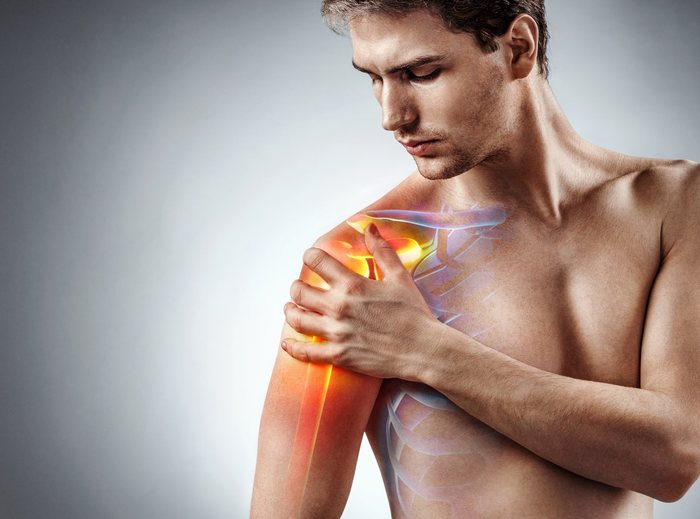
The infraspinatus and teres minor are two rotator cuff muscles located at the back of the shoulder blade. They’re the shoulder’s main external rotators and play an essential role in stabilising the humeral head, particularly during throwing or striking movements.[1] Their tendinopathy shows up as posterior or lateral shoulder pain, often triggered by external rotation movements.
Why do these tendons become painful?
Pain appears when these muscles are subjected to excessive repeated eccentric load, typically during the deceleration phase of a throwing or striking motion. An imbalance between internal rotators (often too strong) and external rotators (often too weak), common in throwing athletes, particularly contributes to this tendinopathy.[2]
Which sports contribute to this tendinopathy?
Any overhead throwing or striking sport places heavy demand on these external rotators:
- Handball and javelin throwing
- Tennis, particularly serving
- Volleyball, spiking and serving
- Baseball and water polo
- Striking combat sports (boxing)
- Weight training with an internal/external rotator imbalance
Symptoms and diagnosis of infraspinatus and teres minor tendinopathy
Typical pain and its triggers
The pain is triggered by external rotation of the arm against resistance, particularly during the deceleration phase of a throw or strike. It’s located at the back or side of the shoulder, sometimes felt down into the arm, and can also get in the way of everyday movements like reaching for something behind you.
How symptoms progress without treatment
Without treatment, the imbalance between internal and external rotators tends to worsen: the pain becomes more frequent, external rotation strength keeps declining, and sporting technique deteriorates to compensate, which increases the risk of other shoulder injuries.
Differential diagnosis
Several types of shoulder pain can look like this tendinopathy:
- Supraspinatus tendinopathy, which affects a different cuff tendon and tends to show up during arm elevation
- Shoulder impingement, worth considering if the pain appears mainly overhead
- Rotator cuff deficit, worth considering if there’s a clear, lasting loss of strength
Causes and risk factors
Infraspinatus and teres minor tendinopathy most often develops from a gradual muscular imbalance, which is reversible with appropriate rehab.
Biomechanical and personal factors
- A strength imbalance between internal rotators (often too strong) and external rotators (often too weak)
- Weak shoulder-blade stabilisers, which increase the overload on the external rotators
- A too-rapid increase in throwing or striking volume
- Insufficient recovery between sessions that load the deceleration phase of the movement
Which sports contribute to this tendinopathy?
Any overhead throwing or striking sport places heavy demand on these external rotators:
- Handball and javelin throwing
- Tennis, particularly serving
- Volleyball, spiking and serving
- Baseball and water polo
- Striking combat sports (boxing)
- Weight training with an internal/external rotator imbalance
Rehab treatment with a sports physio
The goal of treatment is to specifically strengthen the external rotators to rebalance the shoulder’s muscular balance, while temporarily reducing the load on the affected tendons.
- 1Reducing pain and managing load
- 2Shoulder and shoulder-blade mobility
- 3Isometric strengthening
- 4Progressive concentric strengthening
- 5Eccentric strengthening
- 6Rotator cuff work
- 7Correcting sporting technique
- 8Strengthening under sport-specific load
- 9Progressive return to your sport
- 10Return to competition
“A strong external rotator protects the shoulder with every deceleration of the throwing motion.”
Strengthening the external rotators, the cornerstone of treatment
Targeted strengthening of the infraspinatus and teres minor, particularly eccentric work, restores their capacity to absorb the deceleration strain specific to throwing movements. This is completed by broader work on the cuff and the shoulder-blade stabilisers.
In brief
- Specific strengthening of the external rotators
- Eccentric work in the deceleration phase
- Balancing internal / external rotators
- Gradual return: mobility, then load, then sport
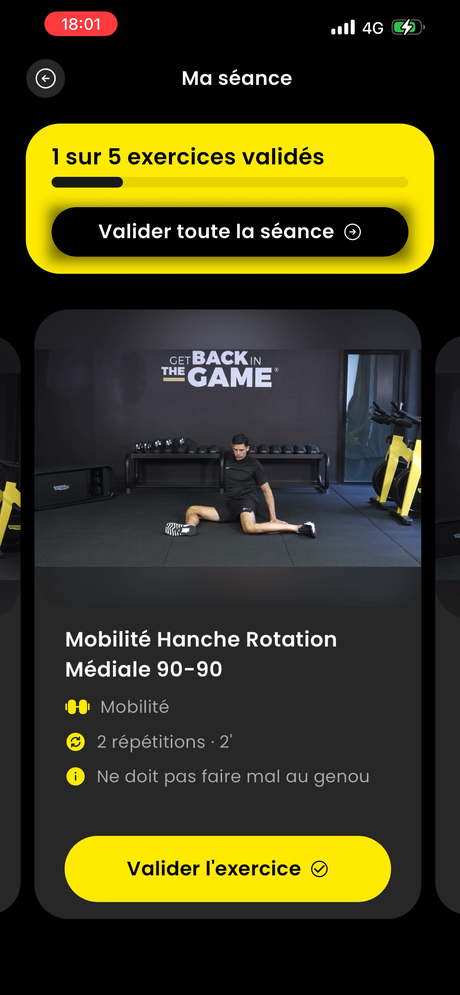
Ready to take your infraspinatus tendinopathy seriously?
Start the HOPP programme designed by sports physios.
Should you rest or keep playing sport?
Total rest is generally not necessary. It’s better to temporarily reduce the volume of throwing or striking movements that reproduce the pain, while quickly starting specific strengthening of the external rotators.
Think you might have a different shoulder injury?
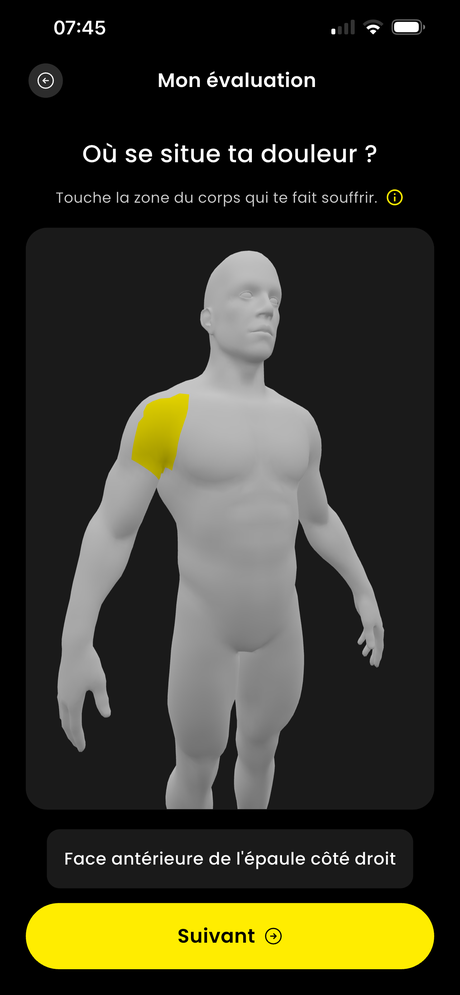
Take your free test in 3 minutes flat.
When should you see a specialist?
If the pain persists for more than three to four weeks despite adapting your activities, or if you feel a clear loss of strength in external rotation, a medical opinion is recommended.
Expected recovery timeline for infraspinatus and teres minor tendinopathy
Since this tendinopathy is most often linked to a functional muscular imbalance, the outlook is generally favourable with well-run rehab. Clear improvement is usually seen within a few weeks, with a full return to sport once the balance between internal and external rotators is restored.
Preventing recurrence
Once the pain is under control, a few measures help limit the risk of recurrence:
- Keep up long-term strengthening of the external rotators, even after the pain is gone
- Keep working on the balance between internal and external rotators, particularly for throwing athletes
- Progress cautiously with throwing or striking volume after a period of reduced activity
- Don’t ignore discomfort that comes back, a sign that the imbalance is creeping in again
The HOPP care programmes to treat this tendinopathy and get back to sport
This tendinopathy requires a targeted rebalancing of the shoulder rotators. HOPP offers you a precise exercise programme, allowing you to get back to your activities as quickly as possible.
The programme runs from 3 to 9 weeks depending on the injury and ends with a reconditioning phase allowing a return to competition in the best possible conditions. Each programme is designed by the HOPP team, made up of two sports physiotherapists who are experts in assessing and treating athletes. You’ll also find theoretical content throughout your progression, so you master every aspect of your recovery and can adjust your treatment independently. If needed, our team of physiotherapists is on hand to support you.
Essential
FROM INJURY TO
BACK TO YOUR ACTIVITIES
59€
One-time payment
“AT YOUR OWN PACE WITH
DAILY ADAPTATION”
- 100% of the treatment programme
- Daily personalisation
- Flexibility / Mobility
- Strengthening
- Proprioception
- Progress tracking
- Return-to-running programme
- Theoretical content included
Performance
TO GET BACK TO SPORT
IN THE BEST CONDITIONS
79€
One-time payment
“GET BACK TO YOUR LEVEL
WITHOUT RISK OF RELAPSE”
- 100% of the treatment programme
- Daily personalisation
- Flexibility / Mobility
- Strengthening
- Proprioception
- Progress tracking
- Return-to-running programme
- Theoretical content included
- + 4-week return-to-play plan with 6 difficulty levels
Expert
PERSONALISED VIDEO-CALL
SUPPORT, ANY TIME
149€
One-time payment
“A PHYSIO
WHENEVER YOU NEED”
- 100% of the treatment programme
- Daily personalisation
- Flexibility / Mobility, Strengthening, Proprioception
- Progress tracking
- Return-to-running programme
- Theoretical content included
- + 4-week return-to-play plan with 6 difficulty levels
- + 2 video calls with an expert sports physio / return check-up
A programme that adapts to you every day
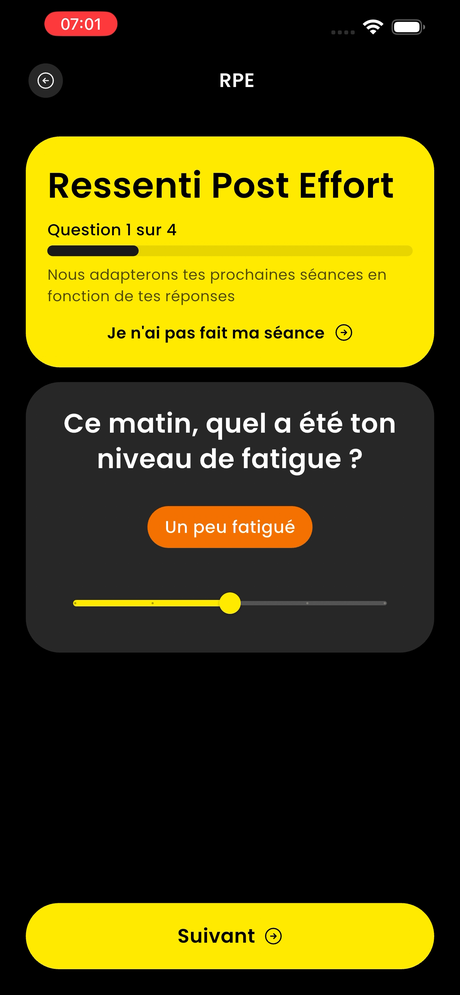
Every day, how you feel (RPE) is factored in to automatically adjust the rest of your programme: more load if all is well, a bit less if your shoulder is complaining. This daily personalisation is what makes the difference compared to a fixed, paper-based programme.

Ready to start your programme?
Join the HOPP support programme designed by sports physios.
F.A.Q
Does the HOPP programme replace a medical consultation?
No. HOPP is a support and rehab tool designed by sports physiotherapists, but it doesn’t replace a doctor’s opinion. If in doubt, or if the pain persists, see a health professional.
Is the programme suited to all sporting levels?
Yes. Every programme is personalised to your sport, your level and how you feel each day, whether you’re a recreational athlete or preparing for competition.
Can I keep playing with this tendinopathy?
In most cases, yes, by temporarily reducing the volume of throwing or striking movements and starting external rotator strengthening in parallel.
How long does it take to recover?
A structured programme generally brings clear improvement within a few weeks, with a full return to sport after several weeks of progressive strengthening.
Why do I have an imbalance between internal and external rotators?
Throwing sports naturally develop the internal rotators (used for propulsion) far more than the external rotators (used for braking), which creates an imbalance that needs correcting with specific strengthening.[2]
Do you need to completely stop throwing movements during rehab?
No, stopping completely isn’t necessary in most cases. It’s better to temporarily reduce the volume of movements that reproduce the pain while starting targeted strengthening of the external rotators, allowing for a gradual, lasting return.
How can you tell if your shoulder lacks external rotator strength?
A good indicator is comparing external and internal rotation strength, with your elbow tucked against your body: in throwing athletes, a marked imbalance favouring the internal rotators is common and is corrected with specific external rotator strengthening.
Scientific references
- La Rose J, Madrazo-Ibarra A, Varacallo M. Anatomy, Rotator Cuff. StatPearls, NCBI Bookshelf, National Library of Medicine (NIH). ncbi.nlm.nih.gov/books/NBK441844
- Wilk KE, Meister K, Andrews JR. Current concepts in the rehabilitation of the overhead throwing athlete. American Journal of Sports Medicine, 2002;30(1):136-151. PubMed : pubmed.ncbi.nlm.nih.gov/11799012
This page is based on peer-reviewed scientific publications. It remains a general self-assessment tool and does not replace medical advice.