

What is an AC joint sprain?
AC joint anatomy
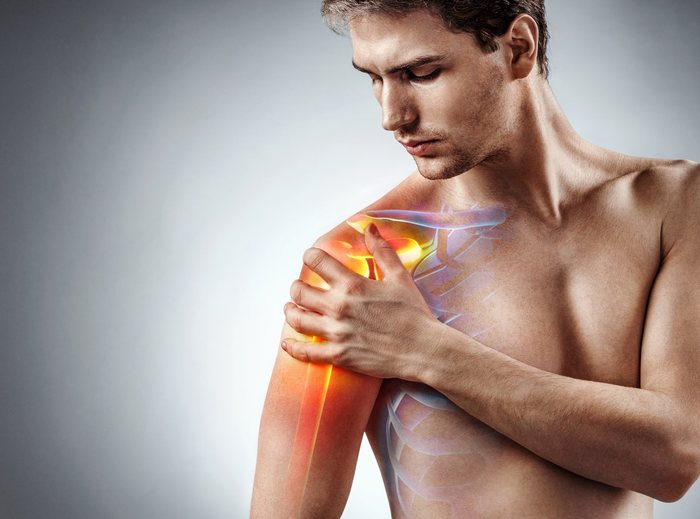
The acromioclavicular (AC) joint connects the end of the collarbone to the acromion, the highest part of the shoulder blade. It’s held together by several ligaments that provide stability during arm movements. A sprain of this joint is a stretch, or even a tear, of these ligaments, most often following a direct blow to the top of the shoulder.
Why does this joint get injured?
An AC joint sprain most often occurs from a fall directly onto the shoulder, arm tucked against the body, such as in a cycling or skiing fall, or a rugby tackle. Depending on the severity of the ligament injury, several stages are distinguished, from a simple stretch (grade 1) to a complete tear with visible displacement of the collarbone (grade 3 and above).[1]
Symptoms and diagnosis of an AC joint sprain
Recognising the signs of the sprain
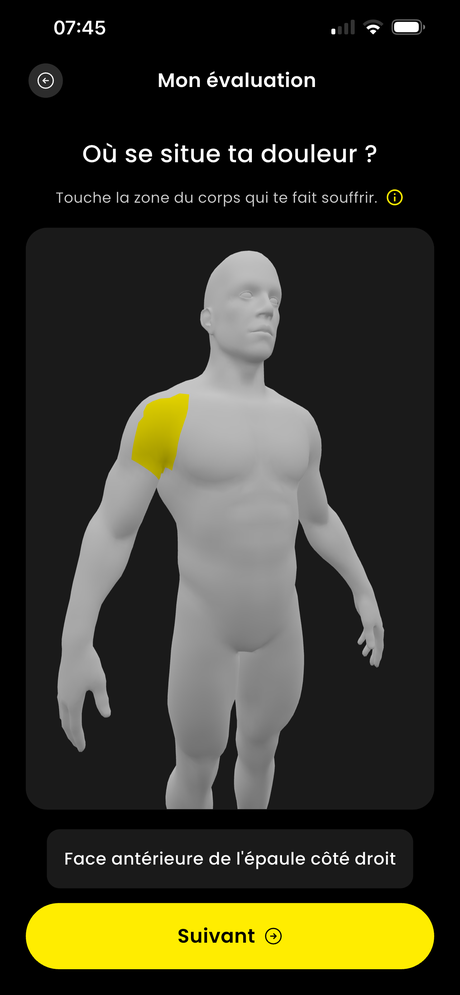
The pain is sharp at the moment of impact, precisely located at the top of the shoulder, on the joint between the collarbone and the shoulder blade. It gets worse when you raise your arm overhead, carry a load, or cross your arm in front of your body. Discomfort can also appear at night when sleeping on the affected side.
Differential diagnosis
Other shoulder pains can sometimes be mistaken for an AC joint sprain:
- Shoulder impingement, which causes more diffuse pain, with no history of direct impact
- A shoulder dislocation, with more obvious deformity and blocking of the main joint
- A supraspinatus tendinopathy, which appears more gradually and without an initial trauma
Causes and risk factors
An AC joint sprain almost always occurs from a direct blow to the top of the shoulder, but certain factors increase the risk or worsen the severity of the injury.
Factors that increase the risk
- A fall onto the shoulder with the arm tucked against the body, the most common mechanism
- Weakness in the shoulder blade stabilisers (trapezius, serratus anterior)
- Poor falling technique in higher-risk sports
- A history of an AC joint sprain on the same shoulder, with residual laxity
Which sports contribute to AC joint sprains?
Any sport with a risk of falling directly onto the shoulder or taking a blow exposes you to this sprain:
- Rugby and American football (tackles)
- Cycling and mountain biking (falls)
- Skiing and snowboarding
- Judo and combat sports
- Ice hockey
- Horse riding
Treating an AC joint sprain in rehab with a sports physio
The goal of treatment is to allow the ligaments to heal under good conditions, while maintaining shoulder mobility and progressively strengthening the stabilising muscles.
- 1Protection and pain reduction
- 2Recovering pain-free mobility
- 3Isometric strengthening of the rotator cuff
- 4Strengthening scapular stability
- 5Shoulder proprioceptive work
- 6Closed-chain strengthening
- 7Open-chain strengthening
- 8Strengthening under sport-specific load
- 9Progressive return to your sport
- 10Return to competition
“Most AC joint sprains heal very well without surgery, provided they’re properly rehabilitated.”
Strengthening, the cornerstone of treatment
Strengthening the shoulder blade’s stabiliser muscles (trapezius, serratus anterior) compensates for residual ligament laxity and restores a stable, functional shoulder. The return of mobility must be progressive and pain-free.
In brief
- Maintaining shoulder mobility
- Strengthening the shoulder blade stabilisers
- Progressive return to weight-bearing on the arm
- Gradual return: mobility, then load, then sport
Ready to take your AC joint sprain seriously?
Start the HOPP programme designed by sports physios.
Should you rest or keep playing sport?
Brief immobilisation (a sling) can be useful for comfort in the first few days, but prolonged rest isn’t recommended. It’s better to gently mobilise the shoulder as soon as the acute pain eases and start strengthening the stabilisers promptly.
Think you might have a different shoulder injury?
Take your free test in 3 minutes flat.
When should you see a specialist for an AC joint sprain?
If you notice clear deformity of the collarbone, very intense pain, or an inability to move your arm, prompt medical attention is needed to assess the grade of the sprain and discuss whether surgery might be indicated for the most severe forms.
Recovery time for an AC joint sprain
Recovery time depends directly on the grade of the sprain. For grade 1 (a simple stretch), returning to sport generally takes 2 to 3 weeks. For grade 2 (a partial tear), expect more like 4 to 6 weeks. For grade 3 and above (a complete tear with visible displacement of the collarbone), recovery takes longer, 8 to 12 weeks, more if surgery is involved.
Preventing relapses
Several measures help reduce the risk of a new AC joint sprain or complications on an already weakened shoulder:
- Strengthen the shoulder blade stabiliser muscles (trapezius, serratus anterior) to better absorb impacts
- Learn a safer falling technique (rolling onto the shoulder rather than landing with an extended arm) for higher-risk sports
- Wear suitable protection (a shoulder pad) in contact sports identified as high-risk
- Don’t return to contact sports before fully recovering mobility and strength
The HOPP care programmes to treat your AC joint sprain and get back to sport
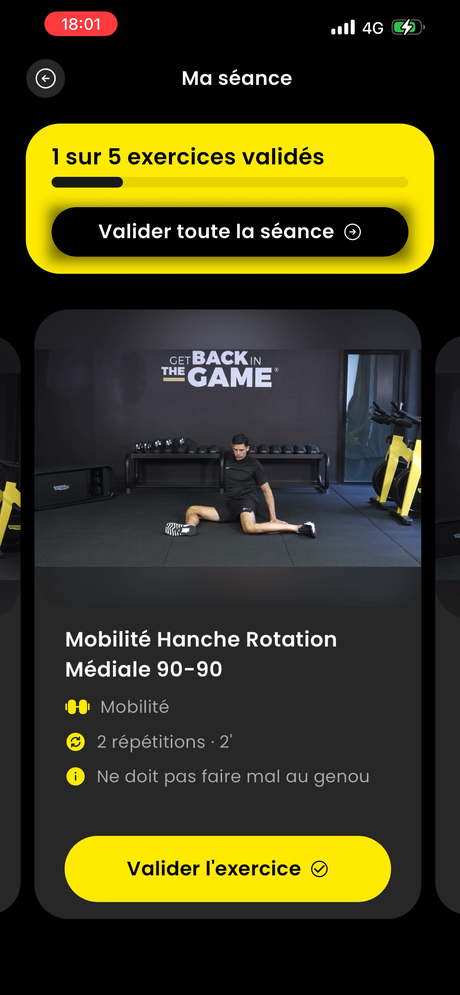
This sprain requires progressive support for ligament healing and muscle strengthening. HOPP offers you a precise exercise programme, allowing you to get back to your activities as quickly as possible.
The programme runs from 3 to 9 weeks depending on the injury and ends with a reconditioning phase allowing a return to competition in the best possible conditions. Each programme is designed by the HOPP team, made up of two sports physiotherapists who are experts in assessing and treating athletes. You’ll also find theoretical content throughout your progression, so you master every aspect of your recovery and can adjust your treatment independently. If needed, our team of physiotherapists is on hand to support you.
Essential
FROM INJURY TO
BACK TO YOUR ACTIVITIES
59€
One-time payment
“AT YOUR OWN PACE WITH
DAILY ADAPTATION”
- 100% of the treatment programme
- Daily personalisation
- Flexibility / Mobility
- Strengthening
- Proprioception
- Progress tracking
- Return-to-running programme
- Theoretical content included
Performance
TO GET BACK TO SPORT
IN THE BEST CONDITIONS
79€
One-time payment
“GET BACK TO YOUR LEVEL
WITHOUT RISK OF RELAPSE”
- 100% of the treatment programme
- Daily personalisation
- Flexibility / Mobility
- Strengthening
- Proprioception
- Progress tracking
- Return-to-running programme
- Theoretical content included
- + 4-week return-to-play plan with 6 difficulty levels
Expert
PERSONALISED VIDEO-CALL
SUPPORT, ANY TIME
149€
One-time payment
“A PHYSIO
WHENEVER YOU NEED”
- 100% of the treatment programme
- Daily personalisation
- Flexibility / Mobility, Strengthening, Proprioception
- Progress tracking
- Return-to-running programme
- Theoretical content included
- + 4-week return-to-play plan with 6 difficulty levels
- + 2 video calls with an expert sports physio / return check-up
A programme that adapts to you every day
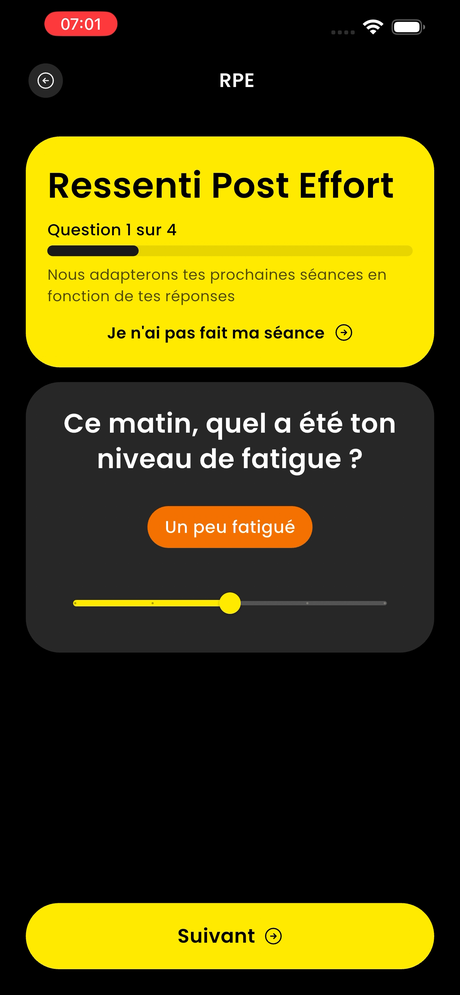
Every day, how you feel (RPE) is factored in to automatically adjust the rest of your programme: more load if all is well, a bit less if your shoulder is complaining. This daily personalisation is what makes the difference compared to a fixed, paper-based programme.

Ready to start your programme?
Join the HOPP support programme designed by sports physios.
F.A.Q
Does the HOPP programme replace a medical consultation?
No. HOPP is a support and rehab tool designed by sports physiotherapists, but it doesn’t replace a doctor’s opinion. If in doubt, or if the pain persists, see a health professional.
Is the programme suited to all sporting levels?
Yes. Every programme is personalised to your sport, your level and how you feel each day, whether you’re a recreational athlete or preparing for competition.
Does an AC joint sprain always need surgery?
No, most sprains (grades 1 and 2) heal well with functional treatment and rehab. Only the most severe grades, with significant displacement, may require surgery.[2]
How long does it take to get back to sport?
For a simple sprain, returning to sport generally happens between three and six weeks, depending on the grade and the sport practised.
Will the bump on my collarbone go away?
In grades with displacement, a small prominence can persist permanently without affecting the shoulder’s function in the long term.
What’s the difference between an AC joint sprain and a shoulder dislocation?
These are two different joints. The AC joint sprain affects the top of the shoulder, between the collarbone and the shoulder blade, while a shoulder dislocation involves the main joint, between the head of the humerus and the shoulder blade. Both can happen during a fall, but a dislocation causes more complete blocking of the arm.
Can you get back to contact sport after an AC joint sprain?
Yes, as long as you’ve regained full, pain-free mobility and sufficient strength in the shoulder blade stabilisers. Returning to contact sports usually happens in the final stage of the programme, once the reconditioning phase is complete.