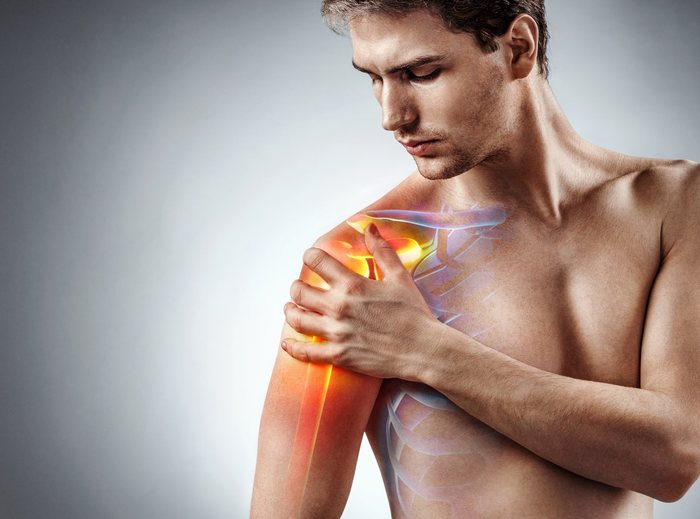


What are after-effects of a shoulder joint injury?
Understanding shoulder joint after-effects
After a shoulder injury (sprain, dislocation, fracture), even one well managed at the time, it’s not uncommon to be left with residual discomfort: stiffness, apprehension, loss of strength or a feeling of instability. We talk about joint after-effects when these symptoms persist beyond the normal healing phase, without a new structural injury necessarily being the cause.
Why do these after-effects persist?
These after-effects are often explained by insufficient or incomplete rehab after the original injury, a lack of strengthening for the shoulder blade stabilisers, or psychological apprehension that limits natural use of the arm.[1] Overly prolonged immobilisation can also encourage residual stiffness to set in.
Which sports are associated with these after-effects?
Any sport that places demand on the shoulder can be relevant here after an original injury, particularly:
- Contact sports (rugby, judo, combat sports)
- Throwing and racquet sports
- Swimming
- Strength training and weightlifting
- Sports with falls (skiing, cycling, horse riding)
- Team sports with aerial contact (basketball, handball)
Symptoms and diagnosis of shoulder joint after-effects
Typical symptoms of shoulder joint after-effects
Several weeks or months after the original injury, certain signs should alert you to the presence of after-effects:
- Residual stiffness, especially at the end of your range of motion (arm overhead, external rotation)
- Pain that comes back during activity, particularly with throwing movements or overhead loading
- Apprehension: the feeling that your shoulder might “give way” or pop out in certain positions
- A loss of mobility or strength compared with your uninjured shoulder
Differential diagnosis
Other shoulder conditions can cause similar symptoms and need to be ruled out before concluding these are simple functional after-effects, in particular a shoulder dislocation (if it recurs), shoulder subluxation, or associated shoulder impingement. A medical opinion can tell the difference if any doubt remains.
Causes and risk factors for shoulder joint after-effects
This residual discomfort doesn’t come out of nowhere: it’s most often explained by how the original injury was managed in the weeks that followed.
- Rehab that was insufficient or stopped too early after the original injury
- Returning to sport too early, before fully regaining mobility and strength
- Prolonged immobilisation, which encourages stiffness to set in
- Apprehension that’s never addressed, which leads to avoiding certain movements long-term[1]
Treating joint after-effects in rehab with a sports physio
The goal of treatment is to restore full, confident mobility, while progressively strengthening the stabilising muscles to restore a functional, confident shoulder.
- 1Protection and pain reduction
- 2Recovering pain-free mobility
- 3Isometric strengthening of the rotator cuff
- 4Strengthening scapular stability
- 5Shoulder proprioceptive work
- 6Closed-chain strengthening
- 7Open-chain strengthening
- 8Strengthening under sport-specific load
- 9Progressive return to your sport
- 10Return to competition
“A shoulder that healed poorly through movement can be rehabbed just as well through movement.”
Strengthening and rebuilding confidence, the cornerstones of treatment
Progressive strengthening of the rotator cuff and shoulder blade stabilisers restores the shoulder’s functional stability. Specific work on apprehension, progressively reintroducing avoided movements, is just as important as strengthening alone.
In brief
- Restoring full mobility
- Strengthening the rotator cuff and stabilisers
- Progressive work on apprehension
- Gradual return: mobility, then load, then sport
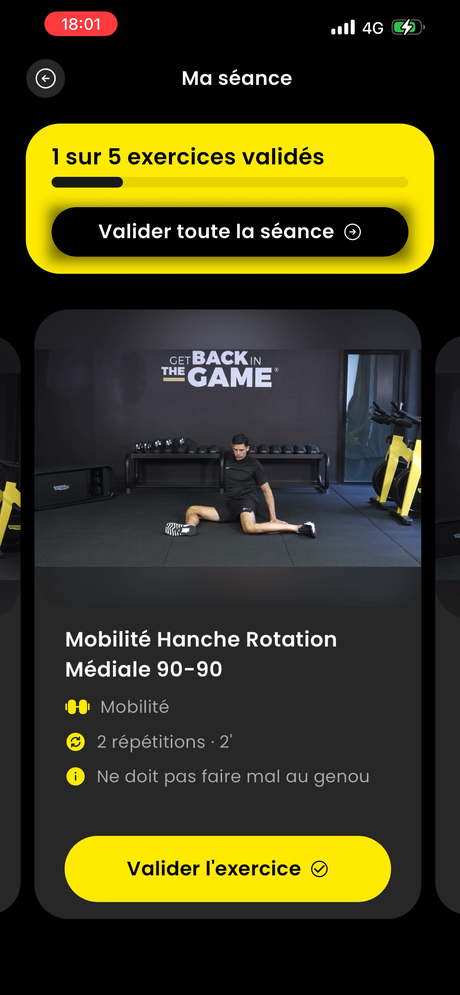
Ready to take your lingering shoulder issues seriously?
Start the HOPP programme designed by sports physios.
Should you rest or keep playing sport?
Rest generally isn’t the answer for long-standing after-effects: on the contrary, it’s a progressive, guided return to movement that restores shoulder function and reduces residual discomfort.
Think you might have a different shoulder injury?
Take your free test in 3 minutes flat.
When should you see a specialist for lingering shoulder issues?
If the discomfort is accompanied by clear instability (a feeling that the shoulder is “popping out”), mechanical locking or a marked loss of strength, a medical opinion is recommended to check for an associated structural injury requiring specific care.
How long does it take to get rid of shoulder joint after-effects?
There’s no single timeline: it all depends on how long-standing the injury is, the rehab already done, and the level of apprehension. Recent stiffness can improve within a few weeks of regular work, while apprehension that’s been there for several months often needs longer, more gradual work. In the vast majority of cases, clear improvement is noticeable within the first few weeks of suitable rehab.
How can you prevent after-effects setting in after a shoulder injury?
The best prevention is not to stop rehab as soon as the initial pain goes away: mobility, strengthening and work on apprehension need to be seen through to the end, even once the shoulder already seems to be doing better. Returning to sport gradually, guided by how it feels rather than a fixed schedule, greatly limits the risk of lasting discomfort.
The HOPP care programmes to treat your shoulder after-effects and get back to sport
These after-effects require combined work on mobility, strengthening and rebuilding confidence. HOPP offers you a precise exercise programme, allowing you to get back to your activities as quickly as possible.
The programme runs from 3 to 9 weeks depending on the injury and ends with a reconditioning phase allowing a return to competition in the best possible conditions. Each programme is designed by the HOPP team, made up of two sports physiotherapists who are experts in assessing and treating athletes. You’ll also find theoretical content throughout your progression, so you master every aspect of your recovery and can adjust your treatment independently. If needed, our team of physiotherapists is on hand to support you.
Essential
FROM INJURY TO
BACK TO YOUR ACTIVITIES
59€
One-time payment
“AT YOUR OWN PACE WITH
DAILY ADAPTATION”
- 100% of the treatment programme
- Daily personalisation
- Flexibility / Mobility
- Strengthening
- Proprioception
- Progress tracking
- Return-to-running programme
- Theoretical content included
Performance
TO GET BACK TO SPORT
IN THE BEST CONDITIONS
79€
One-time payment
“GET BACK TO YOUR LEVEL
WITHOUT RISK OF RELAPSE”
- 100% of the treatment programme
- Daily personalisation
- Flexibility / Mobility
- Strengthening
- Proprioception
- Progress tracking
- Return-to-running programme
- Theoretical content included
- + 4-week return-to-play plan with 6 difficulty levels
Expert
PERSONALISED VIDEO-CALL
SUPPORT, ANY TIME
149€
One-time payment
“A PHYSIO
WHENEVER YOU NEED”
- 100% of the treatment programme
- Daily personalisation
- Flexibility / Mobility, Strengthening, Proprioception
- Progress tracking
- Return-to-running programme
- Theoretical content included
- + 4-week return-to-play plan with 6 difficulty levels
- + 2 video calls with an expert sports physio / return check-up
A programme that adapts to you every day
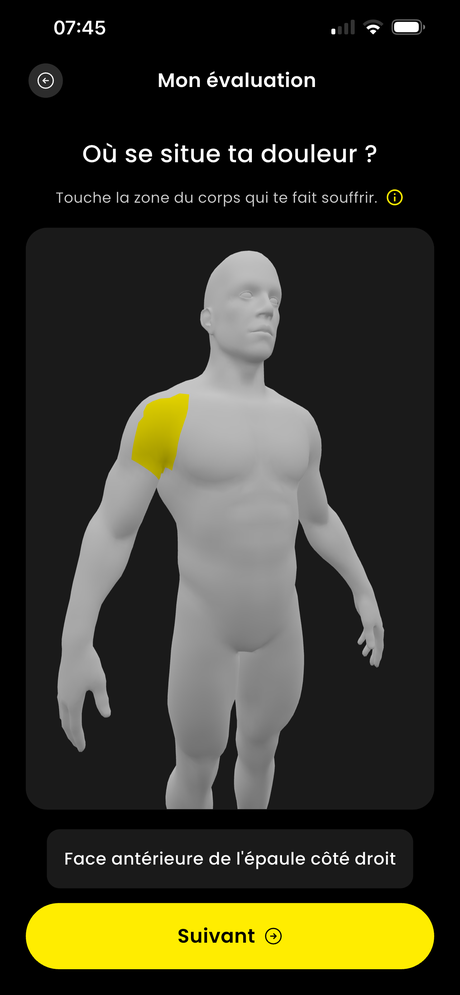
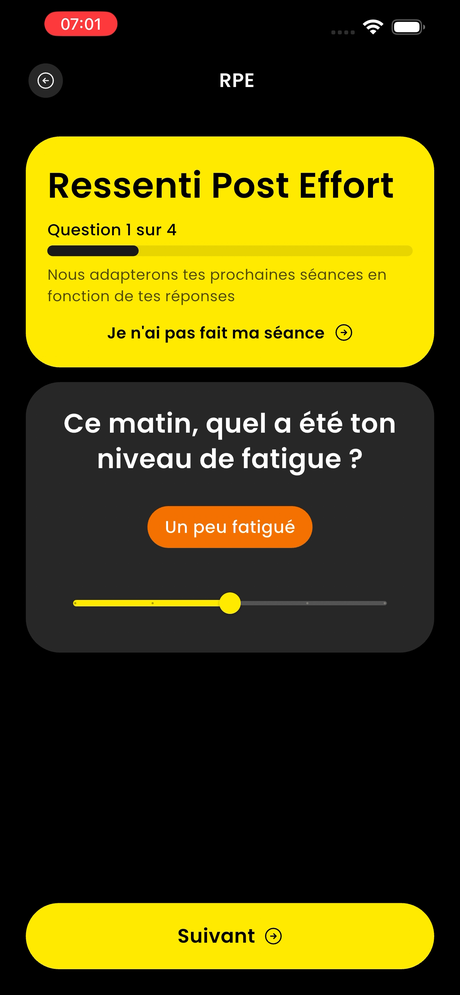
Every day, how you feel (RPE) is factored in to automatically adjust the rest of your programme: more load if all is well, a bit less if your shoulder is complaining. This daily personalisation is what makes the difference compared to a fixed, paper-based programme.

Ready to start your programme?
Join the HOPP support programme designed by sports physios.
F.A.Q
Does the HOPP programme replace a medical consultation?
No. HOPP is a support and rehab tool designed by sports physiotherapists, but it doesn’t replace a doctor’s opinion. If in doubt, or if the pain persists, see a health professional.
Is the programme suited to all sporting levels?
Yes. Every programme is personalised to your sport, your level and how you feel each day, whether you’re a recreational athlete or preparing for competition.
Why do I still have pain months after my injury?
This can be linked to incomplete rehab, a lack of strengthening, or apprehension limiting natural use of the shoulder, rather than a new injury.
Can these after-effects completely disappear?
In most cases, yes, with a suitable, progressive rehab programme, even several months after the original injury.
Do I need further imaging?
If the discomfort is purely functional (stiffness, apprehension), without clear instability or loss of strength, rehab can be started directly. If in doubt, a medical opinion will confirm whether further tests are needed.
Can I return to sport with persistent apprehension?
Yes, it’s actually recommended: gradually reintroducing the movements you’ve been avoiding, in a safe, progressive way, lets you work on that apprehension directly. Avoiding it, on the other hand, only prolongs the feeling of insecurity.
Is rehab different if the original injury happened years ago?
The principle stays the same (mobility, strengthening, rebuilding confidence), but the work can take longer if the stiffness or apprehension has been there for a long time. It’s never too late to improve your shoulder’s function.