

What is posterior ankle impingement?
The anatomy of posterior ankle impingement
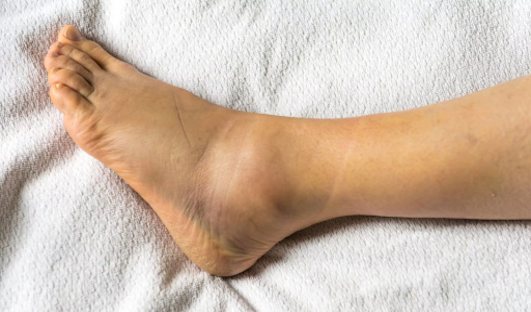
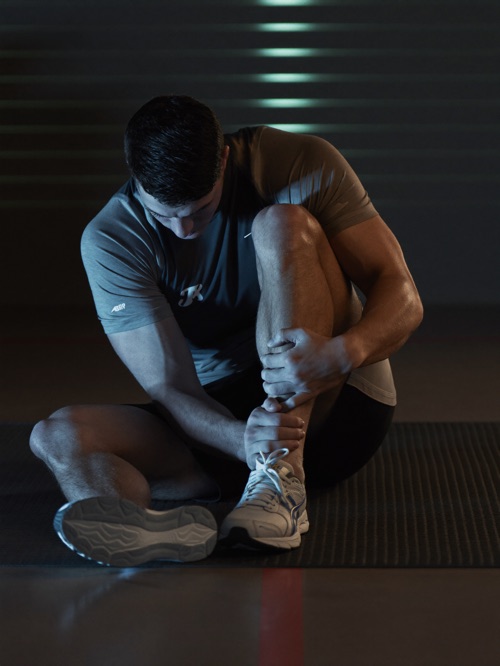
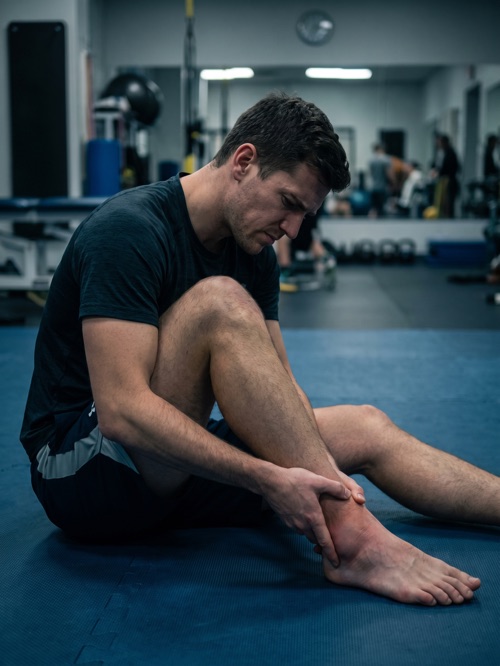
Posterior ankle impingement is a painful pinching of the structures at the back of the ankle joint during forced plantarflexion movements (pointing the toes). It’s often encouraged by the presence of an extra bone (os trigonum) or a bony growth at the back of the talus, present in some people without necessarily causing symptoms.[2]
Why does this impingement develop?
This impingement appears when the bony or tendon structures at the back of the ankle are repeatedly compressed during forced pointed-toe movements, particularly in ballet dancers and footballers who place intense demand on this range.
Symptoms and diagnosis of posterior ankle impingement
Typical pain and its triggers
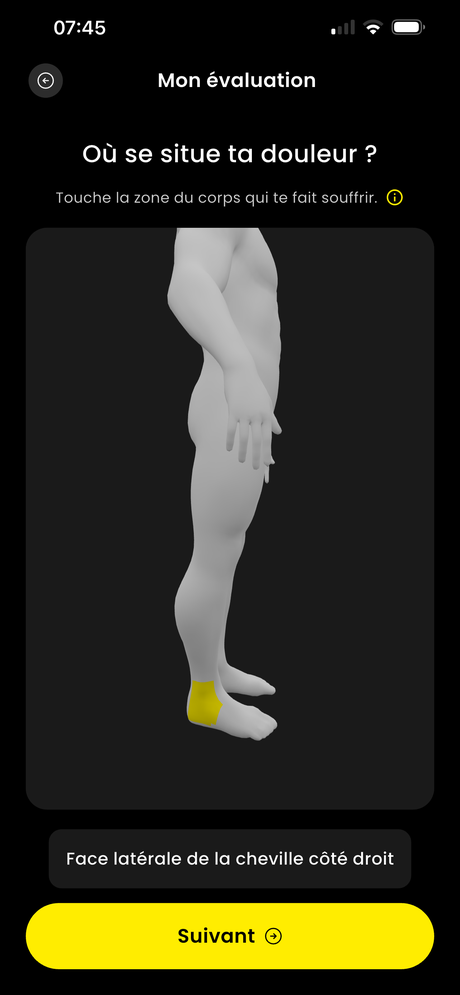
The pain is located at the back of the ankle, triggered by forced plantarflexion (pointing the toes), downhill running, or jumps landing on the toes. A sensation of posterior locking at the end of range is common.
How symptoms progress without treatment
Without treatment, local inflammation around the os trigonum or bony growth can be sustained by repeated demand, gradually reducing available plantarflexion range.
Differential diagnosis
Several types of posterior ankle pain can resemble this impingement:
- Anterior ankle impingement, triggered instead by dorsiflexion
- Flexor hallucis longus tendinopathy, which runs just alongside the impingement area
- Achilles tendinopathy, more centred on the tendon itself
Causes and risk factors
Posterior impingement most often develops on a predisposing anatomical background (an os trigonum), revealed by repeated demand in plantarflexion.
Biomechanical and personal factors
- The presence of an os trigonum or a posterior bony growth, a predisposing anatomical factor
- Intensive pointe or demi-pointe work
- Reduced ankle mobility, which increases strain at the end of range
- Prolonged sporting activity over several years
Which sports contribute to posterior ankle impingement?
All sports involving repeated, forced ankle plantarflexion carry a particular risk:
- Ballet (pointe and demi-pointe work)
- Football, when kicking the ball in extension
- Skiing and snowboarding
- Gymnastics
- Volleyball and basketball (landing on the toes)
Treating posterior ankle impingement in rehab with a sports physio
The goal of treatment is to reduce local inflammation and optimise available mobility, while strengthening the stabilising muscles to limit the repeated strain that causes the impingement.
- 1Reducing pain and managing load
- 2Recovering available mobility
- 3Isometric strengthening
- 4Progressive concentric strengthening
- 5Ankle proprioceptive work
- 6Closed-chain strengthening (weight-bearing)
- 7Optimising the sporting movement
- 8Strengthening under sport-specific load
- 9Progressive return to your sport
- 10Return to competition
“Posterior impingement is managed by optimising the mobility you have, not by trying to force back a limited range.”
Strengthening and available mobility, the cornerstones of treatment
Work focuses on optimising the ankle’s genuinely available mobility, without forcing the range limited by the impingement, combined with strengthening the stabilisers to reduce repeated strain on the back of the ankle.
In brief
- Optimising available mobility
- Strengthening the stabilising muscles
- Managing local inflammation
- Gradual return: mobility, then load, then sport
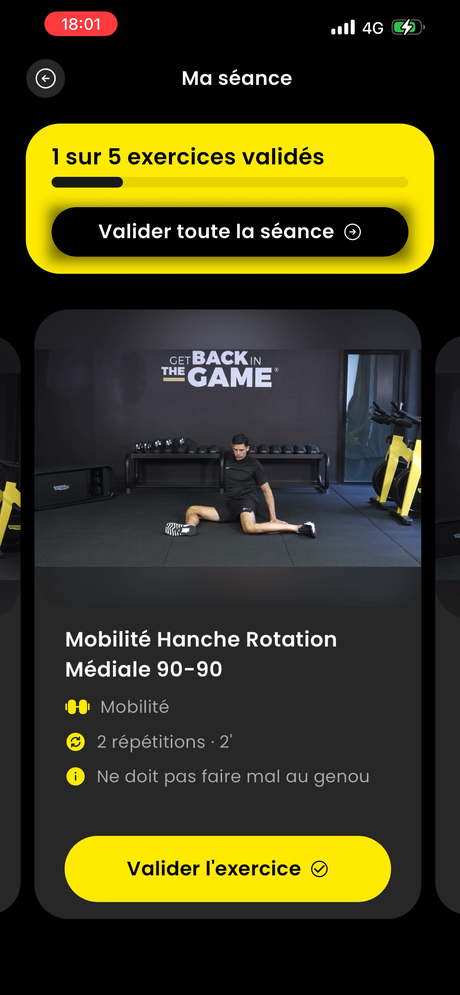
Ready to take your posterior ankle impingement seriously?
Start the HOPP programme designed by sports physios.
Should you rest or keep playing sport?
Complete rest generally isn’t necessary. It’s better to temporarily adjust the pointed-toe movements that clearly reproduce the pain, while starting rehab as soon as possible.
Think you might have a different ankle injury?
Take your free test in 3 minutes flat.
When should you see a specialist for posterior ankle impingement?
If the pain persists for more than four to six weeks despite rehab, or if mechanical locking is very pronounced, a medical opinion is recommended to assess the bony structure involved and discuss further options.
What progress can you expect from posterior ankle impingement?
Progress mainly depends on how early treatment starts and how well training load is adjusted. A clear improvement in pain is generally seen within a few weeks of rehab, even though maximal plantarflexion range may remain slightly reduced compared with the other ankle.
Slowing the progression of posterior ankle impingement
The anatomical structure behind the impingement doesn’t disappear with rehab, but several measures can slow its progression and space out painful episodes:
- Regularly working on ankle mobility in both directions
- Adjusting the volume of repetitive pointe or demi-pointe work
- Strengthening the ankle’s stabilising muscles
- Not ignoring persistent discomfort that could signal it’s getting worse
The HOPP care programmes to treat your posterior ankle impingement and get back to sport
This impingement requires suitably managed mobility and load. HOPP offers you a precise exercise programme, allowing you to get back to your activities as quickly as possible.
The programme runs from 3 to 9 weeks depending on the injury and ends with a reconditioning phase allowing a return to competition in the best possible conditions. Each programme is designed by the HOPP team, made up of two sports physiotherapists who are experts in assessing and treating athletes. You’ll also find theoretical content throughout your progression, so you master every aspect of your recovery and can adjust your treatment independently. If needed, our team of physiotherapists is on hand to support you.
Essential
FROM INJURY TO
BACK TO YOUR ACTIVITIES
59€
One-time payment
“AT YOUR OWN PACE WITH
DAILY ADAPTATION”
- 100% of the treatment programme
- Daily personalisation
- Flexibility / Mobility
- Strengthening
- Proprioception
- Progress tracking
- Return-to-running programme
- Theoretical content included
Performance
TO GET BACK TO SPORT
IN THE BEST CONDITIONS
79€
One-time payment
“GET BACK TO YOUR LEVEL
WITHOUT RISK OF RELAPSE”
- 100% of the treatment programme
- Daily personalisation
- Flexibility / Mobility
- Strengthening
- Proprioception
- Progress tracking
- Return-to-running programme
- Theoretical content included
- + 4-week return-to-play plan with 6 difficulty levels
Expert
PERSONALISED VIDEO-CALL
SUPPORT, ANY TIME
149€
One-time payment
“A PHYSIO
WHENEVER YOU NEED”
- 100% of the treatment programme
- Daily personalisation
- Flexibility / Mobility, Strengthening, Proprioception
- Progress tracking
- Return-to-running programme
- Theoretical content included
- + 4-week return-to-play plan with 6 difficulty levels
- + 2 video calls with an expert sports physio / return check-up
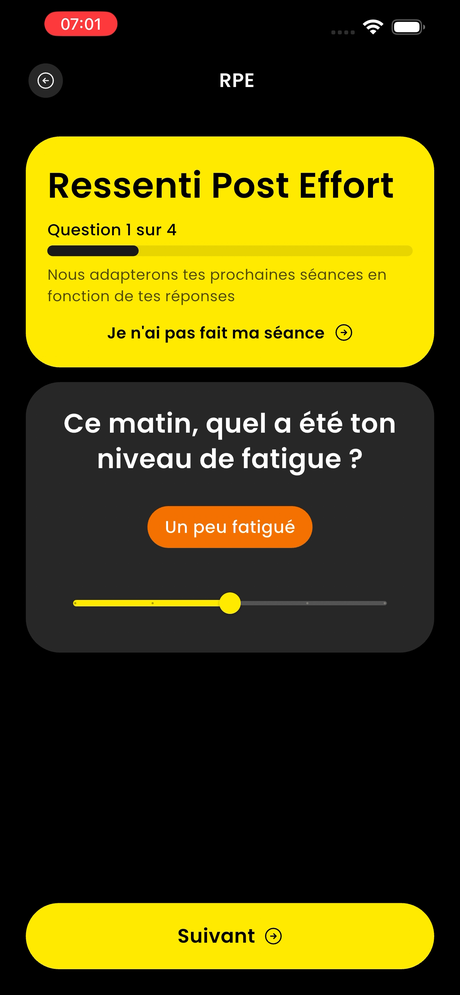
A programme that adapts to you every day
Every day, how you feel (RPE) is factored in to automatically adjust the rest of your programme: more load if all is well, a bit less if your ankle is complaining. This daily personalisation is what makes the difference compared to a fixed, paper-based programme.

Ready to start your programme?
Join the HOPP support programme designed by sports physios.
F.A.Q
Does the HOPP programme replace a medical consultation?
No. HOPP is a support and rehab tool designed by sports physiotherapists, but it doesn’t replace a doctor’s opinion. If in doubt, or if the pain persists, see a health professional.
Is the programme suited to all sporting levels?
Yes. Every programme is personalised to your sport, your level and how you feel each day, whether you’re a recreational athlete or preparing for competition.
What is the os trigonum?
It’s a small extra bone present in some people at the back of the talus, which can become a source of impingement if it’s repeatedly compressed by forced plantarflexion.[1]
Is surgery necessary?
Not always. Rehab often leads to a satisfactory functional improvement. Surgery is considered if well-conducted conservative treatment doesn’t succeed, particularly in professional dancers.[1]
Can I keep dancing with this impingement?
In many cases, yes, by temporarily adjusting pointe work while working on mobility and strengthening alongside it.
What’s the difference between posterior and anterior ankle impingement?
Posterior impingement affects the back of the ankle and is triggered by plantarflexion (pointing the toes), typical of dancers, while anterior impingement affects the front and is triggered by dorsiflexion (the foot lifting upward), more common in footballers who take shots on goal.
How long before you can get back to sport?
A gradual return is often possible within a few weeks, starting with movements that don’t require maximal plantarflexion, then progressively increasing intensity according to your tolerance.