


Quiz: shoulder pain, impingement or rotator cuff?
Pain when raising your arm, a worrying feeling of weakness, waking up at night: these signs help you understand whether your pain looks more like subacromial impingement or a rotator cuff issue.
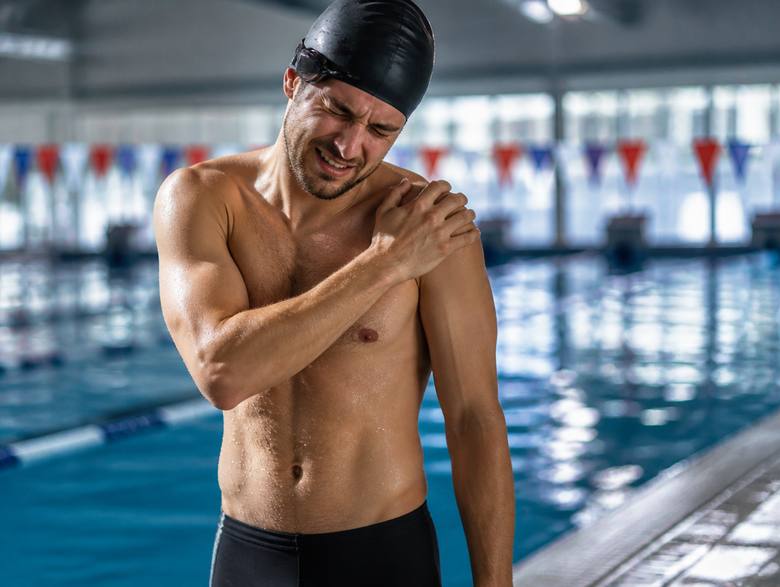
Impingement and rotator cuff: one family of pain
Long described as two separate problems, subacromial impingement and rotator cuff issues are now grouped by many guidelines under the broader term “subacromial pain syndrome”, since the mechanisms overlap heavily and the treatment is very similar.[1]
The common thread: too little space under the acromion
The rotator cuff tendons, especially the supraspinatus, pass through a narrow space under part of the shoulder blade called the acromion. When this space narrows further, especially raising the arm above horizontal, these tendons can get irritated or compressed, causing pain and sometimes weakness.

When real weakness should raise more concern
Pain alone points toward irritation or tendinopathy of the cuff tendons. Clear weakness, especially if sharp and recent, can suggest more significant damage to a cuff tendon and deserves a proper assessment.[2]
What works, in the vast majority of cases
Good news: most subacromial pain, whether impingement or cuff-related, improves with non-surgical care, as long as it’s well built and followed over time.
Why surgery isn’t the first option
Several studies comparing surgery to rehab found no clear benefit from the operation for a large share of subacromial pain, which is why guidelines put targeted exercise first.[1]
Still not sure what’s going on?
Do your HOPP assessment to precisely identify the nature of your shoulder pain.
The exercises that make the difference, and how long it takes
A landmark study compared a targeted exercise program to surgery in people with long-standing subacromial pain: both groups improved comparably, and a good share of those who did the exercises ultimately didn’t need surgery.[3]
What good exercises target
An effective program specifically works the strength and endurance of the rotator cuff, as well as the muscles that stabilize the shoulder blade (the “scapular stabilizers”). Generic shoulder strengthening, without this precise targeting, gives much less clear results.
How long before you feel a difference
A clear improvement is often noticeable within 6 to 12 weeks with a seriously followed program, but full recovery, especially to return to a sport with overhead movements, can take several months.
The sports that stress the rotator cuff the most
Swimming, tennis, volleyball, throwing, weightlifting with overhead or bench press: these practices repeat the movement that stresses the cuff the most. That’s no reason to stop them, but targeted preventive strengthening clearly reduces the risk of recurrence for regular practitioners.
Want a targeted exercise program?
Do your HOPP assessment for strengthening suited to your rotator cuff.
Shoulder vocabulary
Rotator cuff, acromion, scapula: a few anatomical pointers to understand what’s going on in your shoulder.
Rotator cuff
A group of four muscles and their tendons that stabilize the shoulder and allow the arm to rotate. It’s the structure most often involved in shoulder pain among athletes.
Supraspinatus
The most commonly affected of the four rotator cuff tendons, located on top of the shoulder. A large share of shoulder tendinopathies and impingements involve it first.
Acromion
The bony part of the shoulder blade that sits above the head of the humerus, and that defines the subacromial space where the cuff tendons pass.
Subacromial bursa
A small fluid-filled sac that reduces friction under the acromion. It can become inflamed (bursitis) and contribute to pain in case of impingement.
Scapula
Another name for the shoulder blade, the flat bone at the back of the shoulder whose good mobility conditions how the whole shoulder functions.
Frequently asked questions
How do I know if I have shoulder impingement or a rotator cuff issue?
The two patterns look a lot alike and are now grouped by most recent guidelines under the term “subacromial pain syndrome”. A real feeling of weakness, as if the arm might give out, points more toward the cuff, while pure pain without weakness suggests plain subacromial impingement. Only a clinical exam can settle it with certainty.
Why does my shoulder hurt when I raise my arm above my head?
It’s the most classic sign of subacromial pain: the rotator cuff tendons pass through a narrow space under the acromion, which narrows further as the arm rises above horizontal. Irritation or inflammation of these tendons then causes pain at that exact point in the movement.
Is shoulder pain that wakes you up at night serious?
It’s a common sign of subacromial pain, especially when sleeping on the affected side, and isn’t in itself a sign of severity. It mostly reflects local inflammation of the tendons or bursa, but is worth factoring into your care.
Should you operate on rotator-cuff-related shoulder pain?
No, not in most cases. Current guidelines favor non-surgical treatment first, especially a targeted exercise program, since surgery isn’t more effective than rehab for a large share of subacromial pain.
How long does it take to recover from shoulder pain?
With a well-followed exercise program, a clear improvement is often seen within 6 to 12 weeks, but full recovery can take several months depending on how long-standing the pain is and how consistent the strengthening work is.
Which sports put the most strain on the rotator cuff?
Sports with repeated overhead movements (swimming, tennis, volleyball, throwing, weightlifting with overhead or bench press) stress the rotator cuff the most. That’s no reason to stop, but targeted preventive strengthening clearly reduces the risk for regular practitioners.
Is strengthening enough to treat shoulder pain?
In most cases, yes, provided it specifically targets the rotator cuff and the scapula-stabilizing muscles, and is followed over several weeks. A poorly targeted program, or one stopped too soon, explains a good share of pain that lingers despite exercising.
Does this quiz replace a medical opinion?
No, it’s a general self-assessment tool that gives you a direction, not a diagnosis. For a specific situation or persistent pain, use the HOPP assessment or consult a healthcare professional.
Ready to understand your pain?
Do your assessment and get a personalized program in 3 minutes.


Go further
Scientific references
- Diercks R, Bron C, Dorrestijn O, et al. Guideline for diagnosis and treatment of subacromial pain syndrome: a multidisciplinary review by the Dutch Orthopaedic Association. Acta Orthopaedica, 2014;85(3):314-322. PubMed: pubmed.ncbi.nlm.nih.gov/24847788
- Lewis J. Rotator cuff related shoulder pain: assessment, management and uncertainties. Manual Therapy, 2016;23:57-68. PubMed: pubmed.ncbi.nlm.nih.gov/27083390
- Holmgren T, Björnsson Hallgren H, Öberg B, Adolfsson L, Johansson K. Effect of specific exercise strategy on need for surgery in patients with subacromial impingement syndrome: randomised controlled study. BMJ, 2012;344:e787. PubMed: pubmed.ncbi.nlm.nih.gov/22349588
This page is based on peer-reviewed scientific publications. It remains a general self-assessment tool and does not replace medical advice.