


Quiz: is my back pain something to worry about?
Most back pain is harmless and settles within a few weeks. But certain signs should send you to a doctor without delay. Answer a few questions to find out where you stand.
Question 1/5
Do you have any of these signs right now: loss of sensation between the legs or around the anus, new urinary leakage or incontinence, fever, unexplained weight loss, or pain following a violent shock (fall, accident)?
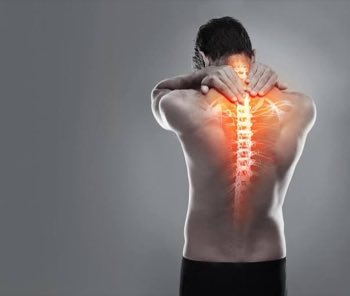
Why back pain is, most of the time, harmless
Back pain is one of the most common complaints among athletes and sedentary people alike. In the vast majority of cases, it’s what’s called non-specific low back pain: a muscular or joint overload with no serious injury, which improves within days to a few weeks.[1] It’s neither a fracture, nor a complicated disc herniation, nor an underlying disease: just a back that was pushed beyond what it could handle at that moment.
The real indicator isn’t how intense the pain is
Pain can be very intense without being serious, and conversely, mild pain can sometimes accompany a serious problem. What separates ordinary back pain from a situation to watch is a set of specific signs, independent of how much pain you feel: sensation changes, urinary problems, fever, weight loss, or pain following a violent trauma.[2]

Why moving remains the best response
Contrary to a still-common belief, prolonged bed rest doesn’t speed up recovery from ordinary back pain, it actually tends to prolong it. Staying active within a comfortable range, and gradually resuming normal movement, is the recommendation found in nearly every clinical guideline on the topic.[1]
When back pain should really send you to the doctor
A minority of back pain hides something more serious: vertebral fracture, infection, or compression of the nerves that control the bladder and bowels (cauda equina syndrome). These situations remain rare, but they’re recognized by precise clinical signs, called “warning signs” or “red flags” in the medical literature.[3]

Pain radiating down the leg: possible sciatica
When back pain comes with pain, tingling, or weakness radiating down one leg past the knee, it’s likely sciatica: the nerve running from the lower back is irritated, often by a disc herniation. It isn’t necessarily serious, but it changes the approach and deserves a proper assessment rather than plain rest.
What the combination of several signs tells you
Taken alone, some signs (night pain, long-standing pain) aren’t enough to conclude anything. It’s their combination, especially with radiation down the leg or pain that never changes with position, that makes a picture more suggestive of something beyond ordinary mechanical back pain, and that calls for a closer look.
Want to understand your back pain?
Do your HOPP assessment to identify what’s going on and start a suitable program.
Where ordinary back pain comes from, most of the time
Back pain is one of the leading causes of disability worldwide, across all ages, which says more about how common it is than about how serious it usually is.[4] In most cases, it doesn’t come from a single incident but from the build-up of several small factors.
1st
leading cause of disability worldwide, across all countries
<10%
of cases hide a specific cause identifiable on imaging
1 to 6
weeks, the usual duration of an acute back pain episode
Lack of movement, a top everyday risk factor
Prolonged static postures (sitting all day, long car rides) reduce mobility in the lower back and increase the area’s sensitivity. It isn’t the position itself that’s the problem, it’s the lack of variation: staying still for hours on end, whatever the posture, ends up irritating the area.
Stress and muscle tension, an often underrated factor
Chronic stress increases back muscle tension and overall pain sensitivity, which can both trigger an episode and make it last longer. This obviously isn’t the only explanation, but it’s a recognized factor not to overlook when back pain lingers with no clear mechanical cause.
How to stop it from coming back
Once the episode has passed, the real question becomes: how do you lower the risk of a new one? Two levers come up repeatedly in the guidelines.
Trunk strengthening, a real lever
A stronger, more resilient trunk absorbs everyday strain better (carrying, bending, sitting) and reduces how often painful episodes recur in people who’ve already had back pain.
Adjusting your workstation and loading habits
Adjusting your screen height, how you lift a load (bending the knees rather than the back), and building active breaks into a sedentary day are simple changes that, added up, make a real difference over time.
Want a program to avoid a recurrence?
Do your HOPP assessment for back strengthening suited to your profile.
Back pain vocabulary
A few words come up often when talking about back pain, without always being well explained. Here’s what you need to know.
Low back pain (lumbago)
General medical term for pain localized in the lower back, at the level of the lumbar vertebrae. It’s the term you’ll find most often in a medical report, where “back pain” stays the everyday phrase.
Acute lumbago
Common name given to a sudden flare of low back pain, often after an awkward movement or lifting a load. It isn’t a diagnosis on its own, just a popular way of naming a low back pain flare-up.
Sciatica
Pain that follows the path of the sciatic nerve, from the lower back down into the leg, sometimes as far as the foot. It’s distinguished from simple low back pain by this characteristic radiation beyond the knee.
Disc herniation
Displacement of part of the intervertebral disc (the cushion between two vertebrae) that can compress a nerve root and trigger sciatica. A disc herniation isn’t always painful: many people have one without knowing it.
Spine
Made up of cervical (neck), thoracic (mid-back), and lumbar (lower back) vertebrae, stacked on top of each other.
Paraspinal muscles
Deep muscles running along either side of the spine, stabilizing it day to day. Their excessive tension is one of the most common causes of ordinary back pain.
Frequently asked questions
Should back pain always worry you?
No. The vast majority of back pain is what’s called non-specific: it comes from a plain muscular or joint overload and improves within a few weeks, with or without treatment. Only a small minority of cases hide something more serious (fracture, infection, nerve compression), and specific signs help spot them.
What are the real warning signs of back pain?
New loss of sensation between the legs or around the anus, new urinary leakage or incontinence, fever, unexplained weight loss, or pain following a violent shock (fall, accident). If any of these signs are present, see a doctor without delay: they define an emergency, not the intensity of the pain alone.
Is pain radiating down the leg serious?
Not necessarily, but it’s a sign worth taking seriously, especially if it radiates past the knee or comes with tingling or weakness. It points toward an irritated sciatic nerve rather than simple mechanical back pain, and deserves a proper assessment.
Should you rest completely if you have back pain?
No, the opposite is recommended in the vast majority of cases. Staying active and moving within a comfortable range speeds up recovery, while strict, prolonged rest tends to prolong it. Gentle, progressive movement remains the best treatment for ordinary back pain.
Can stress cause back pain?
Yes, stress and psychological tension can amplify back pain or make it last longer, by increasing muscle tension and overall pain sensitivity. It isn’t the only cause, but it’s a recognized factor worth considering, especially for back pain that lingers.
Do you need an X-ray or MRI for back pain?
Not systematically. Without a warning sign, imaging doesn’t improve treatment outcomes and can even show findings present in people with no pain at all, which can cause needless worry. It becomes useful mainly when a warning sign points to a specific cause to confirm.
What exercises should you do for acute low back pain?
Gentle movements within a comfortable range: walking, pelvic tilts, progressive extension if it brings relief. The goal isn’t to “strengthen” the back mid-flare-up, but to keep it mobile. More structured trunk strengthening has its place once the acute phase has passed, to limit recurrence.
Does this quiz replace a medical opinion?
No, it’s a general self-assessment tool that gives you a direction, not a diagnosis. If any warning sign is present, see a doctor without delay. Otherwise, the HOPP assessment helps you understand your pain and start a suitable program.
Ready to understand your pain?
Do your assessment and get a personalized program in 3 minutes.


Go further
Scientific references
- Maher C, Underwood M, Buchbinder R. Non-specific low back pain. The Lancet, 2017;389(10070):736-747. PubMed: pubmed.ncbi.nlm.nih.gov/27745712
- Downie A, Williams CM, Henschke N, et al. Red flags to screen for malignancy and fracture in patients with low back pain: systematic review. BMJ, 2013;347:f7095. PubMed: pubmed.ncbi.nlm.nih.gov/24335669
- Finucane LM, Downie A, Mercer C, et al. International Framework for Red Flags for Potential Serious Spinal Pathologies. Journal of Orthopaedic & Sports Physical Therapy, 2020;50(7):350-372. PubMed: pubmed.ncbi.nlm.nih.gov/32438853
- Hartvigsen J, Hancock MJ, Kongsted A, et al. What low back pain is and why we need to pay attention. The Lancet, 2018;391(10137):2356-2367. PubMed: pubmed.ncbi.nlm.nih.gov/29573870
This page is based on peer-reviewed scientific publications. It remains a general self-assessment tool and does not replace medical advice.