

What is a psoas muscle strain?
Psoas anatomy
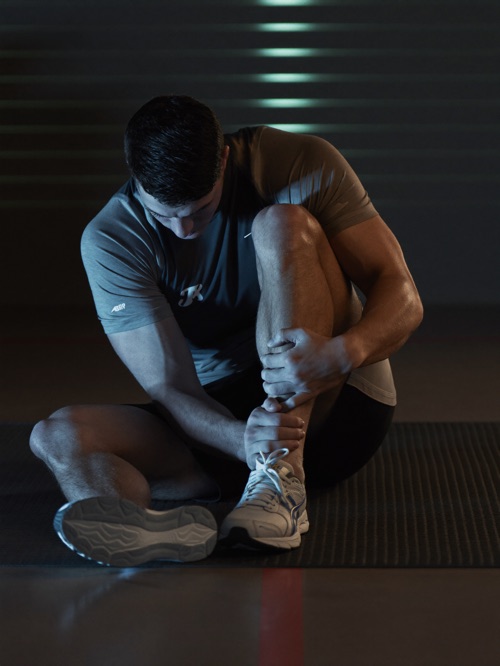
The psoas is a deep muscle that connects the lumbar spine to the femur, passing in front of the hip joint. As the main hip flexor, it’s heavily stressed during sprinting and explosive leg-flexion efforts, which exposes it to muscle strains during intense efforts or forced movements.
Why does this muscle get injured?
A psoas strain most often occurs during an explosive hip-flexion effort, such as a sprint, a kick, or a sudden start, particularly in athletes who haven’t warmed up sufficiently. Too rapid an increase in training intensity or a lack of flexibility in the muscle also raise the risk.
Symptoms and diagnosis of a psoas strain
Typical pain and what triggers it
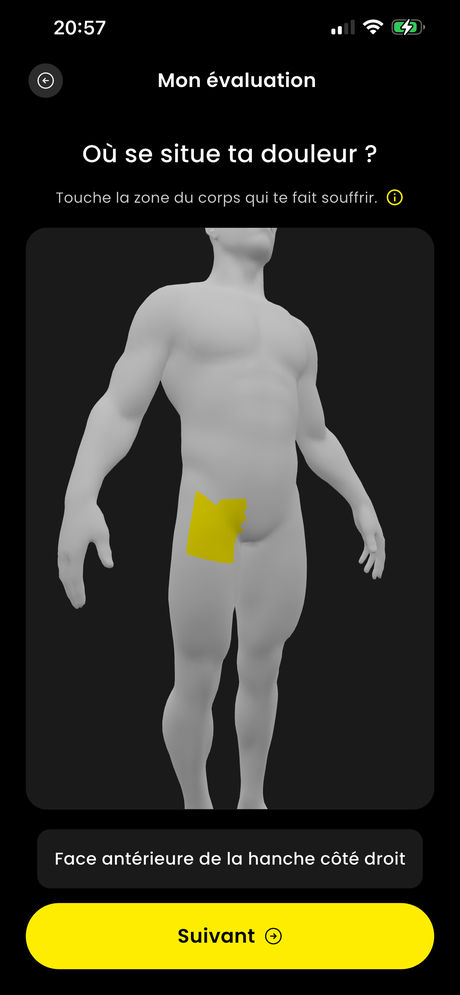
The pain is triggered by active hip flexion against resistance: sprinting, kicking, or taking the stairs quickly. It’s felt at the front of the hip or in the lower abdomen, sometimes fairly diffusely since the psoas is a deep muscle. Sharp pain, sometimes with a “pulling” or “popping” sensation followed by stiffness, is typical of higher grades.
Differential diagnosis
Other hip or groin pain can resemble this injury:
- Psoas tendinopathy, which develops gradually rather than appearing suddenly
- Hip impingement, worth considering if the pain is deeper and triggered by flexion combined with rotation
- Adductor muscle strain, usually located on the inner thigh
Causes and risk factors
A psoas strain most often occurs during an explosive movement on a muscle that isn’t sufficiently prepared.
Risk factors
- Insufficient warm-up before an explosive effort
- Muscle fatigue toward the end of a match or training session
- Too rapid an increase in training intensity
- A lack of flexibility in the psoas
- A previous psoas strain, a risk factor for recurrence
Which sports contribute to psoas muscle strains?
Any sport with explosive hip-flexion efforts exposes this muscle:
- Athletics (sprinting, hurdles)
- Football (striking, running)
- Martial arts (kicking)
- Dance
- Intensive cycling
- Sports with repeated explosive starts
Treating a psoas muscle strain in rehab with a sports physio
The goal of treatment is to allow the muscle to heal under good conditions, then progressively restore its strength to prevent any recurrence.
- 1Protection and relative rest of the area
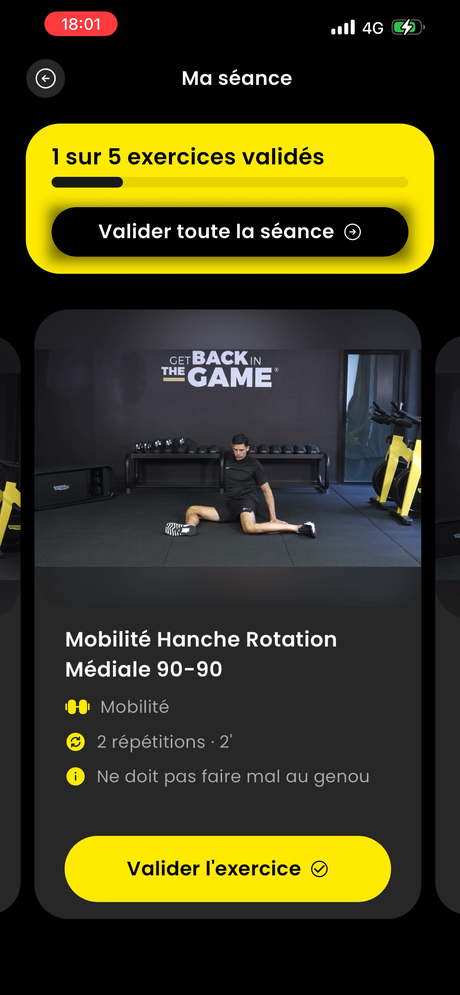
- 2Gentle hip mobility
- 3Light isometric contractions
- 4Progressive concentric strengthening
- 5Eccentric strengthening
- 6Pelvic chain work
- 7Reintroducing sport-specific movements
- 8Strengthening under sport-specific load
- 9Progressive return to your sport
- 10Return to competition
“A poorly managed muscle injury is the best way to get hurt twice in the same place.”
Progressive strengthening, the cornerstone of treatment
Strengthening the psoas must be introduced progressively, starting with pain-free isometric contractions before moving to concentric then eccentric work, with a very gradual reintroduction of explosive efforts.
In brief
- Isometric then progressive concentric strengthening
- Eccentric strengthening to prevent recurrence
- Associated hip mobility
- Gradual return: mobility, then load, then sport
Ready to take your psoas muscle strain seriously?
Start the HOPP programme designed by sports physios.
Should you rest or keep playing sport?
Prolonged total rest isn’t recommended: it causes loss of muscle mass and strength, which increases the risk of recurrence. It’s better to temporarily adapt your activity, avoiding explosive hip-flexion efforts, while quickly starting active, progressive rehab.
Think you might have a different hip injury?
Take your free test in 3 minutes flat.
When should you see a specialist for a psoas strain?
If you feel sudden pain accompanied by a “pop” or an inability to flex your hip, prompt medical attention is needed to rule out a more severe injury.
Recovery time for a psoas strain
A simple strain (grade 1) can resolve in one to two weeks, while a partial tear (grade 2) generally requires four to six weeks of progressive rehab. A complete tear (grade 3), which is rarer, can take several months and needs specialist medical input.
Preventing re-injury
The psoas is particularly prone to recurrence if you return too quickly. Several measures reduce this risk:
- Carry eccentric strengthening all the way through before a full return
- Keep up a specific warm-up including dynamic hip flexion before every session
- Adapt load progression in training
- Work on psoas flexibility outside of painful phases
- Don’t return to competition before strength and mobility criteria are validated
The HOPP care programmes to treat your psoas strain and get back to sport
To heal durably, this muscle strain requires a progressive, well-dosed return to explosive loading. HOPP offers you a precise exercise programme, allowing you to get back to your activities as quickly as possible.
The programme runs from 3 to 9 weeks depending on the injury and ends with a reconditioning phase allowing a return to competition in the best possible conditions. Each programme is designed by the HOPP team, made up of two sports physiotherapists who are experts in assessing and treating athletes. You’ll also find theoretical content throughout your progression, so you master every aspect of your recovery and can adjust your treatment independently. If needed, our team of physiotherapists is on hand to support you.
Essential
FROM INJURY TO
BACK TO YOUR ACTIVITIES
59€
One-time payment
“AT YOUR OWN PACE WITH
DAILY ADAPTATION”
- 100% of the treatment programme
- Daily personalisation
- Flexibility / Mobility
- Strengthening
- Proprioception
- Progress tracking
- Return-to-running programme
- Theoretical content included
Performance
TO GET BACK TO SPORT
IN THE BEST CONDITIONS
79€
One-time payment
“GET BACK TO YOUR LEVEL
WITHOUT RISK OF RELAPSE”
- 100% of the treatment programme
- Daily personalisation
- Flexibility / Mobility
- Strengthening
- Proprioception
- Progress tracking
- Return-to-running programme
- Theoretical content included
- + 4-week return-to-play plan with 6 difficulty levels
Expert
PERSONALISED VIDEO-CALL
SUPPORT, ANY TIME
149€
One-time payment
“A PHYSIO
WHENEVER YOU NEED”
- 100% of the treatment programme
- Daily personalisation
- Flexibility / Mobility, Strengthening, Proprioception
- Progress tracking
- Return-to-running programme
- Theoretical content included
- + 4-week return-to-play plan with 6 difficulty levels
- + 2 video calls with an expert sports physio / return check-up
A programme that adapts to you every day
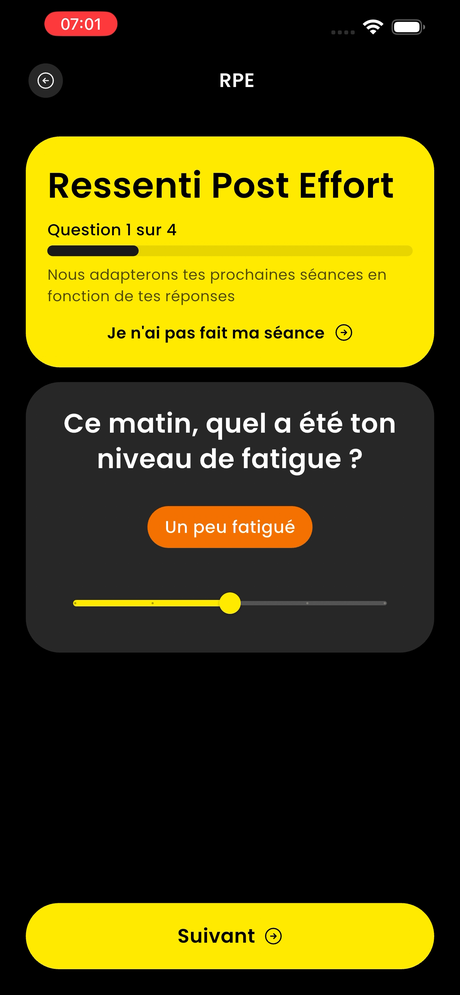
Every day, how you feel (RPE) is factored in to automatically adjust the rest of your programme: more load if all is well, a bit less if your hip is complaining. This daily personalisation is what makes the difference compared to a fixed, paper-based programme.

Ready to start your programme?
Join the HOPP support programme designed by sports physios.
F.A.Q
Does the HOPP programme replace a medical consultation?
No. HOPP is a support and rehab tool designed by sports physiotherapists, but it doesn’t replace a doctor’s opinion. If in doubt, or if the pain persists, see a health professional.
Is the programme suited to all sporting levels?
Yes. Every programme is personalised to your sport, your level and how you feel each day, whether you’re a recreational athlete or preparing for competition.
How long does it take to recover from a psoas strain?
It depends on the grade of the injury: a simple strain can resolve in one to two weeks, while a partial tear generally requires four to six weeks of progressive rehab.
Can I keep training with this injury?
It’s better to avoid explosive hip-flexion efforts that directly stress the psoas during the acute phase, but you can generally maintain a gentler activity.
Could this pain be confused with pubalgia?
The location can sometimes be similar, but the muscular origin (psoas) and the tendon origin (adductors, pubalgia) are distinguished through specific tests carried out during the assessment.
Why does this psoas injury come back so often?
The psoas is particularly prone to recurrence if eccentric strengthening isn’t carried all the way through before a full return to sport, which is why gradual reconditioning matters before resuming explosive hip-flexion efforts.
Should imaging always be done?
Not systematically for mild grades. An ultrasound or MRI is mainly useful if there’s doubt about severity, suspicion of a complete tear, or no improvement despite well-managed rehab.