



What is a muscle contracture?
A muscle contracture is a spasm of the muscle fibres following a difficult effort. Under conditions of intense effort and fatigue, the muscle can partly stay under tension even after the activity stops.
Unlike a structural injury (a tear, a strain), there’s no rupture of the fibres: it’s a dysfunction of muscle tone, generally reversible with the right approach.

Telling it apart from sore muscles or a tear
Three different patterns, not to be confused:
Contracture: muscle sensitive as soon as the effort ends, which stays contracted
Sore muscles (DOMS): pain appearing 24 to 48 hours after effort, without a continuously contracted muscle, see the dedicated page[1]
Muscle strain or tear: sharp pain, often immediate, sometimes with bruising, see the dedicated page
How to relieve a muscle contracture
The muscle can be released with massage, gentle stretching, or local heat. A physiotherapist can also use specific techniques (transverse massage, dry needling, electrostimulation) to relieve the pain and work more effectively on the muscle.
A contracture that persists or worsens despite these steps deserves a professional opinion, to rule out a more serious underlying muscle injury.
The HOPP solution to support you
HOPP helps you identify whether your discomfort is a simple contracture or a more serious injury, and adapt your return accordingly.
A clear pointer in 3 minutes
HOPP helps you understand what you’re feeling and tell a contracture apart from a more serious muscle injury.

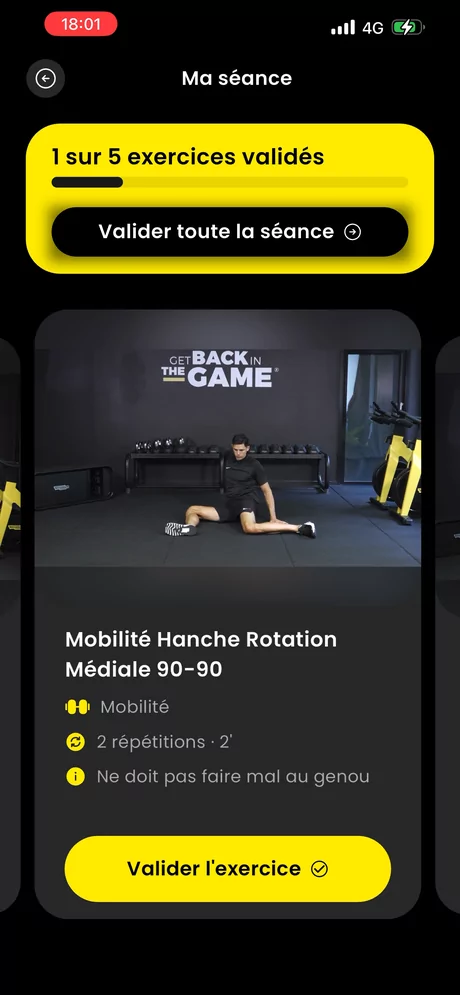
Guided release exercises
Videos filmed by sports physios to help you safely release the muscle.
Frequently asked questions
Is a contracture a real injury?
It’s a lighter condition than a tear or strain: there’s no rupture of the muscle fibres, just a reversible spasm of muscle tone.
Should you stop sport with a contracture?
A short break and release techniques (gentle stretching, massage, heat) are often enough. If the discomfort persists for several days, it’s better to see someone.
Heat or cold, which should you choose for a contracture?
Heat is generally recommended for a contracture, because it promotes muscle release, unlike cold, which is more suited to acute inflammatory phases.[2]
How do you know if it’s a contracture or a tear?
A contracture causes diffuse discomfort without sharp pain or bruising. Acute, localised pain that appears suddenly during effort is more suggestive of a structural injury that should be checked.
Pain that looks like a contracture?
Get a clear answer in 3 minutes and start your suitable programme.