


Injury
Groin pain (pubalgia): why so many relapses, and what really makes the difference in rehab
Pubalgia is one of the injuries I find hardest to treat well. Not because it is rare (groin injuries account for 12 to 18 % of all injuries over a professional football season[1]), but because an imprecise diagnosis or a rehab that moves too fast almost systematically leads to a relapse. Here is what hundreds of cases have taught me about this injury, and what truly separates a solid recovery from a groin problem that drags on for a whole season.
 By Thibault
3 October 2026
6 min read
Pubalgia: one pain, several possible origins
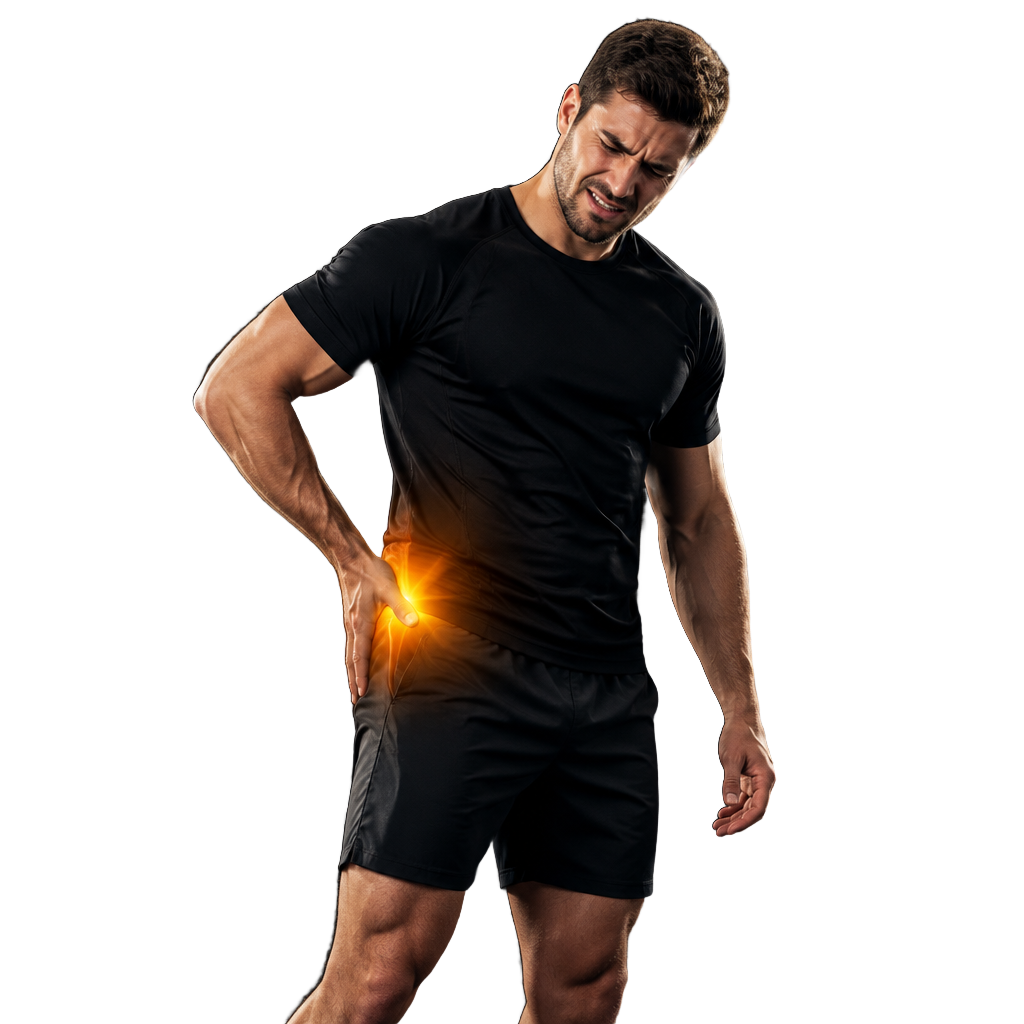
The word “pubalgia” actually covers several distinct lesions located around the pubic symphysis, where the adductors and the abdominal wall meet. Classically, we distinguish abdominal-wall pubalgia (rectus abdominis and obliques), adductor tendinopathy, and bone-and-joint involvement of the symphysis itself[2]. These three origins can coexist in the same patient, and that is precisely what makes this injury hard to pin down.
Why a precise diagnosis changes everything
Before even talking about rehab, I consider the diagnosis step non-negotiable. A clinical examination by a doctor, combined with imaging if needed, tells you exactly which structure is involved: the symphysis, the adductors, or the abdominals[3]. Starting a strengthening protocol without that precision means risking weeks of work on the wrong structure, or missing an injury that needs specific management.
3 structures to tell apart before rehab
- The pubic symphysis itself (bone-and-joint involvement)
- The adductor tendons, at their insertion on the pubis
- The abdominal wall, rectus abdominis and obliques (abdominal-wall form)
The pubalgia trap: a rehab that does not tolerate approximation
A very low tolerance for approximation
What sets pubalgia apart from many other sports injuries is its very low tolerance for approximation. One exercise too many in a session, a poorly dosed load on adductor work, or a progression that is too fast, and a relapse is possible. I see it regularly: the patients who progress best are those whose every stage is validated before moving to the next, not those who go “by feel”.
Physio’s view
A randomized trial compared active, targeted adductor work with conventional passive treatment: at 4 months, 68 % of the athletes who followed the active strengthening had returned to sport pain-free, versus only 12 % in the passively treated group[4]. Rest does not fix pubalgia: active, precise, well-dosed work does.
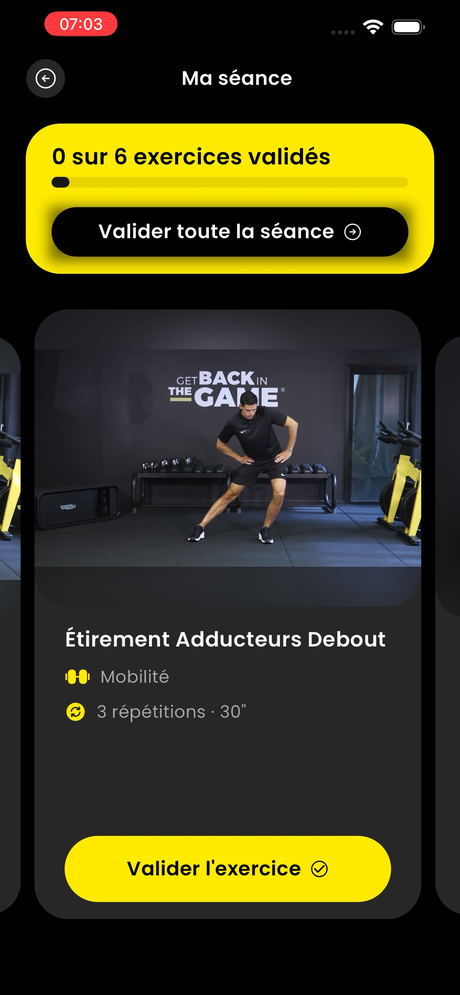
After each session, note the pain you felt during effort, the volume you did, and how you feel the next morning. This simple tracking lets you adjust the dosage week after week, and spot an exercise that is poorly tolerated right away, before it triggers a real relapse.
Groin pain setting in? Find your injury in 3 minutes.
Individualize rather than apply a standard protocol
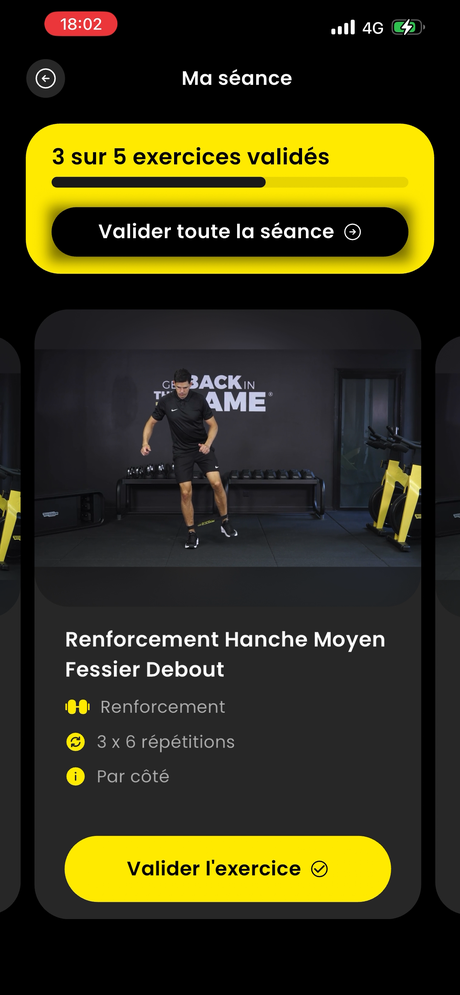
There are reference protocols for pubalgia, notably around eccentric adductor strengthening with the Copenhagen exercise. But I never apply them as they are. Every treatment must fit the patient: how the injury appeared (a gradual overload is not treated like an acute trauma), and their end goal.
Rebuilding the athlete’s real movement
Which sport will be played again, in which position, with which dominant movement pattern? A footballer who chains shots and changes of support does not have the same needs as a sprinter or a handball player who winds up a throw with rotation. I build the end of rehab around these specific movements, not around a generic pelvic strengthening program.

“Protocols exist, but there is no typical pubalgia. I always adapt to the patient, to when the injury appeared, and to the end goal: which sport, which position, which movement pattern needs to be retrained to put them back in real conditions.”
Thibault Vignais
Sports physiotherapist, co-founder of HOPP
Return-to-play tests: the step you must never skip
Changing direction, the riskiest moment
Returning to competition, and more specifically the first change of direction at full speed, is when I see the most relapses. It is a very demanding movement for the groin, and the absence of pain at rest absolutely does not guarantee it will be well tolerated.
In a follow-up of athletes after an acute adductor injury, the one-year relapse rate was 8 % on average, but it rose to 21 % among athletes who had not met the “pain-free during effort” criterion before returning, versus only 5 % among those who had[5]. The return-to-play check is not a formality: it is what gives the green light, not the mere disappearance of pain at rest.
Functional tests before allowing a return
This is why I never skip functional tests before allowing a return to competition: adductor strength, hip mobility, and above all tolerance to changes of direction and accelerations at full speed, in conditions close to those of a match.
What really makes the difference
Ultimately, a well-treated pubalgia rests on three pillars: a precise diagnosis of the structure involved, a rigorously dosed and individualized strengthening progression, and a return validated by real functional tests rather than by feeling alone. Skip any one of these three pillars, and the risk of relapse rises markedly.
Are you suffering from groin pain?
HOPP lets you identify your injury in 3 minutes and start a personalized care program right away, designed by FIFA-certified sports physiotherapists with more than 17 years of experience. No waiting for an appointment, wherever you are.
Frequently asked questions
Can you keep playing sport with pubalgia?
It all depends on the intensity of the symptoms and the structure involved. Movements that reproduce the pain, shots, changes of direction, sprints, should be suspended or strictly limited during the assessment and the start of treatment. On the other hand, cycling without resistance, swimming without a leg kick or upper-body strengthening can often be kept up.
How long does pubalgia rehab last?
There is no single timeline: it depends on the structure involved, how long the symptoms have been there and how rigorous the follow-up is. Precise, well-dosed treatment often allows a return within a few weeks for a recent case, but a pubalgia that has been present for several months requires a longer rehab, carried through to the end of the return-to-play tests.
Is imaging always needed to diagnose pubalgia?
The clinical examination remains the central step, but imaging is very often useful to confirm the structure or structures involved and rule out other diagnoses, particularly when several origins are suspected at once[3]. It is this pairing of clinical examination and imaging that lets you build a targeted protocol rather than a generic one.
Can pubalgia come back after healing?
Yes, and this is why the return should never be based on the mere disappearance of pain at rest. Strengthening work kept up as prevention, a cautious progression when resuming after a break, and particular vigilance on the first changes of direction in competition clearly reduce this risk.
Scientific references
- Waldén M, Hägglund M, Ekstrand J. The epidemiology of groin injury in senior football: a systematic review of prospective studies. British Journal of Sports Medicine, 2015;49(12):792-797. PubMed : pubmed.ncbi.nlm.nih.gov/25833901
- Weir A, Brukner P, Delahunt E, Ekstrand J, Griffin D, Khan KM, et al. Doha agreement meeting on terminology and definitions in groin pain in athletes. British Journal of Sports Medicine, 2015;49(12):768-774. DOI : 10.1136/bjsports-2015-094869
- Branci S, Thorborg K, Bech BH, Boesen M, Magnussen E, Court-Payen M, Nielsen MB, Hölmich P. The Copenhagen Standardised MRI protocol to assess the pubic symphysis and adductor regions of athletes: outline and intratester and intertester reliability. British Journal of Sports Medicine, 2015;49(10):692-699. PubMed : pubmed.ncbi.nlm.nih.gov/25488954
- Hölmich P, Uhrskou P, Ulnits L, Kanstrup IL, Nielsen MB, Bjerg AM, Krogsgaard K. Effectiveness of active physical training as treatment for long-standing adductor-related groin pain in athletes: randomised trial. The Lancet, 1999;353(9151):439-443. PubMed : pubmed.ncbi.nlm.nih.gov/9989713
- Serner A, Weir A, Tol JL, Thorborg K, Lanzinger S, Otten R, Hölmich P. Return to Sport After Criteria-Based Rehabilitation of Acute Adductor Injuries in Male Athletes: A Prospective Cohort Study. Orthopaedic Journal of Sports Medicine, 2020;8(1):2325967119897247. PubMed : pubmed.ncbi.nlm.nih.gov/32064292
Une blessure à l'aine ?
Get the facts on your injury in 3 min
- Start your care without waiting
- Get back to your activities without wasting time