


Injury
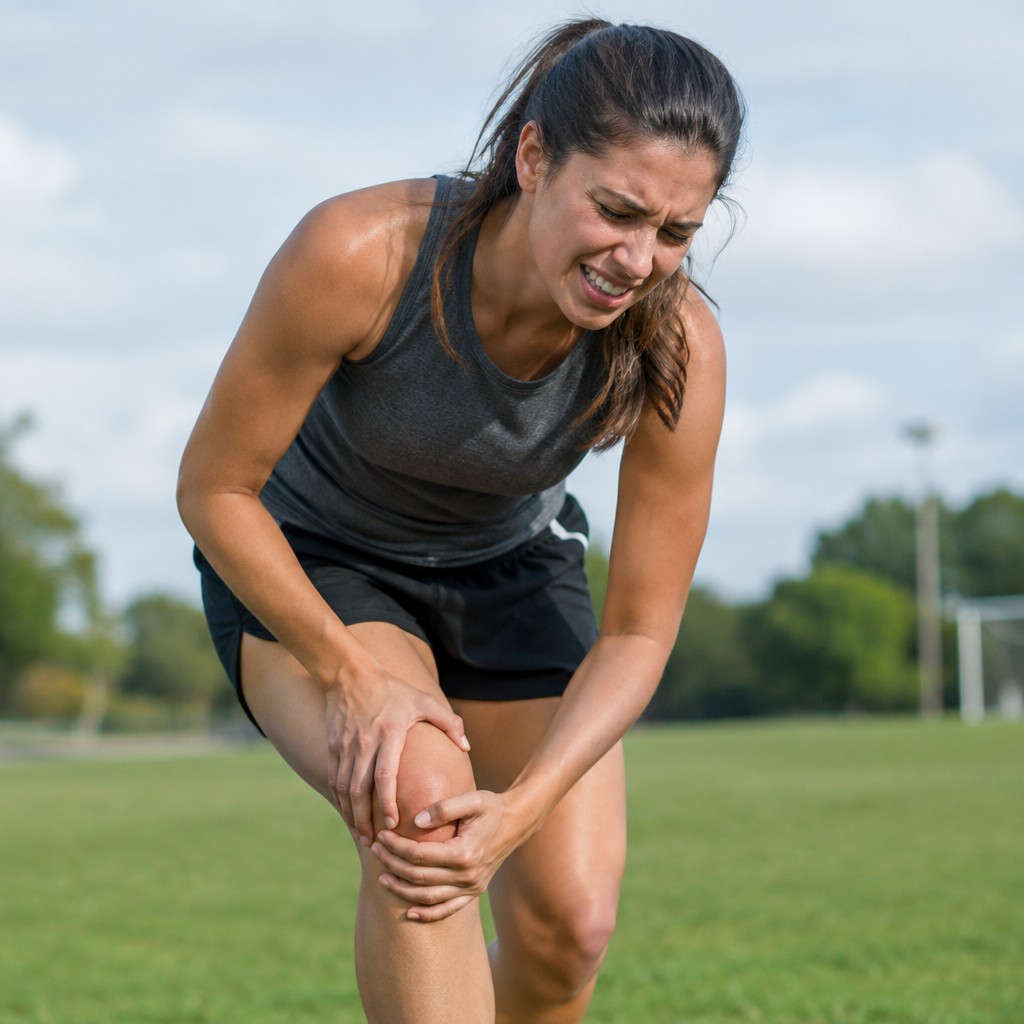
Returning to sport too soon after an injury: the mistake I see every week
This is the most common problem I see in my practice, whatever the injury. The pain is gone, motivation is at its peak, and the patient thinks: “ok, I’m getting back to it.” But no pain does not mean the problem is solved, nor that a ligament or a muscle has healed. The body needs time to adapt, and trying to go faster than that time is the mistake that costs the most.
 By Thibault
5 November 2026
5 min read

No pain does not mean the tissue is ready
The body needs time to adapt
A ligament or a muscle does not regain its strength simply because the pain has gone. The tissue adapts gradually to the load placed on it, and this adaptation takes time[1]. Depending on the type of injured tissue, you have to respect that time before loading it again, so that it adapts and gets trained for the movement and the biomechanics of the target sport.
The classic story among runners
I see it every week in my practice: “I felt good so I ran again, but for two days now it hurts again.” It is especially classic among runners. Very often the injury happens close to a deadline, and as soon as the pain goes away, the temptation to start jogging again so as not to lose more cardio becomes very strong.

Physio’s take
This is the number one mistake I encounter in my practice, whatever the injury. A return that is too early and goes badly means a setback of several days, sometimes several weeks. The worst part is that this setback is almost always avoidable.
The price of a failed return
After a muscle injury, the highest risk of reinjury is precisely in the first two weeks after returning, and athletes who get reinjured have on average returned earlier than those who did not[2]. In other words, trying to gain a few days by returning too early risks losing many more if it goes badly.
Signs that your return was too early
- The pain comes back in the days after you resumed, even though it had gone away
- You went straight back to your pre-injury intensity or volume
- No specific strengthening was done between the end of the pain and the return to sport
Understanding progressive loading
The body adapts under load, and it needs load to progress
What you need to understand is what I call the assessment of external loads: the body adapts under load, so it takes load to progress. This is the very principle of mechanotherapy: the exercise prescribed by the physio triggers the mechanical signals that drive tissue repair[3]. A tendon or a ligament that never receives an appropriate load never regains its pre-injury strength[4]. The paradox, documented in elite sport, is that athletes who stop for too long without reintroducing progressive load sometimes get injured more than those who keep loading intelligently[5].
The 3 criteria to dose this load
To dose this load, I rely on 3 simple subjective criteria, validated for pain monitoring during rehabilitation[6]:
The 3 criteria to know whether the load is appropriate
- No pain above 3/10 during the effort
- No pain when cold, 30 minutes to 2 hours after the effort
- No pain the next morning
If one of these 3 criteria is not met, it was too much, and you need to scale down.
When you return, aim low. It is better to be certain you trigger no pain on the 3 criteria with a deliberately too easy session than to aim just right and have to start again from zero.
Once the lights are green, progress in steps
If the 3 criteria are met, you can then increase the loads gradually, always listening to your sensations. A too rapid increase in training load remains one of the best-documented injury risk factors, much more than the absolute level of load[2]. Progressing in small steps, revalidating the 3 criteria at each stage, is what lets you go fast without ever starting over.
An injury that drags on or comes back every time you return?
HOPP lets you identify your injury in 3 minutes and start a personalized care program right away, designed by FIFA-certified sports physios with more than 17 years of experience. No waiting for an appointment, wherever you are.
Frequently asked questions
Why is the absence of pain not enough to return to sport?
Because a ligament or a muscle needs time to adapt to load, regardless of when the pain goes away. Pain stopping often marks the end of the inflammatory phase, not the end of tissue healing.
What is the risk of returning too early?
The risk of reinjury is highest in the first two weeks after a return that is too early. A failed return often means a setback of several days to several weeks, much more costly than the time you thought you were saving.
How do I know if the intensity of my return is appropriate?
By following 3 criteria: no pain above 3/10 during the effort, no pain when cold between 30 minutes and 2 hours after, and no pain the next morning. If even one of these criteria is not met, you need to step back.
How do I progress once the return is validated?
In progressive steps, revalidating the 3 pain criteria at each stage. A too rapid increase in load remains one of the best-documented injury risk factors.
Scientific references
- Lazarczuk SL, Maniar N, Opar DA, Duhig SJ, Shield A, Barrett RS, Bourne MN. Mechanical, Material and Morphological Adaptations of Healthy Lower Limb Tendons to Mechanical Loading: A Systematic Review and Meta-Analysis. Sports Medicine, 2022;52(10):2405-2429. PubMed : pubmed.ncbi.nlm.nih.gov/35657492
- Wulff MW, Mackey AL, Kjær M, Bayer ML. Return to Sport, Reinjury Rate, and Tissue Changes after Muscle Strain Injury: A Narrative Review. Translational Sports Medicine, 2024;2024:2336376. PubMed : pubmed.ncbi.nlm.nih.gov/39263259
- Khan KM, Scott A. Mechanotherapy: how physical therapists’ prescription of exercise promotes tissue repair. British Journal of Sports Medicine, 2009;43(4):247-252. PubMed : pubmed.ncbi.nlm.nih.gov/19244270
- Hulin BT, Gabbett TJ, Blanch P, Chapman P, Bailey D, Orchard JW. Acute:chronic workload ratio predicts injury: high chronic workload may decrease injury risk in elite rugby league players. British Journal of Sports Medicine, 2016;50(4):231-236. PubMed : pubmed.ncbi.nlm.nih.gov/26511006
- Gabbett TJ. The training-injury prevention paradox: should athletes be training smarter and harder? British Journal of Sports Medicine, 2016;50(5):273-280. PubMed : pubmed.ncbi.nlm.nih.gov/26758673
- Silbernagel KG, Thomeé R, Eriksson BI, Karlsson J. Continued sports activity, using a pain-monitoring model, during rehabilitation in patients with Achilles tendinopathy: a randomized controlled study. The American Journal of Sports Medicine, 2007;35(6):897-906. PubMed : pubmed.ncbi.nlm.nih.gov/17307888
A pain, an injury?
Get the facts on your injury in 3 min
- Start your care without waiting
- Get back to your activities without wasting time