


The comparison at a glance
The three solutions meet different needs. None is strictly better than the others: the right choice depends on your injury, your budget and the time you have available.
| Criteria | Clinic | Teleconsultation | HOPP |
|---|---|---|---|
| Manual techniques (massage, mobilisations) | |||
| Assessment carried out by a physio | |||
| Personalised exercise programme | |||
| Day-to-day adjusted follow-up | |||
| Immediate start, no appointment | |||
| No prescription needed | |||
| No travel | |||
| National health insurance reimbursement | |||
| Fixed, transparent price | |||
| Video call with a physio |
Ready to try HOPP?
Start your programme, no prescription or appointment needed.
In-person clinic, in detail
An in-clinic session remains the only solution that allows a direct physical examination and manual techniques (massage, passive mobilisations). It’s the reference for injuries that need hands-on contact or specialist equipment. In exchange, you need a prescription, a waiting time to get an appointment, and travel for every session.
Classic teleconsultation, in detail
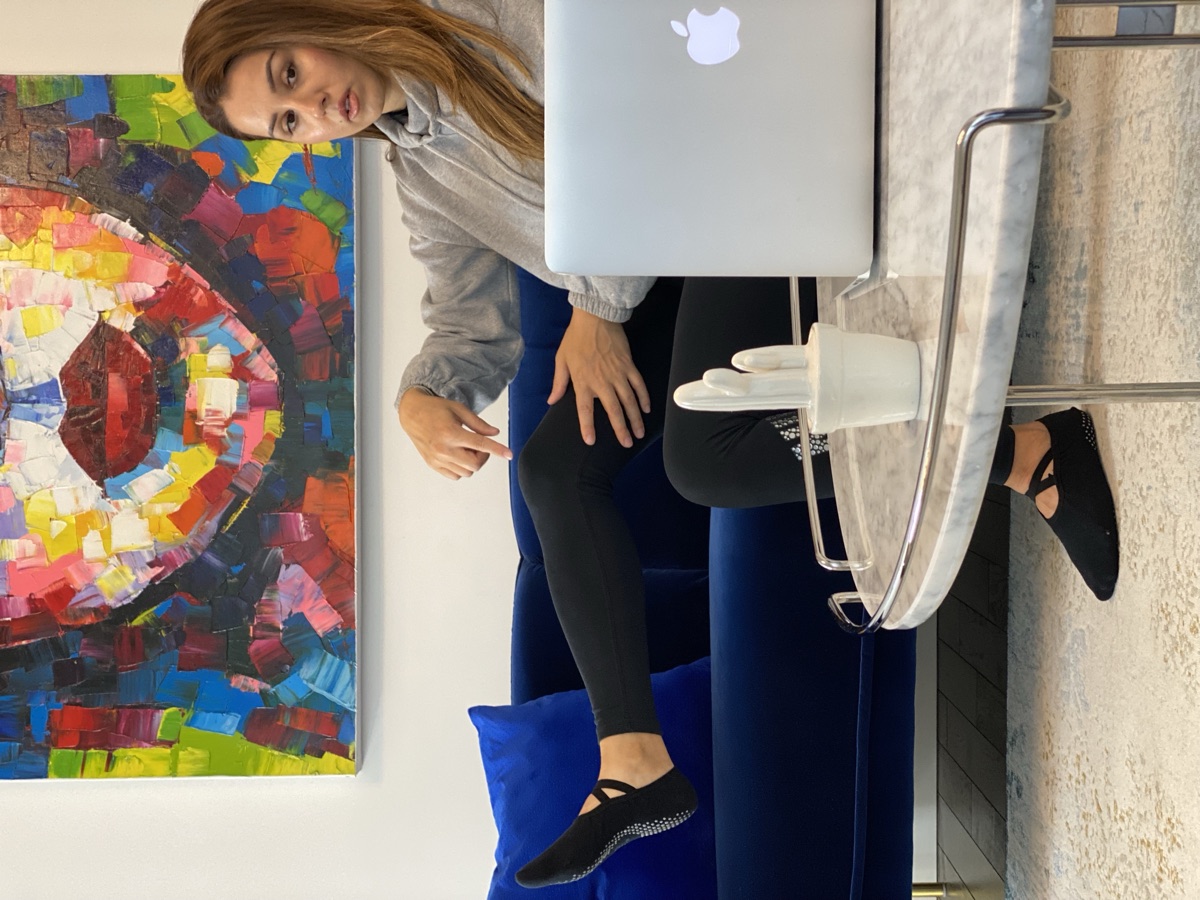
Teleconsultation with a physiotherapist works like an in-clinic session, but remotely: same prescription, same national health insurance reimbursement, same physio following you over time. The only difference is the absence of manual techniques, since everything happens in front of a screen.
HOPP, in detail
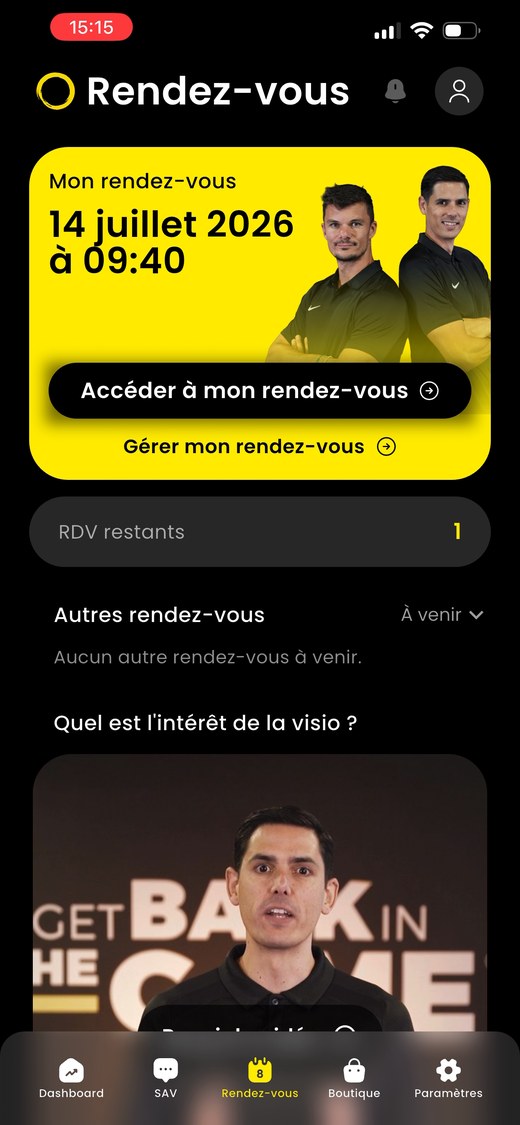
HOPP is neither a clinic nor a classic teleconsultation: it’s a fixed-price digital programme, designed by FIFA-certified sports physios. No prescription, no appointment to wait for, you start your assessment and your programme immediately. In exchange, it isn’t reimbursed by national health insurance.
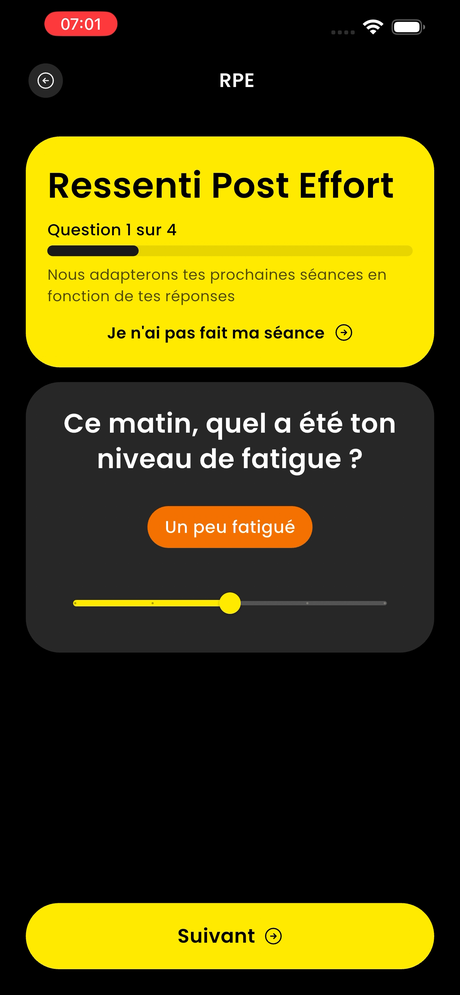
The main difference from a classic teleconsultation: your programme adjusts every day to how you feel (RPE), without waiting for your next session. With the Expert plan, you can also talk with a sports physio via video call.
Which solution for which situation?
- Care after surgery that requires massage or manual mobilisations: go for a clinic
- You want regular one-on-one follow-up with the same physio, without travelling, and you have a prescription: classic teleconsultation is made for you
- You want to start immediately, without waiting for an appointment, for a common sports injury (tendinopathy, muscle soreness, mild sprain): HOPP directly meets that need
In the most complex cases (post-surgery, long-standing injury), combining approaches, for example clinic follow-up supplemented by a HOPP programme between sessions, often gives the best results.
Does online follow-up with a physio really work?
Yes, for the majority of common sports injuries (tendinopathies, muscle pain, mild sprains), well-structured remote follow-up is effective: it allows a precise assessment, a personalised exercise programme and regular adjustments as you progress. Its limit is clear: it doesn’t replace manual techniques, like massage or passive mobilisations, which require the physical presence of a practitioner.
What online follow-up can do
A precise assessment based on a detailed questionnaire and functional tests that you carry out yourself, guided step by step. A strengthening, mobility and return-to-sport programme suited to your injury and your level. Continuous adjustment based on how you feel (pain, fatigue, progress), which a weekly in-clinic session doesn’t always allow at the right pace. Education about your injury, to understand why it happened and how to avoid a recurrence.
What online follow-up doesn’t replace
A direct physical exam by palpation, specific manual tests, and of course the manual techniques themselves (massage, passive mobilisations, manual therapy). For a severe injury, a post-surgery situation or an uncertain diagnosis, an initial in-clinic assessment is still recommended, before or alongside remote follow-up.
Is online follow-up serious and reliable?
Teleconsultation with a physiotherapist is a recognised and regulated practice in France, on the same footing as an in-clinic consultation. At HOPP, programmes are designed by FIFA-certified sports physios, which guarantees an approach based on the same rehab principles as classic follow-up, simply adapted to a digital format.
Frequently asked questions
Does online follow-up with a physio really work?
Yes, for the majority of common sports injuries such as tendinopathies, muscle pain or mild sprains. A well-structured online follow-up allows a precise assessment, a personalised exercise programme and regular adjustments. Its only real limit is the absence of manual techniques, which require the physical presence of a physio.
How do I know if I should see a physio in person or choose remote follow-up?
If your injury needs massage, manual mobilisations, or if you’re recovering from surgery, go for an in-person clinic. If you’re looking for a personalised exercise programme, regular follow-up and a quick start without the constraints of an appointment, remote follow-up like HOPP or a classic teleconsultation meets that need better.
Do I need a prescription for a classic teleconsultation or for HOPP?
A prescription is needed for a classic teleconsultation with a physio, just like for an in-clinic session, in order to be reimbursed by national health insurance. With HOPP, no prescription is needed: you start your programme immediately, in exchange for a fixed price with no health insurance reimbursement.
Can HOPP completely replace an in-clinic session?
No, not for everything. Unlike an in-person clinic, HOPP doesn’t offer massage or manual techniques. For most sports injuries (mild sprains, tendinopathies, muscle pain), a well-run strengthening and mobility programme is largely enough, but some situations still require hands-on care in a clinic.
Why isn’t HOPP reimbursed like a classic teleconsultation?
A classic teleconsultation is an individual medical act billed to national health insurance on prescription. HOPP is a fixed-price digital programme, not a regulated medical act: that’s exactly what makes it immediately accessible, with no prescription or waiting time.
Which solution is the fastest to start?
HOPP: you start your online assessment and your programme immediately. A classic teleconsultation or an in-clinic session require a prescription and then an appointment, which usually takes several days.
Ready to start without waiting?
Identify your injury and get your personalised programme in 3 minutes.


How to choose your type of care after a sports injury?
There isn’t a single right answer: the choice depends on your injury, what you’re looking for and your constraints. Here are the four criteria that should really guide your decision.
1. The severity and type of your injury
Muscle pain, tendinopathy or a mild sprain can be very effectively managed remotely, with a suitable exercise programme and regular follow-up. Conversely, a severe injury, a post-surgery situation or a case that requires a direct physical exam (palpation, manual tests, passive mobilisations) needs in-clinic care, at least for the initial assessment.
2. Whether you need manual techniques or not
If you’re looking for massage or passive mobilisations performed by a professional’s hands, only a clinic meets that need. If your priority is understanding your injury, having a structured exercise programme and being followed through your progress, distance isn’t an obstacle: it’s often even easier to fit into your daily life.
3. Prescription, reimbursement and budget
Clinics and classic teleconsultation require a prescription and are reimbursed by national health insurance, with a waiting time to get an appointment. HOPP works on a different principle: fixed price, no prescription, but no health insurance reimbursement. The right choice depends on whether you prioritise financial cover or speed of access.
4. How quickly you need it
For pain that’s just appeared and that you want to treat right away, waiting for an in-clinic or teleconsultation appointment can delay your recovery by several days, or even several weeks. A programme like HOPP lets you start an assessment and suitable exercises immediately, which is often decisive in the first days after a common sports injury.