


Uncategorized
What works for treating a muscle injury as a physio, after 15 years of experience
Muscle injuries are among the most common injuries I see in clinic. They’re also among the most frustrating for athletes: the pain is sudden, sharp, and the stoppage is immediate. But what happens afterwards — the quality of the care, the rigour of the programme, respecting the dosage — is what determines everything: how long you’re out, how solid the scar tissue is, and above all the risk of relapse. Here’s what I’ve learned in 15 years of practice.
 By
29 August 2026
8 min read
By
29 August 2026
8 min read
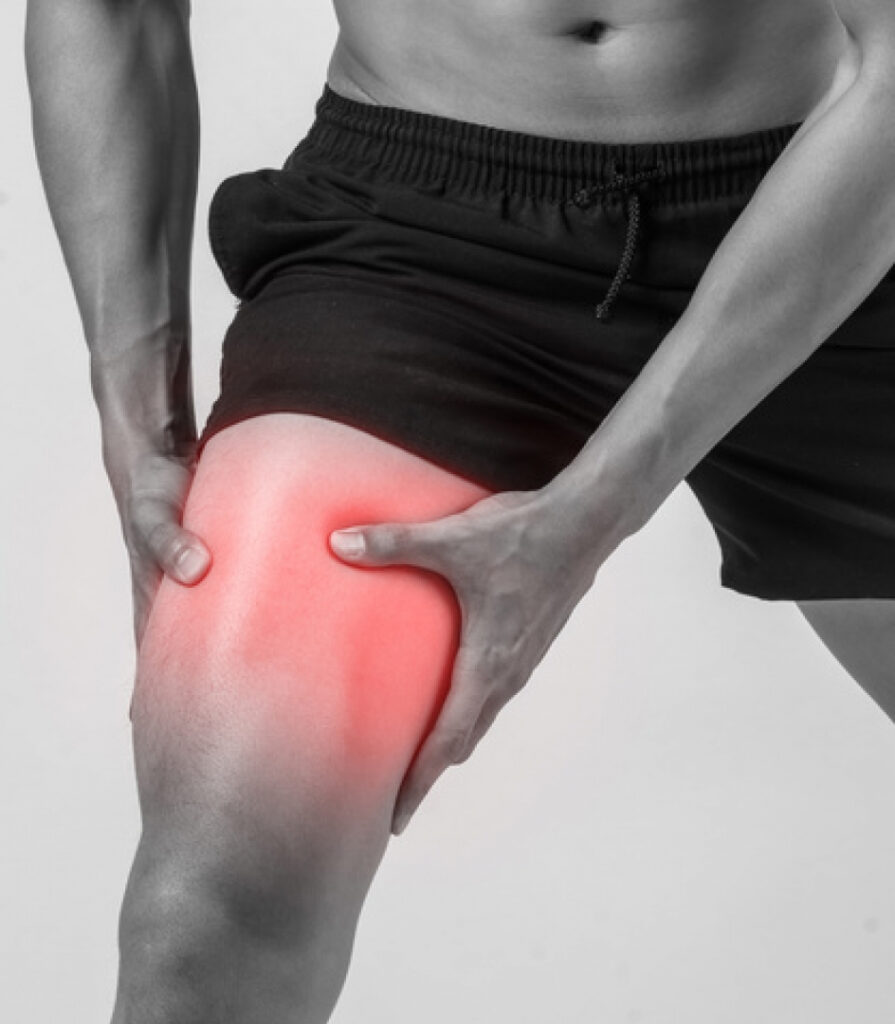
The muscle injuries I see in clinic
Every week, I see new patients for rehab following muscle injuries. Almost all the cases I see involve the lower limb: hamstrings, quadriceps, calf. These are powerful muscles, heavily loaded in sport, and particularly exposed to extreme demands like sprinting, kicking or jumping.
A hamstring injury during a sprint
This is the muscle injury I see most often. A sprint, and that sensation of a knife stab at the back of the thigh, unable to go any further. The injury stops you dead. It’s a hamstring injury, classic in every sport with high-intensity sprint phases: football, rugby, athletics. But also climbing, which can cause hamstring injuries during movements combining hip flexion and knee extension under tension.
This muscle is particularly vulnerable because it works across two joints at once. It flexes the knee and extends the hip, and it’s loaded eccentrically with every fast stride, at the exact moment it’s most lengthened and therefore least able to absorb a sudden strain.
A quadriceps injury from a kick in football
During a kick in football, the quadriceps undergoes a maximal contraction in a lengthened position. It’s this combination — intense effort during a stretch phase — that causes the tear. The pain is immediate and sharp, stopping the player dead in their movement. The front of the thigh is painful to touch, sometimes swollen, and any attempt to contract the muscle reproduces the pain.
This type of injury is also common in contact sports, where a direct blow to a contracted quadriceps can cause a deep muscle contusion, sometimes mistaken for a pure tear. The distinction matters because the rehab protocol differs slightly.
A calf injury during a sprint or a jump
The calf is a muscle exposed to every push-off action: sprinting, jumping, rising onto the toes. The action I most often see behind a calf injury is coming to the net in tennis or padel. A fast, powerful ankle extension, often on a hard surface, combined with slight knee flexion.
The sensation described is almost universal: a sudden pop or burning feeling in the calf, the impression of having been hit. Walking remains possible but painful, and rising onto the toes is impossible in the first few hours.
How I manage a muscle injury in clinic day to day
Managing a muscle injury requires a very strict framework to minimise how long you’re out and to avoid relapse as much as possible. This isn’t rehab by feel — it’s a precise, progressive protocol that we adjust based on how the muscle responds.
The importance of prompt care
Rehab for a muscle injury should ideally start on the 3rd day after the injury. The first two days are for limiting inflammation and bruising: relative rest, ice, light compression, and avoiding anything that could worsen intramuscular bleeding.
Waiting longer before starting active rehab leaves the muscle to heal without mechanical stimulus, which produces a less organised, less solid scar, more likely to give way when you return to activity. The longer you wait, the further away your return to sport gets.
The importance of eccentric muscle work
The key to a muscle injury rehab programme is eccentric work on the affected muscle. The principle: contracting the muscle while it lengthens. It’s the opposite of what you’d do intuitively — you don’t push, you brake.
A concrete example for the calf: I have the patient slowly lower their heel from a step, starting on their toes and braking the descent with the calf muscle. This type of exercise isn’t well known to the general public. No one does it spontaneously after an injury. Yet it’s exactly what guides healing in the right direction, aligning the muscle fibres in the direction of the strain and stimulating the production of quality collagen.
For the hamstrings, I use the Nordic curl or variations of a single-leg deadlift depending on the stage. For the quadriceps, very slow squat descents, then eccentric leg extensions on a table. Eccentric work is non-negotiable — it’s the central exercise around which the whole care plan is organised.
Quantifying load is the key to success
Dosage is what makes the difference between rehab that progresses and rehab that stalls. Too little strain and the muscle doesn’t progress. Too much strain and you reopen the injury. To calibrate it, I use the criteria of external load assessment (ELA):
- No pain above 3/10 during effort, even 0 at the start of rehab. If pain exceeds this threshold, we stop immediately.
- No pain once cold, 30 minutes to 2 hours after effort. Pain returning after a session signals overload.
- No pain the following morning on waking. This is the best indicator: if waking up is painful, it was too much.
Doing slightly too much once isn’t catastrophic. It helps you find your bearings and calibrate progression. On the other hand, if the exercises cause no pain at all, don’t hesitate to increase the load. Rehab without enough stimulus stalls, and a return to sport that drags on always ends up being discouraging.
The most common mistakes behind relapse
Relapse is enemy number one after a muscle injury. When the injury is well managed, the scar tissue can end up stronger than the original tissue. But this requires following certain rules, and the mistakes I see are always the same.
Thinking it will heal on its own
Without care, the muscle will heal. But in what state? Without guided mechanical stimulus, the scar tissue forms in a disorganised way, a point of weakness that will cause a recurrence as soon as the muscle is loaded intensely again.
The muscle needs a precise exercise programme to heal well. It’s not rest that treats a muscle injury, it’s suitable movement, at the right time, with the right dosage.
Returning too fast because it no longer hurts
The difficulty at the end of muscle injury rehab is knowing exactly when to return. The trap is relying solely on pain, or its absence. Often the patient feels good and ready, but when properly tested, we observe weakness compared to the opposite side or a lack of explosiveness signalling that the scar tissue isn’t mature yet.
Returning prematurely because of an upcoming competition is, in my view, trap number one. I’ve seen athletes come back with a recurrence three weeks after a first injury, purely because they wanted to play an important match too soon. The second injury is almost always worse than the first.
Not pushing rehab hard enough at the end of care
This third mistake sometimes involves the physio themselves. When every light is green — no pain, healing timeframe validated, strength tests satisfactory — there’s still a trap. If the athlete returns at an intensity that was never reached during rehab or testing, the risk of relapse is high.
Often, the physio lacks the space or equipment to recreate the conditions of real sporting effort. And if the gap between the level of rehab and the level of competition is too big, the muscle finds itself facing a strain it hasn’t been prepared for. The end of rehab must include sprints, changes of direction, kicks — everything the sport actually demands.
Struggling with a muscle injury?
HOPP lets you identify your injury in 3 minutes and immediately start a personalised care programme, designed by FIFA-certified sports physios with over 17 years of experience. No need to wait for an appointment, wherever you are.
FAQ — Muscle injuries
Can you get back to sport at the same level after a quadriceps injury?
Yes, provided rehab was properly conducted and the return-to-sport tests are good. A properly managed muscle injury results in solid scar tissue, and the muscle can regain all its qualities: strength, explosiveness, endurance. The decisive factor isn’t the timeframe, it’s the quality of the functional tests done at the end of rehab. An athlete who passes their tests successfully can return at full intensity without fear.
Can you re-injure your hamstring when returning to sport?
Yes, and that’s precisely what needs to be avoided. Recurrence of a hamstring injury is unfortunately common, particularly in sports with repeated sprinting. This is why the physio’s role doesn’t end when the pain disappears: it ends when the athlete is ready to face the actual demands of their sport. A well-built rehab programme, with progression suited to the final goal, is the best protection against recurrence.
Can you heal within the same timeframe as a professional athlete?
Yes, if you dedicate the same amount of time. A professional athlete heals quickly because they do rehab several hours a day, 7 days a week, with multidisciplinary support and an optimised lifestyle. If you can dedicate as much time to your rehab, and have comparable physical qualities and recovery, the timeframes can indeed be similar. In reality, most amateur athletes recover a bit more slowly, not for lack of ability, but because professional and personal life leaves less room for intensive rehab.
A pain, an injury?
Get the facts on your injury in 3 min
- Start your care without waiting
- Get back to your activities without wasting time