


What is an anterior cruciate ligament sprain?
ACL anatomy
The anterior cruciate ligament (ACL) connects the femur to the tibia inside the knee and prevents the tibia from sliding forward relative to the femur. It’s one of the knee’s main stabilisers, particularly during pivoting movements, sudden deceleration, or landing after a jump. An ACL sprain is a stretch, or a partial or complete tear, of this ligament.
Why does the ACL get injured?
This injury most often happens during a sudden change of direction, a rotational jump landing, or a direct blow to the knee, particularly in pivoting sports. The classic mechanism combines rapid deceleration, knee rotation, and the knee slightly bent in valgus (turned inward).[1] An audible or felt “pop” at the moment of injury is common, followed by rapid swelling of the knee.
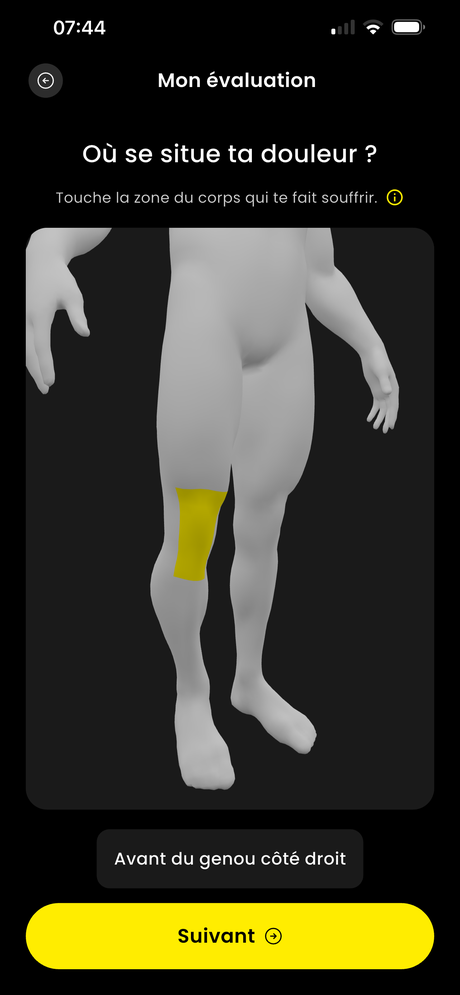
Symptoms and diagnosis of an ACL sprain
Warning signs
An audible or felt “pop” at the moment of injury, followed by rapid swelling of the knee (within the first few hours), is strongly suggestive of an ACL injury. A feeling of the knee giving way or being unstable, particularly during changes of direction, is also characteristic.
Differential diagnosis
The injured knee can also present other conditions, isolated or combined:
- An MCL sprain, often associated with the same injury mechanism
- An LCL sprain, less common but possible depending on the mechanism
- A meniscus injury, frequently associated with an ACL tear[2]
Causes and risk factors
An ACL injury most often results from a mechanism combining deceleration, rotation and knee valgus, favoured by certain factors.
Risk factors
- Neuromuscular fatigue late in a match or training session
- Poor neuromuscular control of the knee (dynamic valgus)[1]
- Terrain or conditions that favour unstable footing
- A history of a knee injury on the same leg or the opposite leg
Which sports contribute to ACL sprains?
Sports with sudden changes of direction, pivoting and jump landings carry the highest risk:
- Football and handball
- Basketball (pivots, jump landings)
- Alpine skiing
- Rugby (changes of direction, tackles)
- Tennis and racquet sports
- Any sport with sudden stops and starts
Grades of ACL sprain
Ligament sprain classification
- Grade 1, stretching of the ligament, without clear laxity
- Grade 2, partial injury, moderate laxity
- Grade 3, complete tear, clear knee instability
Treating an ACL sprain in rehab with a sports physio
The goal of treatment is to restore the knee’s mobility, strength and stability, whether care is focused on rehab alone (often for grades 1 and 2, or certain grade 3 injuries in patients with little exposure to pivoting) or alongside possible surgery.
- 1Reducing swelling and pain
- 2Recovering full knee mobility
- 3Strengthening the quadriceps and hamstrings
- 4Progressive strengthening of the chain (hip, calf)
- 5Proprioceptive and balance work
- 6Dynamic knee stability
- 7Progressive straight-line running
- 8Working on changes of direction
- 9Plyometrics and reintroducing jumping
- 10Progressive return to pivoting sport
DEMONSTRATION
Video by Hemrick, co-founder of HOPP.
“You don’t rehab an unstable knee by forcing it: you rehab it by rebuilding, step by step, the body’s confidence in bearing weight.”
Strengthening, the cornerstone of treatment
Strengthening the quadriceps and hamstrings is central after an ACL sprain, as these muscles actively contribute to knee stability alongside the ligament. Proprioceptive work (balance, unstable footing) is just as essential to restore the knee’s protective reflexes before any return to pivoting and jumping.
In brief
- Strengthening the quadriceps and hamstrings
- Proprioceptive work to restore the knee’s reflexes
- Dynamic stability before any return to pivoting
- Very gradual return: straight line, then changes of direction
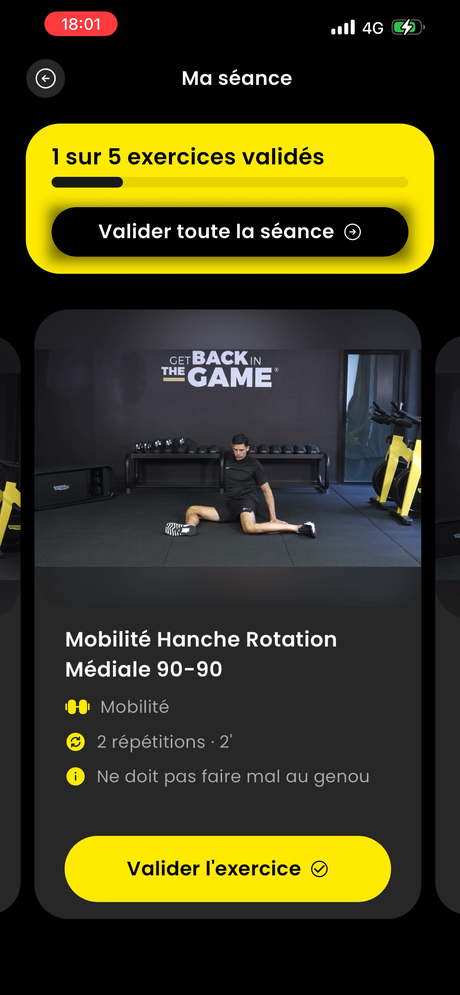
Ready to take your ACL sprain seriously?
Start the HOPP programme designed by sports physios.
Should you rest or keep playing sport?
Unlike other knee injuries, a grade 2 or 3 ACL sprain most often requires a more significant period of adapted activity, or even a medical opinion before any return to sport involving pivoting. For milder sprains, it’s better to progressively adapt your activity rather than resuming pivoting or landing movements too quickly.
Think you might have a different knee injury?
Take your free test in 3 minutes flat.
When should you see a specialist for an ACL sprain?
A prompt medical opinion is recommended as soon as the injury occurs, especially if you felt a “pop”, experienced rapid swelling, or feel the knee is unstable. An MRI can clarify the extent of the ligament injury and rule out an associated injury (meniscus, other ligaments), which then guides the care strategy.
Recovery time for an ACL sprain
Recovery time varies enormously depending on the grade of the injury and the strategy chosen: a few weeks for a mild sprain (grade 1), several months for a full return after a tear (grade 3), whether treated surgically or not. Returning to pivoting sports is always the final step, after strength and stability criteria have been met.[3]
Preventing relapses
Once knee stability has been restored, several measures reduce the risk of a new sprain or an injury to the opposite knee:
- Keep up neuromuscular and proprioceptive work over the long term
- Regularly strengthen the quadriceps and hamstrings
- Work on jump-landing and change-of-direction technique
- Don’t return to pivoting sports before meeting the return-to-sport criteria
The HOPP care programmes to treat your ACL sprain and get back to sport
To restore a stable, functional knee, an ACL sprain requires progressive, rigorous support. HOPP offers you a precise exercise programme, allowing you to get back to your activities as quickly as possible, in line with any medical opinion. By combining mobility, strengthening, proprioception and training management, HOPP supports you all the way back to the field.
The programme runs from 3 to 9 weeks depending on the injury and ends with a reconditioning phase allowing a return to competition in the best possible conditions. Each programme is designed by the HOPP team, made up of two sports physiotherapists who are experts in assessing and treating athletes. You’ll also find theoretical content throughout your progression, so you master every aspect of your recovery and can adjust your treatment independently. If needed, our team of physiotherapists is on hand to support you.
Essential
FROM INJURY TO
BACK TO YOUR ACTIVITIES
59€
One-time payment
“AT YOUR OWN PACE WITH
DAILY ADAPTATION”
- 100% of the treatment programme
- Daily personalisation
- Flexibility / Mobility
- Strengthening
- Proprioception
- Progress tracking
- Return-to-running programme
- Theoretical content included
Performance
TO GET BACK TO SPORT
IN THE BEST CONDITIONS
79€
One-time payment
“GET BACK TO YOUR LEVEL
WITHOUT RISK OF RELAPSE”
- 100% of the treatment programme
- Daily personalisation
- Flexibility / Mobility
- Strengthening
- Proprioception
- Progress tracking
- Return-to-running programme
- Theoretical content included
- + 4-week return-to-play plan with 6 difficulty levels
Expert
PERSONALISED VIDEO-CALL
SUPPORT, ANY TIME
149€
One-time payment
“A PHYSIO
WHENEVER YOU NEED”
- 100% of the treatment programme
- Daily personalisation
- Flexibility / Mobility, Strengthening, Proprioception
- Progress tracking
- Return-to-running programme
- Theoretical content included
- + 4-week return-to-play plan with 6 difficulty levels
- + 2 video calls with an expert sports physio / return check-up
A programme that adapts to you every day
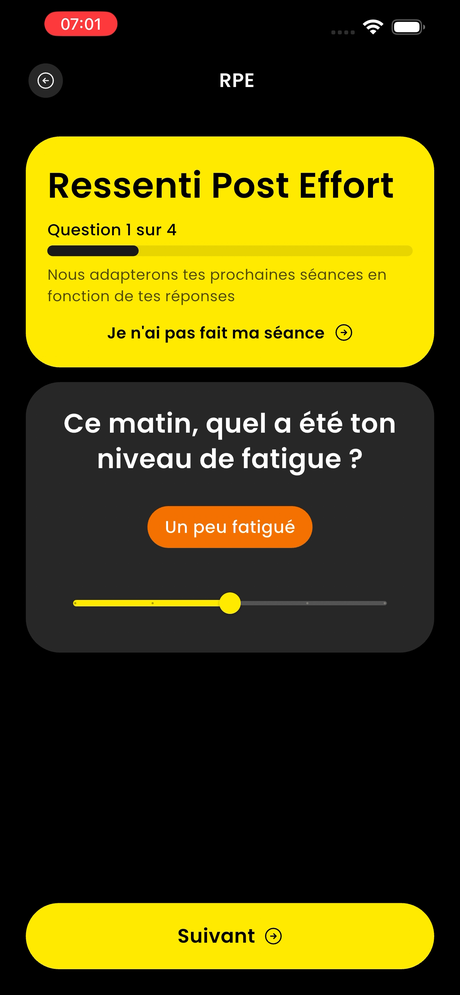
Every day, how you feel (RPE) is factored in to automatically adjust the rest of your programme: more load if all is well, a bit less if the ligament is complaining. This daily personalisation is what makes the difference compared to a fixed, paper-based programme.

Ready to start your programme?
Join the HOPP support programme designed by sports physios.
F.A.Q
Are an ACL sprain and an ACL tear the same thing?
“Sprain” is the general term used for a ligament injury, ranging from a simple stretch (grade 1) to a complete tear (grade 3). An ACL tear is therefore a grade 3 sprain, the most severe form.
Can I keep playing sport with an ACL sprain?
This strongly depends on the grade of the sprain and your sport. For mild injuries, a progressive, guided return is often possible. For complete tears, a medical opinion is essential before any return, particularly for pivoting sports.
How long does it take to get back to sport after an ACL sprain?
This varies enormously depending on the grade of the sprain, the strategy chosen (rehab alone or surgery) and the sport practised. The timeline can range from a few weeks for a mild sprain to several months for a full return after a severe injury.
Does the HOPP programme replace a medical consultation?
No. HOPP is a support and rehab tool designed by sports physiotherapists, but it doesn’t replace a doctor’s opinion. If in doubt, or if the pain persists, see a health professional.
Is the programme suited to all sporting levels?
Yes. Every programme is personalised to your sport, your level and how you feel each day, whether you’re a recreational athlete or preparing for competition.
Is surgery always necessary for an ACL tear?
No. Some athletes, particularly those who play little pivoting sport, regain satisfactory function with rehab alone. The decision depends on sporting level, age, felt instability and any associated injuries, and is made together with a specialist surgeon.
How can you tell an ACL sprain apart from an MCL sprain?
An ACL sprain typically shows up as a pop, rapid swelling and pivoting instability, while an MCL sprain causes pain more localised on the inner side of the knee, often following a valgus impact, with less of a feeling of rotational instability.