


Uncategorized
Why 100% of Runners Get Injured (and How to Avoid It)
It’s a question I hear very often in clinic: “Why do I keep getting injured when I train properly?” My answer is always the same, and it comes down to one word: dosage. Not training, not shoes, not running technique first and foremost. Dosage. Here’s why injury is almost inevitable for runners, and above all how to protect yourself from it for the long run.
 By
28 August 2026
8 min read
By
28 August 2026
8 min read
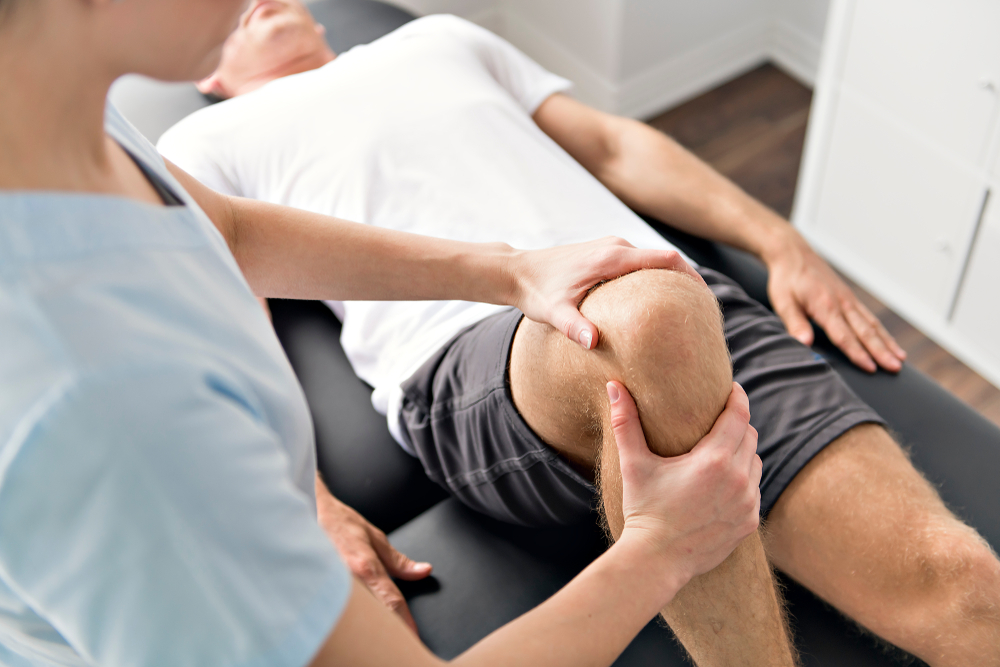
Do 100% of runners really get injured?
As a physio, every runner I see in consultation is injured or in pain — that’s simply the nature of my work. But I also see runners for prevention, more often in osteopathy consultations. And even those without pain at the time of the consultation have a history of it. The verdict is clear: in my practice, I’ve almost never seen a regular runner who has never had the slightest issue.
87% of runners get injured or see their performance drop within the year
A 2025 study confirms it: a runner has an 87% risk of getting injured or seeing their performance decline within the year. Over several years of practice, injury therefore becomes almost inevitable — it’s a matter of time.
In my view, the main factor that separates runners who get injured from those who get injured less is guidance. I find that amateur runners training solo have more injuries than runners in a club. An experienced coach helps calibrate progression, set limits, and avoid the loading mistakes that a runner training alone doesn’t see coming.
That said, chasing performance also increases risk by pushing limits — you mechanically get closer to the breaking point. The profile least likely to get injured? In my opinion, it’s the club runner, guided by an experienced coach, who isn’t chasing performance at all costs. A rare profile, but one that exists.
The universal reason for injury, which of course applies to runners too
The mechanics of injury are simple and universal: injury occurs when you apply more strain than the tissue can absorb. Too much strain on a muscle, tendon, bone or ligament, and it gets irritated, it hurts, and that’s the injury. This applies to every tissue, without exception.
Shin splints are too much strain on the tibia relative to its capacity at that moment. Patellofemoral pain syndrome is too much strain on the knee relative to its absorption capacity. Achilles tendinopathy is the tendon overloaded beyond what it can tolerate at that stage of training. In every case, the conclusion is the same: progression is a question of dosage, and if that dosage is poorly managed, injury follows.
The most common running injuries I see in clinic
Unsurprisingly, patellofemoral pain syndrome comes out on top — it’s the most common finding at the knee, and the knee is the area that causes runners the most trouble. The ranking below also includes:
- — Iliotibial band syndrome, pain on the outer side of the knee
- — Plantar fasciitis, pain under the foot at the heel
- — Achilles tendinopathy, classic in runners who increase their volume too quickly
- — Shin splints, irritation of the tibia caused by repeated impact
What’s striking is that in each of these conditions, the tissues involved need a particularly long adaptation time. Yet this time is almost never respected, whether at the start of training or when preparing for a race with a fixed deadline. And that’s exactly where injury strikes.
The simple, effective solution to avoid most injuries
The solution is dosage. Simple to understand, sometimes hard to accept, especially when you have a goal in mind and ego enters the equation. But it’s the only real protection against overuse injuries, which make up the vast majority of what I see in clinic.
The ECE — external constraint evaluation
The external constraint evaluation method (ECE) is the tool that lets you dose your training and manage your progression safely — whether in running or in any other sport.
The principle: assess the strain you’re placing on your body, compare it to your current capacity, and listen to the signals your body sends you to adjust your next efforts. In practice, three criteria to check after every session:
- No pain above 3/10 during the effort. If you go past this threshold, you’re doing too much.
- No pain once you’ve cooled down, in the 30 minutes to 2 hours after the effort. Pain returning after the session = overload.
- No pain the next morning on waking up. This is the ultimate test: if waking up is painful, the previous day’s session was too much.
The ECE is explained in video and PDF form in your HOPP dashboard.
Understanding dosage means running without risk while still progressing
If you follow the ECE rules, you shouldn’t get injured, barring an unpredictable trauma of course — nobody is ever fully safe from rolling an ankle on a step or an external impact. But overuse injuries, which make up the overwhelming majority of running injuries, are preventable with a clear framework and controlled progression.
This isn’t a limit on your performance — it’s the condition for progressing sustainably. Runners who respect this framework run for longer, more often, and without forced interruptions. Those who ignore it alternate between good form and repeated stoppages. Over the long run, there’s no contest.
The last piece for it to work: ego
You know the theory. You know the criteria. And yet, you’re training for a marathon, a long run is planned this weekend, and you don’t want to miss it. You know you shouldn’t do it, your knee has been sensitive for three days, but you go anyway. Result: you overdo it, you make things worse, and you spend the next two weeks recovering what you could have avoided by listening to yourself.
I’ve seen this pattern hundreds of times in clinic. Even among fellow runners who specialise in treating runners. Ego, the pressure of an approaching race, how others see you on Strava — these are the factors that trip runners up, not a lack of knowledge. Mastering the ECE also means mastering that temptation.
What if the pain is already there?
If you’re already injured or in pain, the solution remains simple in principle, even if it takes discipline to apply.
Using the ECE to calm things down and get back to it
Keep the ECE criteria in mind and start applying them to everything you do: not just running, but also walking, stairs, other sports, everyday activities. With this approach, you’ll adjust your overall load, and the pain and inflammation will gradually decrease. That’s the point — once the criteria are met on several consecutive days — when you can gradually get back to your activity.
The comeback: another key moment for runners
Returning to running is always a pivotal moment in rehab. Between apprehension, excitement and the goal in sight, emotions run high and can push you to go too fast. Volume and frequency need to be carefully managed so the body tolerates and adapts properly.
Even if a physio gives you a return-to-running protocol, you’ll always need to rely on how you feel on the day and the day after to adjust it. A protocol is a framework — it’s your body that validates or invalidates each step. A successful comeback is one that isn’t rushed, session after session, consistently checking the three ECE criteria.
Feeling pain when you run?
HOPP lets you identify your injury in 3 minutes and start a personalised care programme immediately, designed by FIFA-certified sports physios with more than 17 years of experience. The ECE is built directly into the app to help you manage your progression day to day.
FAQ — Running injuries
Can you train for a marathon without getting injured?
Yes, in principle, and with the ECE you should be able to get there. But the reality on the ground shows that over several years of practice and several marathon build-ups, you’ll likely have a phase of pain or an injury to manage. The goal isn’t to guarantee zero injuries for life — it’s to limit severity and frequency. A runner who manages their dosage well doesn’t stop for months: they manage it, adapt, and keep going.
Can you treat yourself without a physio and get back to running?
Yes, without any problem, provided you have the right programme and the right tools. HOPP offers you a programme specific to your injury, which adapts every day based on how you feel. An ECE management system is built directly into the app, with all the content you need to manage your progression and get back to running safely, without waiting for an appointment, from home.
What’s the most common injury in beginner runners?
In my practice, it’s patellofemoral pain syndrome — pain under the kneecap that shows up most often in beginners, followed by shin splints and plantar fasciitis. These three injuries share a common trigger: a running volume increased too quickly, on tissues that haven’t yet had time to adapt to repeated impact. The good news: they respond very well to a reduction in load and a suitable strengthening programme.
A pain, an injury?
Get the facts on your injury in 3 min
- Start your care without waiting
- Get back to your activities without wasting time