


Shoulder subluxation: consequences and treatment with HOPP
Anatomy and biomechanics of the shoulder joint
The different joints that make up the shoulder
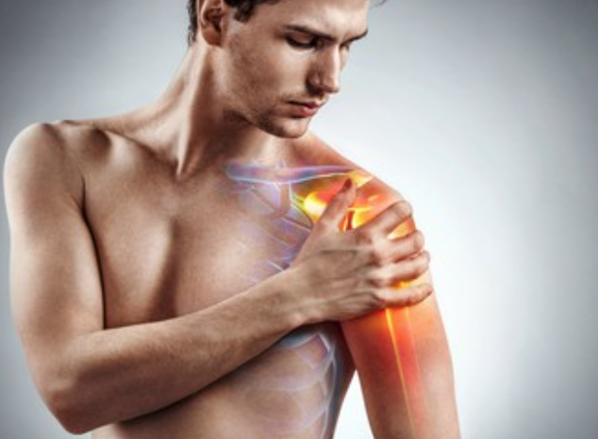
The shoulder is a complex joint. When we talk about the shoulder, we often think of the glenohumeral joint. However, there are three other joints essential to the proper movement of the shoulder girdle: the scapulothoracic joint (between the scapula and the ribs), the acromioclavicular joint (between the acromion of the shoulder blade and the collarbone) and the sternoclavicular joint (between the collarbone and the sternum). All these joints move together to ensure the full range of motion of the upper limb in space. These joints have their own ligaments (at the humerus, the acromion, the collarbone, etc.) and a capsule filled with synovial fluid. These structures play a stabilising role
The different muscles that make up and stabilise the shoulder
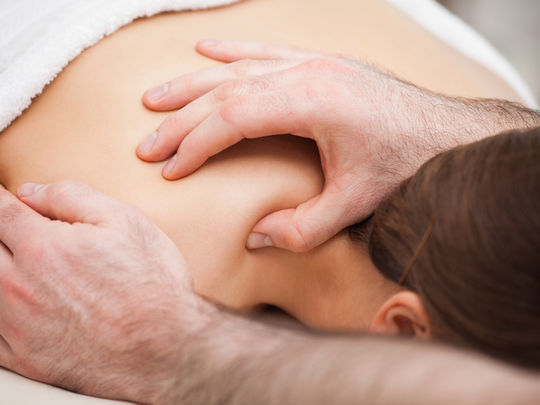
The shoulder is moved through space by a complex set of muscles. There are many of them, divided into two categories. The rotator cuff muscles (supraspinatus, infraspinatus, teres minor, subscapularis and long head of biceps) play a stabilising role. They ensure the proper movement of the head of the humerus on the glenoid of the scapula. Around this joint there are also larger muscles with a mainly driving role. This is the case for the anterior deltoid and the pectoralis major (anterior), the triceps brachii or the rhomboids (posterior), or the middle deltoid (lateral). Their main role is to provide strength to the upper limb.
Shoulder joint mobility: between range of motion and instability
The shoulder is therefore complex, because it must provide both great mobility and great stability at the same time. This is why the ligaments are backed up by active ligaments: the rotator cuff. These muscles must be active and strong in every position (abduction, external rotation, internal rotation). From an anatomical point of view, the ligaments (such as the coracoacromial ligament) and the joint capsule are not always maximally taut depending on the position of the humerus. There are therefore positions where these passive structures are weaker. All the shoulder joints must move together, with good activation of each muscle, to keep the risk of injury as low as possible.
How does a shoulder subluxation happen in athletes
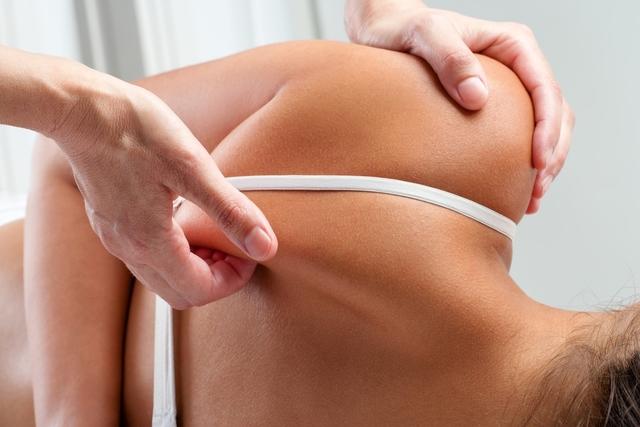
Shoulder subluxation always occurs following an injury. It corresponds to a very brief dislocation of the glenohumeral joint, which spontaneously returns to place. The damage is therefore less significant than in a full dislocation, and recovery is often better. This injury can occur in different positions: following a direct blow to the shoulder (a fall onto the shoulder), in the “cocked arm” position (abduction and external rotation, such as when shooting in handball), or in a flexed position with the hand on the ground (during a fall where you land on your hand with the elbow extended). In most cases, the subluxation is anterior.
What to do after a shoulder subluxation to get back to sport?
Specialists to consult after this shoulder injury
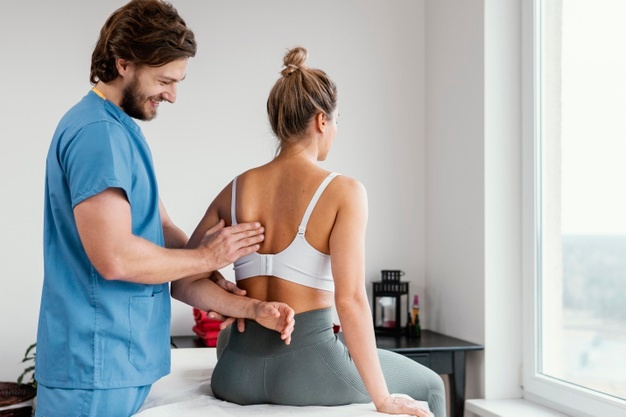
The first priority is to identify the damage caused by the subluxation. This requires imaging. Ultrasound can show the main tendons affected. An X-ray can show whether there is an associated fracture. But an MRI, CT scan or CT arthrogram can reveal more joint damage (bursitis, damage to certain rotator cuff tendons, tears or tendinopathy/tendinitis). Depending on the results, and if the shoulder is painful, it is best to see a sports doctor. They will review the imaging results and, depending on the injury, refer you if necessary to a surgeon or a physiotherapist.
The different treatments to recover from a subluxation: surgery / physiotherapy
There are two options: if the damage is minor, functional (non-surgical) treatment remains the best solution. This treatment involves a period of immobilisation followed by rehabilitation with a physiotherapist. If the damage is significant, or if the patient has already had several episodes of dislocation or subluxation, surgical treatment remains an excellent choice. There are two main operations aimed at stabilising the shoulder: the Bankart technique (suturing the joint capsule) or the Latarjet procedure (creating a bone block by taking a piece of the acromion from the scapula). These operations, now performed arthroscopically, can be combined with other surgical techniques. Depending on the associated damage (rotator cuff tear, tear, osteoarthritis, calcification, etc.), the surgeon may treat these various issues at the same time.
Risks of recurrence after a shoulder subluxation in athletes
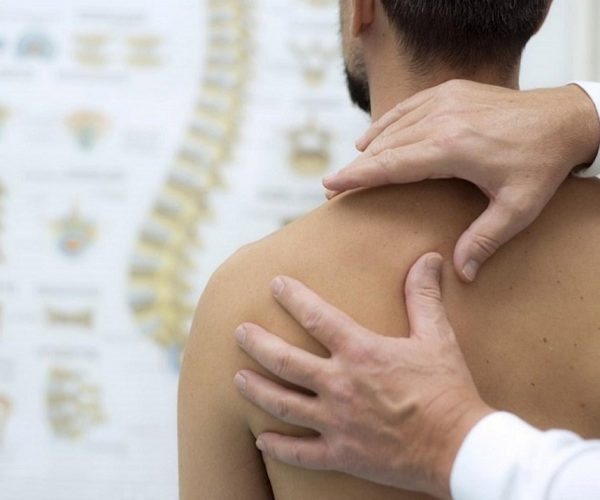
During a first episode of subluxation, the passive structures will be stretched. It is therefore important to treat the shoulder properly to allow for optimal healing of the damage. Good muscle strengthening is helpful to recover shoulder strength throughout its full range of motion. If these steps are not followed, healing will not happen optimally, increasing the risk of recurrence. The risk is that episodes of subluxation multiply, along with the associated complications.[1] Over time, there is a risk of a partial rotator cuff tear, damage to the cartilage or labrum, nerve damage, or the onset of early osteoarthritis.
Physiotherapy rehabilitation following a shoulder subluxation
The first days of rehabilitation after the injury with the physiotherapist
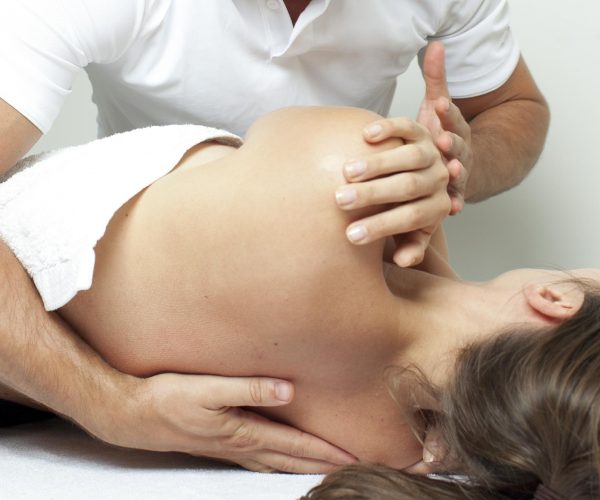
Rehabilitation should begin early. However, a period of strict immobilisation (with a splint) is recommended for the first three weeks. This allows the tissues to heal properly and reduces inflammation. It is normal for the shoulder to be painful during the first few weeks. Anti-inflammatory medication should not be taken systematically, and the use of pain relief depends only on the patient’s tolerance of a painful shoulder. Some gentle isometric muscle contraction exercises for the shoulder can begin within the first few days. Early work to maintain the mobility and strength of the hand and forearm muscles is useful in the first few weeks. Hydrotherapy is also very useful in the first few weeks to mobilise the shoulder across many ranges of motion.
Active shoulder rehabilitation with the sports physiotherapist
In a second phase, the goal is to limit stiffness and instability as much as possible while regaining a functional shoulder (whether or not surgery was performed, and whatever the post-operative course).
To do this, you need to regain a strong, stable shoulder girdle in every position. Rehabilitation must therefore strengthen the various rotator cuff tendons as well as the muscles of the spine, the entire upper limb and the chest. There are many types of muscle contraction for this (concentric, static, eccentric), and the muscles must be strengthened across different lengths (inner, middle and outer range). This is how a good return to sport can be achieved.

Returning to sport after a shoulder subluxation
The goal of rehabilitation is to return to sport as quickly as possible without risking a recurrence. To do this, start with lower-risk sports (running, swimming, yoga) before higher-risk sports (rugby, handball, CrossFit). Certain signs found during a clinical examination are good indicators of whether someone is ready to return to sport or not. The presence of significant stiffness, capsulitis, functional impairment, severe shoulder pain (requiring medication), or subacromial impingement are not good indicators for return to sport.
There are also certain functional scores, such as the Constant score.[2]
How HOPP helps you after a shoulder subluxation
Two elements are key to recovering effectively from a shoulder subluxation: choosing the right rehabilitation exercises and having the knowledge needed to carry them out. The HOPP solution, developed by two therapists specialised in caring for athletes, fully meets this need. Through interactive videos, HOPP guides you from day one of your injury all the way back to the field at 100% of your capabilities.
Scientific references
- Olds M, Ellis R, Donaldson K, Parmar P, Kersten P. Risk factors predisposing first-time traumatic anterior shoulder dislocations to recurrent instability: a systematic review. British Journal of Sports Medicine, 2015;49(14):913-922. PubMed: pubmed.ncbi.nlm.nih.gov/25900943
- Constant CR, Murley AH. A clinical method of functional assessment of the shoulder. Clinical Orthopaedics and Related Research, 1987;214:160-164. PubMed: pubmed.ncbi.nlm.nih.gov/3791738
This page is based on peer-reviewed scientific publications. It remains a general self-assessment tool and does not replace medical advice.