


Uncategorized
Field results of an isometric protocol for Achilles tendinopathy
Achilles tendinopathy is one of the injuries I see most often in clinic. Week after week, runners walk through the door with the same pain, the same discouragement, and often the same question: “Will I be able to get back to it?” For over 7 years, I’ve used a protocol based on isometric work to answer that question with a yes — provided a precise framework is followed. Here’s what I observe in the field, the details of the protocol I apply day to day, and why rigour is the real active ingredient in this care.
 By
29 August 2026
11 min read
By
29 August 2026
11 min read
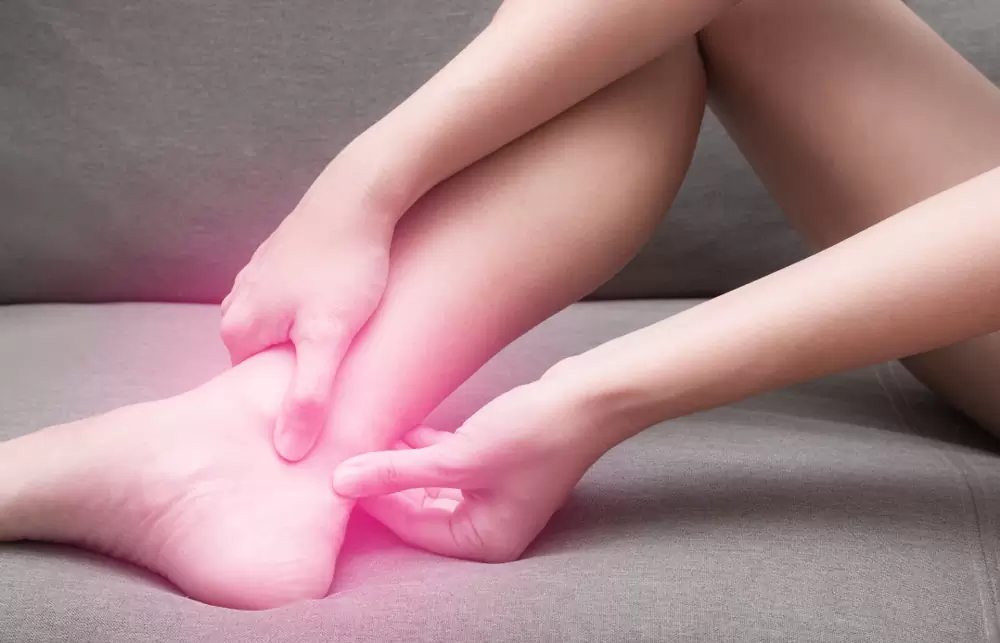
The typical pain of Achilles tendinopathy
I see patients with Achilles tendon pain every week in clinic. Most of the time they’re amateur runners, from 10K to marathon distance, who’ve increased their training volume too fast, come back after a break, or simply built up mechanical strain without realising it. This profile is almost universal.
Before talking about the protocol, it’s important to properly recognise the symptoms. Achilles tendinopathy has a fairly characteristic clinical signature, and understanding it helps you accept — and therefore stick with — the treatment.
Pain on waking
This is the most typical sign, the one almost all my patients describe in the same way. In the morning, on getting up, they feel a precise pain on the Achilles tendon — localised, often two or three centimetres above the heel. This pain lasts anywhere from a few steps to five minutes depending on the person and the stage of the tendinopathy.
What my patients describe is a tendon that feels stiff, “seized up”. They feel like they can’t roll through the foot normally, as if the tendon refuses to stretch. This is called morning stiffness: the tendon, resting all night, struggles to regain its usual elasticity. This symptom alone is already very suggestive of tendinopathy.
Improvement once warmed up
Another characteristic sign: once the tendon is “warm”, things get better. After the morning stiffness eases, or during exertion, movement becomes smoother, the tendon regains elasticity, and the pain disappears. Many patients tell me they run pain-free from the second kilometre onward.
This is important information, because it distinguishes tendinopathy from other conditions. A tendon that improves once warm is a tendon whose structure responds positively to progressive loading. It’s also what guides our rehab protocol.
Pain flaring up in case of overload
The problem is that this improvement once warm can give a false impression of being healed. When a patient feels good during training, they tend to do more. And that’s where things get complicated.
In case of overload — too long a run, too fast a return, a change of surface — the pain comes back. Often stronger than before. And the next morning’s stiffness is even longer, sometimes painful for ten to twenty minutes. This pattern of improvement then relapse, which I see very regularly, is why a poorly managed Achilles tendinopathy can drag on for months, even years.
The answer to this vicious circle is quantifying mechanical strain. And that’s exactly what the isometric protocol allows us to do.
The isometric protocol for the Achilles tendon that I use day to day in clinic
I’ve been using this protocol for over 7 years. It’s built on solid scientific evidence — particularly research on tendon response to mechanical load — but what lets me talk about it with confidence is above all my field experience, with patient feedback every week. Here’s how it unfolds, phase by phase.
Phase 1: isometrics (static contraction) for pain relief
Isometrics is a muscle contraction without movement. The muscle works but the ankle doesn’t move. This form of work has a very interesting property on painful tendons: it significantly reduces pain, often from the first sessions. This is the pain-relieving effect of isometrics, well documented in the scientific literature.
In practice, here’s what I prescribe to my patients:
- A 45-second isometric contraction, on tiptoe, in a raised-heel position (both feet or one, depending on pain level)
- 3 reps with a 45-second rest between each
- 3 times a day, ideally spaced 6 hours apart (morning, afternoon, evening)
Progression happens through load. We start with bodyweight, then progressively add load — a weighted backpack, for example — up to an extra 20 kg. I never go beyond this threshold before moving to the next phase.
The validation criterion is simple but non-negotiable: two consecutive days without pain at a given load level before increasing it. This criterion avoids progressing too fast, which is the leading cause of failure in managing tendinopathies.
Phase 2: heavy slow work to increase capacity
Once pain is under control, we move to a more demanding strengthening phase, called heavy slow resistance work. The goal here is no longer just to calm the pain, but to structurally reload the tendon and rebuild its capacity to withstand high strain.
The protocol is as follows:
- 3 sets of 7 reps of heel raises (single-leg preferably)
- A slow, controlled movement: for example 4 seconds down (eccentric) and 4 seconds up (concentric)
- The maximum load tolerated without pain during the effort
- Progression identical to phase 1: validation over two consecutive pain-free days before increasing the load
This slow work is often counterintuitive for athletes used to going fast. But it’s precisely this slowness that creates the optimal mechanical signal for remodelling tendon collagen. The slower you go, the more controlled the load on the tendon, and the more effective the adaptive response.
Phase 3: getting back into motion
The Achilles tendon isn’t just a cable that resists tension: it’s a spring. It stores energy with every step and releases it on push-off. It’s this spring function that lets you run efficiently, and it’s the one tendinopathy disrupts the most.
This third phase aims to progressively retrain this elastic capacity:
- Landings from a progressive height: we start with small jumps with controlled landing, to reaccustom the tendon to dynamic strain
- Push-off work: impulse exercises from the ground, focusing on energy return
- Combined plyometrics: combining landing and push-off in sequences increasingly close to running conditions
This progressive loading is what makes the difference between a successful return and an early relapse. The tendon needs to go through all these steps to regain its tolerance to dynamic load.
Returning to running
Plyometrics opens the door to returning to running in good conditions. At this stage, I use a protocol inspired by the Running Clinic, based on alternating walk-run intervals with a progressive increase in running time.
The principle: you don’t go straight back to continuous running. You alternate walking phases and running phases, progressively increasing the duration of the running phases over several weeks. This method precisely controls the mechanical stress applied to the tendon, allows you to observe the next day’s response (morning stiffness, tenderness on palpation), and adjust the pace of progression accordingly.
The key to this protocol’s success, from my experience as a sports physio
The protocol itself isn’t a secret. It’s described in the scientific literature, used by many sports physios. So why do some patients heal fast and others drag on for months? The answer is simple: the framework and consistency.
Without strictly following the protocol, managing an Achilles tendinopathy can become very, very long. I see the proof of this every week in clinic.
Quantifying mechanical stress, a global approach to effort
The big mistake I see most often is treating the tendon in isolation without taking into account everything else the patient does. A patient who perfectly follows their isometric sessions but goes all-out cycling, does swimming session after swimming session with flutter kicks, or goes back to running “just 20 minutes” because it felt fine that morning — that patient will stall.
Quantifying mechanical stress means taking into account all the efforts that load the tendon: rehab sessions, of course, but also sporting activities, standing all day at work, stairs, weekend hikes. It’s this global view that helps avoid the overloads that set you back a week with every excess.
I ask my patients to keep a simple log: sessions done, activities of the day, and how they feel the following morning on getting up. This morning stiffness is the best indicator of the tendon’s tolerance to the previous day’s load.
The strict framework of this protocol is the key to success
What makes this protocol work is precisely its rigour. The 45 seconds are 45 seconds — not 30. The 3 times a day are 3 times a day — not 2. The two-pain-free-days criterion before progressing is non-negotiable, even when the patient feels good and wants to move faster.
This rigour can seem restrictive, but it’s exactly what makes the protocol effective. The tendon responds to mechanical signals very precisely: too little strain, and it doesn’t remodel; too much strain, and it becomes inflamed. The progressive isometric protocol, followed to the letter, keeps you within this optimal window.
Part of my role as a physio is also to reassure the patient about this rigour: following a strict framework isn’t an arbitrary constraint, it’s the condition for a fast, lasting recovery.
My feedback from experience
After 7 years of applying this protocol and adjusting it based on my patients’ feedback, here’s what I regularly observe:
By being strict on the external load assessment (ELA) criteria — that is, taking into account not just rehab sessions but all the week’s mechanical effort — I see many athletes spend a week on each phase and get back to running within 3 weeks, even for very inflammatory tendinopathies at the start.
3 weeks. That’s short for an injury that, poorly managed, can keep a runner off the track for 6 to 12 months.
This result isn’t systematic — age, initial inflammation level, loading habits, and how long the tendinopathy has been present all play a role. But it’s reproducible for patients who genuinely commit to the protocol.
Struggling with Achilles tendon pain? HOPP lets you identify your injury in 3 minutes and immediately start a personalised care programme, designed by FIFA-certified sports physios with over 17 years of experience. No need to wait for an appointment, wherever you are.
FAQ
Can you keep running during the isometric protocol?
In phases 1 and 2, the answer is no in the vast majority of cases. The protocol requires temporarily cutting out running so as not to sustain the inflammation and to allow the tendon to respond to the controlled loading work. This is often hard to accept for a runner, but it’s exactly what makes a return possible in 3 weeks rather than 6 months. Running only resumes in phase 4.
How long does this protocol take on average?
By being strict about the framework and managing overall load, I regularly see patients spend a week per phase and get back to running after 3 weeks. For longer-standing or heavily loaded tendinopathies, expect 4 to 6 weeks. What consistently extends the timeframe is excesses between sessions — too long a bike ride, going back to running too early.
Do you have to stop sport completely during rehab?
Not necessarily, but you do need to quantify every effort that loads the Achilles tendon. Swimming without flutter kicks, cycling at light resistance, or upper-body weight training are generally compatible. On the other hand, anything that dynamically loads the tendon — cycling out of the saddle, swimming with fins, the elliptical — should be paused or very limited. The log (sessions + activities + morning stiffness) is the tool that helps find the right balance for each patient. Upper-body strength sessions at the gym pose no problem at all. It’s worth knowing that keeping up cardio activity supports healing, so it will help your recovery.
Can Achilles tendinopathy come back after healing?
Yes, and it’s important to talk about it. A healed tendon remains a tendon that’s had tendinopathy; it keeps a sensitivity to overload. Preventing recurrence comes down to three things: keeping up regular eccentric strengthening work outside of injury phases, progressing slowly when returning after a break, and staying alert to morning stiffness as an early warning sign.
A pain, an injury?
Get the facts on your injury in 3 min
- Start your care without waiting
- Get back to your activities without wasting time