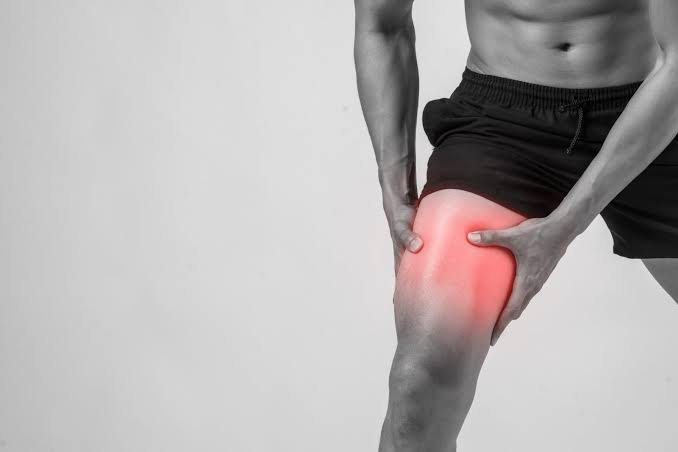


What is a thigh dead leg?
Understanding thigh muscle contusion
A “dead leg”, a term commonly used in sport, refers to a muscle contusion of the thigh following a direct impact, most often an opponent’s knee. It causes crushing of the muscle fibres and sometimes small blood vessels, leading to pain, stiffness and often a localised bruise in the quadriceps.
Why does this contusion happen?
A dead leg happens following a direct impact to the thigh, typically an opponent’s knee during a challenge or tackle. Severity depends on the intensity of the impact and how contracted the muscle is at the moment of impact: a muscle that’s contracted at the moment of the hit is generally less damaged than a relaxed one.
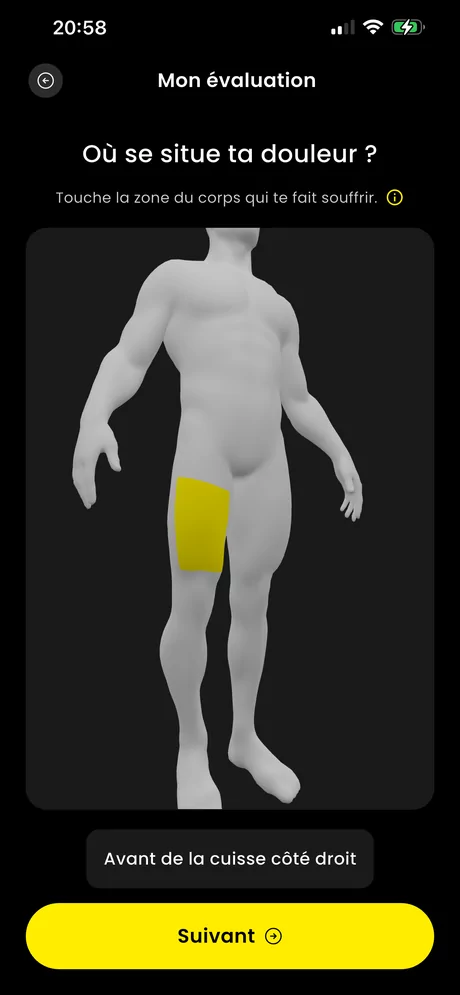
Symptoms and severity of a thigh dead leg
Recognising how severe the contusion is
Pain is immediate at the moment of impact, combined with growing stiffness over the following hours. Loss of knee flexion range in the first 24 hours is the best indicator of severity: the more marked it is, the longer recovery will take.[2]
Differential diagnosis
Other types of thigh pain can sometimes be mistaken for a dead leg:
- A muscle tear, caused by excessive stretching rather than a direct impact
- A stress fracture, worth considering if bone pain persists despite only a moderate impact
Causes and risk factors
A dead leg always follows a direct impact to the thigh, but certain factors make it worse.
Factors that make the contusion worse
- A relaxed muscle at the moment of impact (as opposed to a contracted one, which offers more protection)
- A high-intensity impact, typical of contact sports
- Late or unsuitable initial care (early massage, no knee flexion)
- A history of a dead leg on the same area
Which sports contribute to a thigh dead leg?
All contact sports with a risk of direct impact to the thigh are particularly relevant here:
- Football
- Rugby
- Basketball and handball
- Ice hockey
- Combat sports
Treating a thigh dead leg in rehab with a sports physio
The goal of treatment is to limit bruise formation in the first few hours, then progressively restore the mobility and strength of the bruised muscle.
- 1Immediate protection (ice, compression)
- 2Gentle mobility without forcing
- 3Light isometric contractions
- 4Progressive concentric strengthening
- 5Recovering full range of motion
- 6Eccentric strengthening
- 7Reintroducing contact and weight-bearing
- 8Strengthening under sport-specific load
- 9Progressive return to your sport
- 10Return to competition
“The first few minutes after a dead leg often determine how long recovery takes over the following days.”
Early mobility and strengthening, the cornerstones of treatment
Recovering mobility early, as soon as pain allows, combined with progressive quadriceps strengthening, helps avoid the most feared complication of a severe dead leg: myositis ossificans (calcification of the muscle), which is encouraged by prolonged immobilisation or overly early, intensive massage of the area.[1][3]
In brief
- Immediate protection (ice, compression, knee flexion)
- Early recovery of mobility
- Progressive quadriceps strengthening
- Gradual return: mobility, then load, then sport
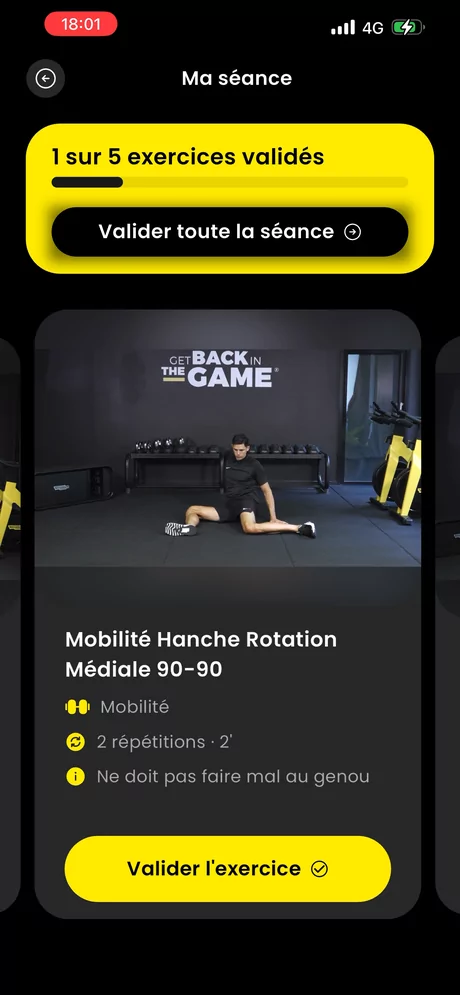
Ready to take your thigh dead leg seriously?
Start the HOPP programme designed by sports physios.
Should you rest or keep playing sport?
A few days of relative rest is useful for a significant dead leg, but prolonged immobilisation should be avoided: it encourages stiffness and increases the risk of complications. Gentle, progressive mobilisation should resume as soon as the acute pain allows.
Think you might have a different thigh injury?
Take your free test in 3 minutes flat.
When should you see a specialist for a thigh dead leg?
If the pain is very intense, if you can’t bend your knee past 90° within 24 hours of the impact, or if significant swelling appears rapidly, a medical consultation is recommended to assess the severity of the contusion and rule out a complication.
Recovery timeline for a thigh dead leg
A mild dead leg recovers within a few days to a week. A more severe contusion, with a significant loss of mobility in the first 24 hours, can require 3 to 6 weeks of progressive rehab before a full return to sport.[2]
Preventing recurrence
Several measures can help reduce the risk of a new dead leg or a complication on an already-bruised area:
- Wear suitable protection (reinforced padded shorts) in higher-risk contact sports
- Follow the immediate protection protocol if a new impact occurs (ice, knee flexion)
- Don’t return to contact before mobility and strength are fully recovered
- Strengthen the quadriceps to better absorb future impacts
The HOPP care programmes to treat your thigh dead leg and get back to sport
This contusion requires early care to limit complications and speed up recovery. HOPP offers you a precise exercise programme, allowing you to get back to your activities as quickly as possible.
The programme runs from 3 to 9 weeks depending on the injury and ends with a reconditioning phase allowing a return to competition in the best possible conditions. Each programme is designed by the HOPP team, made up of two sports physiotherapists who are experts in assessing and treating athletes. You’ll also find theoretical content throughout your progression, so you master every aspect of your recovery and can adjust your treatment independently. If needed, our team of physiotherapists is on hand to support you.
Essential
FROM INJURY TO
BACK TO YOUR ACTIVITIES
59€
One-time payment
“AT YOUR OWN PACE WITH
DAILY ADAPTATION”
- 100% of the treatment programme
- Daily personalisation
- Flexibility / Mobility
- Strengthening
- Proprioception
- Progress tracking
- Return-to-running programme
- Theoretical content included
Performance
TO GET BACK TO SPORT
IN THE BEST CONDITIONS
79€
One-time payment
“GET BACK TO YOUR LEVEL
WITHOUT RISK OF RELAPSE”
- 100% of the treatment programme
- Daily personalisation
- Flexibility / Mobility
- Strengthening
- Proprioception
- Progress tracking
- Return-to-running programme
- Theoretical content included
- + 4-week return-to-play plan with 6 difficulty levels
Expert
PERSONALISED VIDEO-CALL
SUPPORT, ANY TIME
149€
One-time payment
“A PHYSIO
WHENEVER YOU NEED”
- 100% of the treatment programme
- Daily personalisation
- Flexibility / Mobility, Strengthening, Proprioception
- Progress tracking
- Return-to-running programme
- Theoretical content included
- + 4-week return-to-play plan with 6 difficulty levels
- + 2 video calls with an expert sports physio / return check-up
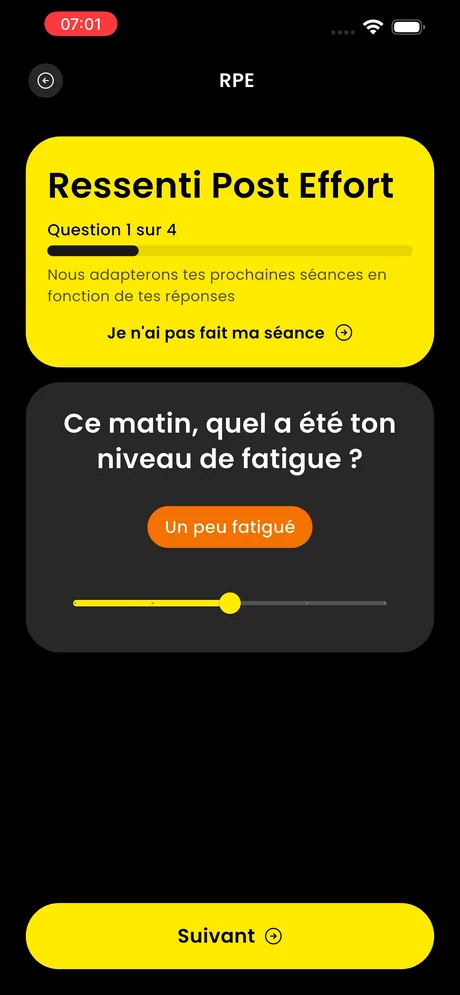
A programme that adapts to you every day
Every day, how you feel (RPE) is factored in to automatically adjust the rest of your programme: more load if all is well, a bit less if your thigh is complaining. This daily personalisation is what makes the difference compared to a fixed, paper-based programme.

Ready to start your programme?
Join the HOPP support programme designed by sports physios.
F.A.Q
Does the HOPP programme replace a medical consultation?
No. HOPP is a support and rehab tool designed by sports physiotherapists, but it doesn’t replace a doctor’s opinion. If in doubt, or if the pain persists, see a health professional.
Is the programme suited to all sporting levels?
Yes. Every programme is personalised to your sport, your level and how you feel each day, whether you’re a recreational athlete or preparing for competition.
How long does it take to recover from a dead leg?
A mild dead leg generally recovers within a few days to a week, while a severe contusion with a significant loss of mobility can require several weeks of progressive rehab.[2]
Should I massage the bruised area?
No, it’s better to avoid deep massage in the first few days after a significant dead leg: it can increase the risk of myositis ossificans (calcification of the muscle).[3]
What is myositis ossificans?
It’s a rare but possible complication of a severe contusion that’s poorly managed, where the muscle partially calcifies.[3] Early, suitable care (progressive mobility, no early deep massage) reduces this risk.
How can I tell a dead leg apart from a muscle tear?
A dead leg always follows an identifiable direct impact (a knee, contact), whereas a tear usually happens with no impact, during an explosive effort or excessive stretching of the muscle.
Can I wear protection to avoid another dead leg?
Yes, padded shorts with reinforced protection can reduce the risk of a new contusion on an already-affected area, particularly in higher-risk contact sports.