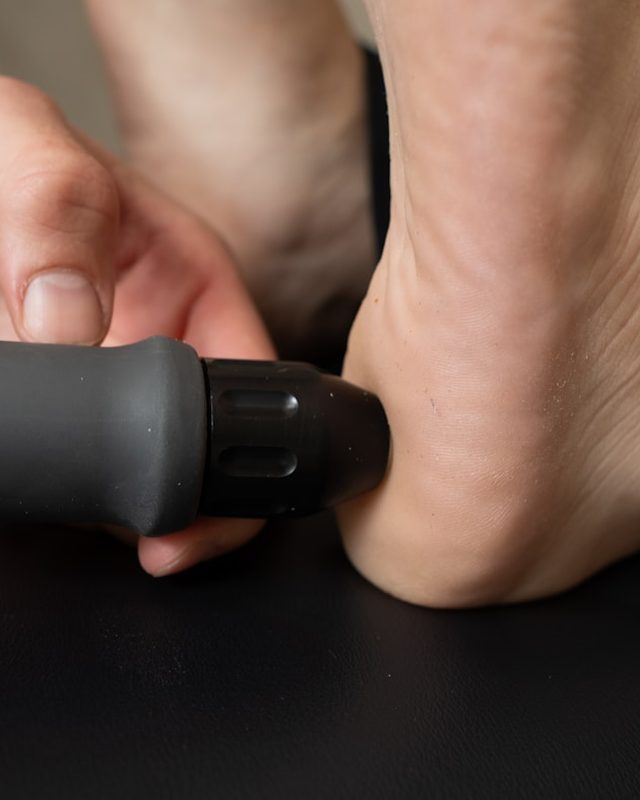


What is acute metatarsalgia?
Forefoot and metatarsal anatomy
The metatarsals are the five long bones of the forefoot that connect the midfoot to the toes. Acute metatarsalgia refers to a sudden-onset pain under the forefoot, often following a direct impact, a poorly controlled jump landing, or an unusual one-off effort, unlike the overuse form which builds up more gradually.
Why does this pain appear suddenly?
Acute pain appears following a specific event: a jump landing, a direct impact to the forefoot, a sudden twist, or a one-off effort with unusual load (running on very hard ground after a break, an abrupt change of footwear). It can correspond to a bruise, acute inflammation, or even an early stress fracture in the more marked cases.
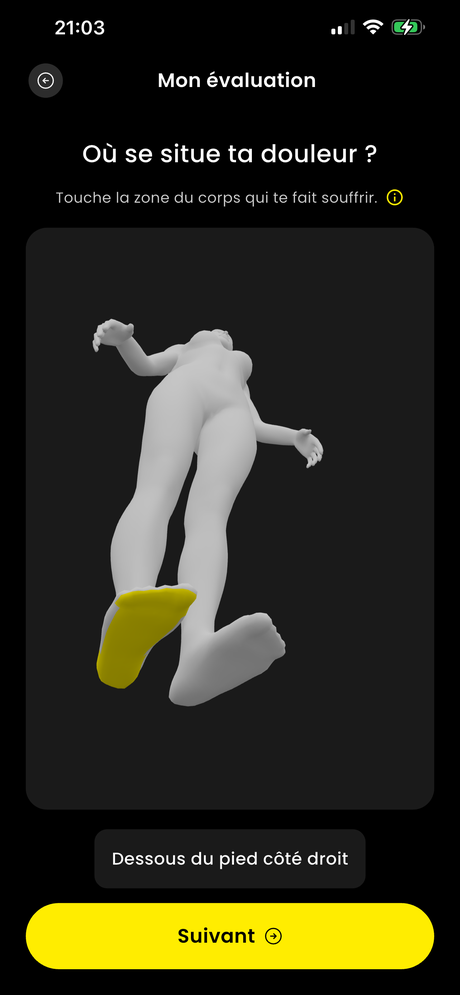
Symptoms and diagnosis of acute metatarsalgia
Typical pain and its triggers
Pain appears suddenly under the forefoot, following a specific event (impact, landing, twist). It can be accompanied by local swelling, difficulty putting full weight on the foot, or marked tenderness when pressing on a metatarsal.
Differential diagnosis
Several types of forefoot pain can resemble this metatarsalgia:
- Overuse metatarsalgia, which builds up gradually rather than suddenly
- Morton’s neuroma, with characteristic tingling between the toes[1]
- A metatarsal stress fracture, to rule out with imaging if in doubt
Causes and risk factors
Acute metatarsalgia occurs following a specific event that suddenly loads the forefoot beyond its capacity to adapt.
Risk factors
- A direct impact to the forefoot
- A poorly controlled jump landing
- A one-off effort with unusual load (returning after a break, a change of footwear)
- Particularly hard or uneven terrain
Which sports contribute to acute metatarsalgia?
All sports with a risk of direct impact to the forefoot or sudden effort carry a risk of this pain:
- Basketball and volleyball (jump landings)
- Football (impacts, tackles)
- Running with an abrupt restart
- Combat sports
- Trail running on uneven terrain
- Racquet sports (tennis, padel)
Treating acute metatarsalgia in rehab with a sports physio
The goal of treatment is to calm the initial inflammatory phase, then progressively strengthen the forefoot muscles to make your return to activity safe.
- 1Protection and reducing pain
- 2Recovering pain-free mobility
- 3Isometric strengthening
- 4Progressive concentric strengthening
- 5Foot proprioceptive work
- 6Closed-chain strengthening (weight-bearing)
- 7Return to walking then running
- 8Strengthening under sport-specific load
- 9Progressive return to your sport
- 10Return to competition
“Sudden forefoot pain needs to be understood before it can be rehabilitated.”
Progressive strengthening, the cornerstone of treatment
Once the acute phase has passed and a fracture has been ruled out if needed, progressively strengthening the forefoot muscles restores full function and makes a return to sporting weight-bearing safe.
In brief
- Managing the initial inflammatory phase
- Progressive forefoot strengthening
- Progressive return to weight-bearing
- Gradual return: mobility, then load, then sport

Ready to take your acute metatarsalgia seriously?
Start the HOPP programme designed by sports physios.
Should you rest or keep playing sport?
Relative rest with partial offloading is useful in the very first days if pain is significant, but a progressive return to weight-bearing should be encouraged as soon as the acute pain eases, to avoid unnecessary loss of function.
Think you might have a different foot injury?
Take your free test in 3 minutes flat.
When should you see a specialist for acute metatarsalgia?
Sudden, intense forefoot pain, especially after an impact or an unusual effort, deserves a prompt medical consultation to rule out a fracture, particularly a stress fracture of a metatarsal.
Recovery time for acute metatarsalgia
For a simple bruise without a fracture, return to sport generally happens between two and four weeks, depending on severity and the sport practised. An associated stress fracture can extend this timeframe by several additional weeks.
Preventing recurrence
Several measures help limit the risk of another metatarsalgia:
- Avoid abrupt increases in intensity after a period of rest
- Choose footwear suited to the terrain and sport practised
- Regularly strengthen the foot’s intrinsic muscles
- Adapt your practice on very hard or uneven terrain
The HOPP care programmes to treat your acute metatarsalgia and get back to sport
This metatarsalgia first requires ruling out a bone injury, then progressive strengthening. HOPP offers you a precise exercise programme, allowing you to get back to your activities as quickly as possible.
The programme runs from 3 to 9 weeks depending on the injury and ends with a reconditioning phase allowing a return to competition in the best possible conditions. Each programme is designed by the HOPP team, made up of two sports physiotherapists who are experts in assessing and treating athletes. You’ll also find theoretical content throughout your progression, so you master every aspect of your recovery and can adjust your treatment independently. If needed, our team of physiotherapists is on hand to support you.
Essential
FROM INJURY TO
BACK TO YOUR ACTIVITIES
59€
One-time payment
“AT YOUR OWN PACE WITH
DAILY ADAPTATION”
- 100% of the treatment programme
- Daily personalisation
- Flexibility / Mobility
- Strengthening
- Proprioception
- Progress tracking
- Return-to-running programme
- Theoretical content included
Performance
TO GET BACK TO SPORT
IN THE BEST CONDITIONS
79€
One-time payment
“GET BACK TO YOUR LEVEL
WITHOUT RISK OF RELAPSE”
- 100% of the treatment programme
- Daily personalisation
- Flexibility / Mobility
- Strengthening
- Proprioception
- Progress tracking
- Return-to-running programme
- Theoretical content included
- + 4-week return-to-play plan with 6 difficulty levels
Expert
PERSONALISED VIDEO-CALL
SUPPORT, ANY TIME
149€
One-time payment
“A PHYSIO
WHENEVER YOU NEED”
- 100% of the treatment programme
- Daily personalisation
- Flexibility / Mobility, Strengthening, Proprioception
- Progress tracking
- Return-to-running programme
- Theoretical content included
- + 4-week return-to-play plan with 6 difficulty levels
- + 2 video calls with an expert sports physio / return check-up
A programme that adapts to you every day
Every day, how you feel (RPE) is factored in to automatically adjust the rest of your programme: more load if all is well, a bit less if your foot is complaining. This daily personalisation is what makes the difference compared to a fixed, paper-based programme.

Ready to start your programme?
Join the HOPP support programme designed by sports physios.

F.A.Q
Does the HOPP programme replace a medical consultation?
No. HOPP is a support and rehab tool designed by sports physiotherapists, but it doesn’t replace a doctor’s opinion. If in doubt, or if the pain persists, see a health professional.
Is the programme suited to all sporting levels?
Yes. Every programme is personalised to your sport, your level and how you feel each day, whether you’re a recreational athlete or preparing for competition.
Do I always need an X-ray?
If pain is intense, prevents weight-bearing, or follows a significant impact, an X-ray is recommended to rule out a fracture before starting rehab.
How long does it take to get back to sport?
For a simple bruise without a fracture, return to sport generally happens between two and four weeks, depending on severity and the sport practised.
What’s the difference with overuse metatarsalgia?
Acute metatarsalgia follows a specific, sudden event, while the overuse form builds up gradually over several weeks with no identified trauma.
How can you tell if it’s Morton’s neuroma?
Morton’s neuroma typically causes tingling or an electric-shock sensation between two toes, in addition to the pain, which sets it apart from classic acute metatarsalgia.[1]
Can I walk normally during recovery?
In most cases yes, adjusting how you walk according to the pain you feel. Temporary partial offloading can help in the very first days if pain is significant.