


Quiz: pain under the foot, plantar fasciitis or something else?
Heel pain from the very first steps in the morning, or pain more under the front of the foot: location and timing help you better understand what’s going on. Answer these 3 questions.
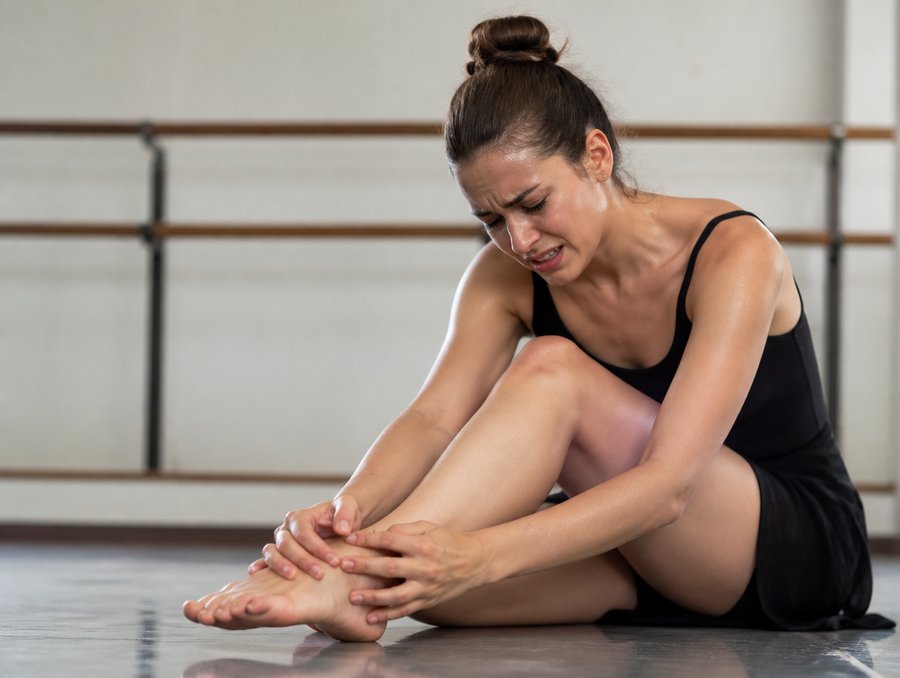
The most telling sign of plantar fasciitis
Plantar fasciitis is one of the most common causes of heel pain in athletes and sedentary people alike. Its most telling sign is sharp pain during the very first steps in the morning, which then eases with walking.[1]
Why this pain is worse on waking
During the night, the plantar fascia, a fibrous tissue stretched under the arch, shrinks slightly while at rest. The very first steps in the morning suddenly stretch it, causing sharp pain that eases with gradual movement, before possibly returning at the end of the day after prolonged standing.[2]

The most common trigger
A fast increase in walking or running volume, a change of shoes (thinner sole, less cushioning), or prolonged standing on hard ground come up very often in the history of plantar fasciitis as it begins.
What if the pain isn’t under the heel?
Not every pain under the foot is plantar fasciitis. Location changes the picture a lot.

Metatarsalgia: forefoot pain
It shows up under the metatarsal heads, at the base of the toes, often described as a “pebble in the shoe” sensation. Unlike fasciitis, it doesn’t have that peak pain on the very first steps in the morning.
Either way, load management stays central
Whether the pain is at the heel or the front of the foot, the underlying strategy is similar: temporarily adjust the load (volume, shoes, surfaces), and progressively strengthen the tissues involved.
Still not sure what’s going on?
Do your HOPP assessment to precisely identify the nature of your foot pain.
Risk factors for plantar fasciitis
A landmark study, comparing people with plantar fasciitis to people without this pain, identified the factors that come up most often.[3]
The most determining factor: ankle mobility
Reduced ankle mobility, especially the ability to bring the foot upward (dorsiflexion), stands out as one of the most significant risk factors. The less mobile the ankle, the more the plantar fascia is called on to compensate with every step.
The other factors that add up
Excess weight, a job with prolonged standing, and a fast increase in physical activity round out the list of most commonly found factors. Several combined factors raise the risk more than proportionally.
When to worry more
If the pain lasts beyond 6 months despite serious care (stretching, strengthening, load management, suitable shoes), it’s worth revisiting the situation with a healthcare professional to consider other options.
Want a program suited to your risk factors?
Do your HOPP assessment to target the right exercises right away.
Foot pain vocabulary
Fascia, fasciitis, calcaneal spur: these words come up often as soon as foot pain is discussed.
Plantar fascia
A thick fibrous tissue running under the foot, from the heel to the toes, supporting the arch with every step.
Plantar fasciitis
Inflammation or irritation of the plantar fascia, the most common cause of heel pain in athletes and sedentary people alike.
Calcaneal spur
A small bony outgrowth under the heel, often associated with plantar fasciitis but not always its cause: many people have one with no pain at all.
Dorsiflexion
The movement that brings the top of the foot closer to the shin. Limited ankle dorsiflexion is one of the best-documented risk factors for plantar fasciitis.
Metatarsalgia
Pain localized under the front of the foot, at the metatarsal heads, not to be confused with plantar fasciitis, which mainly affects the heel.
Frequently asked questions
How do I know if I have plantar fasciitis?
The most characteristic sign is heel pain that’s sharp during the very first steps in the morning or after sitting for a long time, which eases with walking then can return later in the day. This first-step pain is considered the most telling sign of plantar fasciitis.
Why does my foot only hurt in the morning?
The plantar fascia, a fibrous tissue running under the foot, tightens slightly during overnight rest. The first steps in the morning suddenly stretch it, causing sharp pain that then eases with gradual movement.
How long does plantar fasciitis last?
With suitable care (stretching, strengthening, load management), a large majority of plantar fasciitis cases improve over several weeks to a few months. Neglected or poorly managed cases can, on the other hand, settle in for longer.
What’s the difference between plantar fasciitis and metatarsalgia?
Plantar fasciitis mainly affects the heel, with that characteristic pain during the first steps in the morning. Metatarsalgia affects the front of the foot, at the level of the metatarsal heads (near the base of the toes), and tends to show up more with prolonged weight-bearing or at the end of activity than on waking.
What are the risk factors for plantar fasciitis?
Reduced ankle mobility (limited upward flexion of the foot) stands out as one of the most significant risk factors in studies. Excess weight, a job with prolonged standing, and a fast increase in physical activity also raise the risk.
What stretches help most with plantar fasciitis?
Calf and arch stretches, done regularly and especially before putting weight on the foot on waking, are the ones that come up most often in care protocols. Strengthening the small foot muscles usefully complements these stretches over time.
When should plantar fasciitis genuinely worry you more?
If the pain lasts beyond 6 months despite serious care (stretching, strengthening, load management, suitable shoes), it’s worth revisiting the situation with a healthcare professional to consider other options.
Does this quiz replace a medical opinion?
No, it’s a general self-assessment tool that gives you a direction, not a diagnosis. For a specific situation or persistent pain, use the HOPP assessment or consult a healthcare professional.
Ready to understand your pain?
Do your assessment and get a personalized program in 3 minutes.


Go further
Scientific references
- Buchbinder R. Plantar Fasciitis. New England Journal of Medicine, 2004;350(21):2159-2166. PubMed: pubmed.ncbi.nlm.nih.gov/15152061
- Latt LD, Jaffe DE, Tang Y, Taljanovic MS. Evaluation and Treatment of Chronic Plantar Fasciitis. Foot & Ankle Orthopaedics, 2020;5(1). PubMed: pubmed.ncbi.nlm.nih.gov/35097359
- Riddle DL, Pulisic M, Pidcoe P, Johnson RE. Risk factors for Plantar fasciitis: a matched case-control study. Journal of Bone and Joint Surgery (American), 2003;85(5):872-877. PubMed: pubmed.ncbi.nlm.nih.gov/12728038
This page is based on peer-reviewed scientific publications. It remains a general self-assessment tool and does not replace medical advice.