


Uncategorized
What it really feels like after ACL knee surgery: a physio’s perspective
There’s a lot of talk about ACL rehab, return-to-sport timeframes, protocols, return-to-sport tests. But there’s little talk about what happens in the very first days after surgery. And yet that’s where a lot is decided: the quality of this early phase directly shapes the rest of the rehab. As a physio, I’ve supported hundreds of patients after ACL surgery. Here’s what I observe, what I tell them, and what I wish someone had told them before the operation.
 By
29 August 2026
8 min read
By
29 August 2026
8 min read
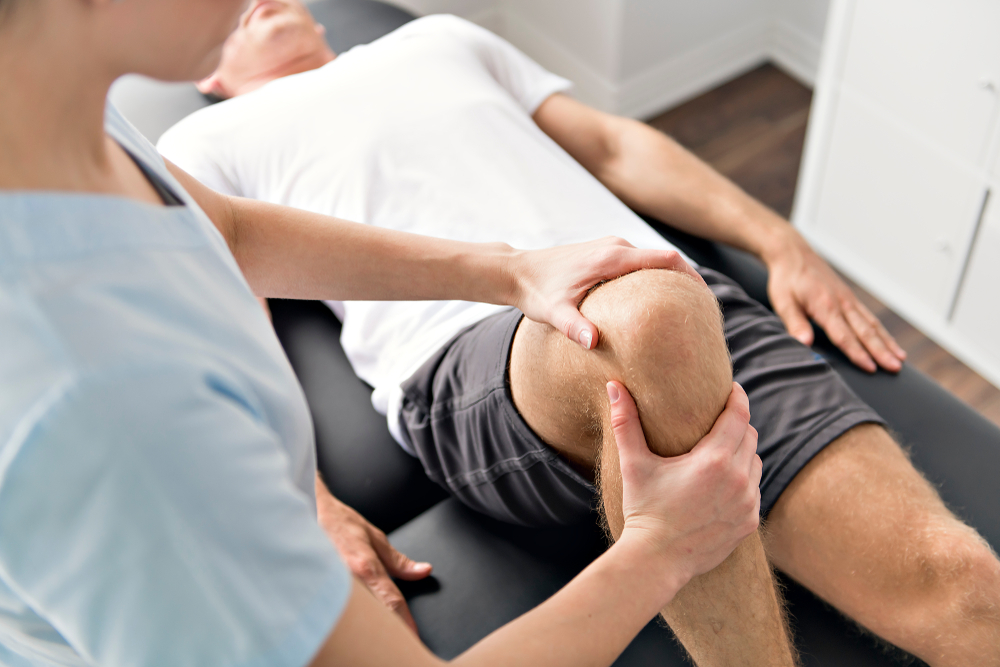
The first post-operative days are painful
I wanted to share my experience about the first post-operative days after ACL surgery because I find that most of my patients are surprised by how they feel during the first week. They had the timeframes for returning to running and sport in mind, but not the difficulties of the first days. This unwelcome surprise can quickly become distressing, and distress isn’t a good ally for rehab.
Pain linked to knee surgery
Even though ACL surgery is a common procedure, it’s still an invasive surgical act. The surgeon cuts, harvests tissue, screws, pulls, sutures. All of these are traumatic actions for the knee, which make the body react in a classic way: pain, swelling, inflammation. The body’s goal is to heal, but it hurts.
Even though the orthopaedic surgeon prescribes painkillers, pain is present in almost all my patients. It generally ranges from 1 to 4/10 — not unbearable, but not negligible either. Don’t expect to be comfortable at home. Even on painkillers, swelling in the knee puts the tissue under tension and pulls constantly. This constant tugging sensation, even without sharp pain, is exhausting. The first days are therefore fairly tough: constant discomfort, a mild background ache, and no truly comfortable position to be found.
Pain linked to stiffness
Swelling doesn’t just cause discomfort, it also causes significant knee stiffness. In the first post-operative days, the knee can’t bend or straighten freely. You lose range of motion, and above all fluidity. Every movement takes effort, every everyday action becomes deliberate and laborious.
And if you push a little too hard on range of motion to try to recover faster, the pain is immediate and the swelling flares up again. It’s a classic trap: wanting to rush mobility and worsening the inflammation instead of calming it. Patience in these first days isn’t passivity, it’s strategy.
Solutions for this early pain
The most important thing is to know all this before the operation so you’re not caught off guard. Here’s what I systematically recommend to my patients:
- Ice, applied for 20 minutes, several times a day, up to 5 times if needed. Less pain allows better relaxation, and it’s this relaxation that opens the door to mobility.
- Compression stockings, very useful in the first days to support drainage and limit swelling.
- Draining the back of the knee and releasing the hamstrings, two simple physio techniques you can reproduce alone at home. I use them at every session in the immediate post-op period. Less swelling, less tension means a knee that hurts less and moves better.
These actions seem simple, but doing them consistently makes all the difference. A patient who ices five times a day progresses much faster in the first week than a patient who ices only once.
The functional impairment is often underestimated by patients
I see a real difference between a patient having ACL surgery for the first time and those undergoing a second procedure. Patients who’ve already had surgery are aware of the post-operative difficulties. They’ve prepared for it, they’ve organised their daily life accordingly. This organisation strongly changes how things go over the first few weeks. Those having surgery for the first time, on the other hand, are often overwhelmed.
It’s hard to get around in the first few days
I find that surgeons give a lot of information pre-operatively about the surgery itself, but that patients are given little information about their actual functional capacity in the first days. Perhaps to avoid scaring them, but the effect is often the opposite: the surprise is far more anxiety-inducing than preparation would be.
My patients generally know the timeframes for returning to running and the typical length of rehab, but they’re not aware of what their first week will look like. Crutches, a brace, and your whole daily life is turned upside down. Walking becomes a workout. Taking the stairs, an expedition. Public transport, a risk to avoid. All of this needs to be planned ahead of time, so that all your energy can be focused on your knee.
Everyday actions become tiring and exhausting
All the natural movements you make without thinking become an effort. And all these efforts added up over a day become exhausting. And if your body is tired, your knee will heal more slowly and less well. It’s therefore essential to plan ahead and simplify your daily life so you can put maximum energy into what really matters at this stage: healing and care.
My view as a sports physio
I see too many patients forced to travel in the first post-operative days, dragging a sensitive, swollen knee through transport or up stairs. That’s time needlessly lost, and sometimes a setback.
When you have ACL surgery, for the first two weeks, your knee should be your only focus. Icing, drainage exercises, releasing the hamstrings, rest. Your body needs to put all its energy into healing. Every unnecessary outside effort is energy stolen from your recovery.
My physio recommendations to best prepare before ACL surgery
As I said, preparation and organisation are the keys to rehab starting off well. Here’s what I tell all my patients before surgery.
Planning ahead and getting organised
Since you know you’ll be in pain and that getting around will be difficult, you need to plan ahead. Do your grocery shopping before the operation, for at least 3 weeks. Don’t plan any activity, any outside commitment during this period. And above all: choose a physio close to home, a few minutes away on foot or a short drive.
I’ve too often seen patients come to see me two days after their operation by public transport. The benefit of the session was immediately cancelled out by the metro station stairs, prolonged standing, and the effort of getting there. In the first instance, proximity matters more than reputation. You can travel to see a physio further away later, but not in the first two weeks. That’s the big mistake to avoid.
Being patient at the start can save time on your return
The priority in the first days is clear: reducing knee swelling and regaining full extension. To do this, you need to keep the knee as relaxed as possible. This isn’t always easy when you’re in pain, but relaxation is the most effective approach for this first stage of rehab.
I too often see patients who only ice once a day, who stay tense because of the pain, and who can’t straighten their knee quickly. It’s often tension in the hamstrings that keeps the knee in flexion contracture, slightly bent all the time. If you’re properly relaxed, you’ll be able to do some kneecap mobility work: a simple, discreet, remarkably effective exercise for unlocking a knee in the first few days. It’s often the first exercise I give, and patients are always surprised by its effect.
Preparing for ACL surgery, or already post-op?
HOPP lets you immediately start a personalised care programme, designed by FIFA-certified sports physios with over 17 years of experience. No need to wait for an appointment, wherever you are.
FAQ — ACL surgery
Will I necessarily be in pain post-op?
In my experience: around 80% of my patients are in pain during the first week. The pain is rarely intense, but it’s present and constant. That said, some surgeons offer to maintain local anaesthesia for a few days after surgery. I find the result very good: with no pain, relaxation is immediate, which allows better knee movement from the first days and speeds up the recovery of mobility.
How long does this phase of pain and impairment last?
Generally between 1 and 3 weeks depending on the patient. The variability depends on several factors: the surgical technique, the quality of care in the first 48 hours, how rigorously ice is applied, and the patient’s ability to genuinely rest. Once past this point, getting around gradually becomes possible again, the background pain fades, and rehab enters a more active, less restrictive phase.
Can I get through the first post-operative weeks without a physio?
Yes, it’s possible, and we can support you with this through HOPP. But it requires rigour and flawless daily work: icing multiple times, drainage exercises, kneecap mobility, releasing the hamstrings. These are simple actions, but doing them consistently is non-negotiable. An independent, disciplined patient can progress very well without in-clinic sessions in the first two weeks, provided they’re well guided and don’t improvise anything.
A pain, an injury?
Get the facts on your injury in 3 min
- Start your care without waiting
- Get back to your activities without wasting time