

What is tibialis posterior tendinopathy?
Tibialis posterior anatomy
Tibialis posterior is a deep muscle in the leg whose tendon passes behind the inner ankle bone before attaching under the foot. It plays a key role in supporting the arch of the foot and stabilising the ankle during running and walking. An untreated tendinopathy can, over time, contribute to a collapsing arch (acquired flat foot).[1]
Why does this tendon become painful?
Pain appears when tibialis posterior is repeatedly loaded beyond its capacity, particularly in people whose foot tends to roll inward (excessive pronation).[2] Too rapid an increase in training volume, footwear with poor arch support, or weight gain can also contribute to this tendinopathy.
Which sports contribute to tibialis posterior tendinopathy?
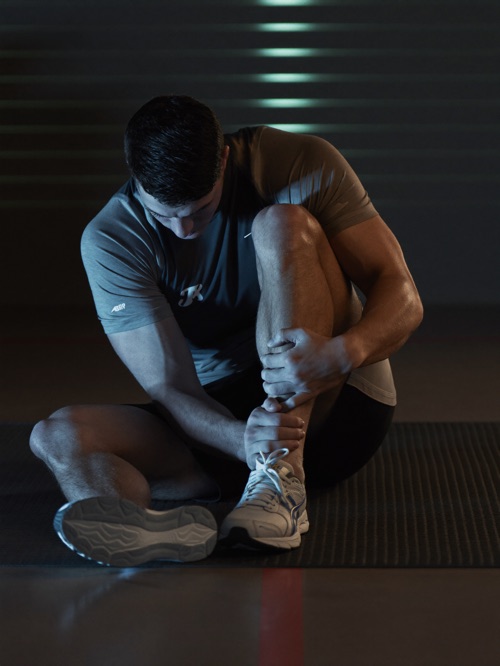
Any sport with repeated impact and pronation control demands this tendon:
- Running, particularly for runners with marked pronation
- Hiking and trail running
- Tennis and racquet sports
- Dance
- Sports with prolonged standing
Symptoms and diagnosis of tibialis posterior tendinopathy
Typical pain and its triggers
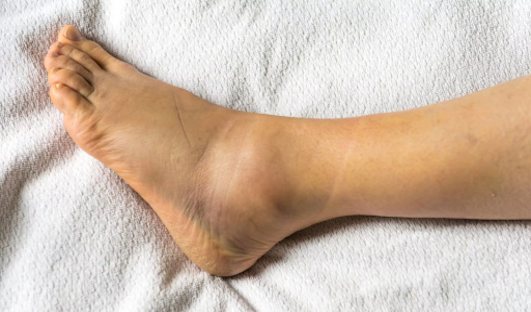
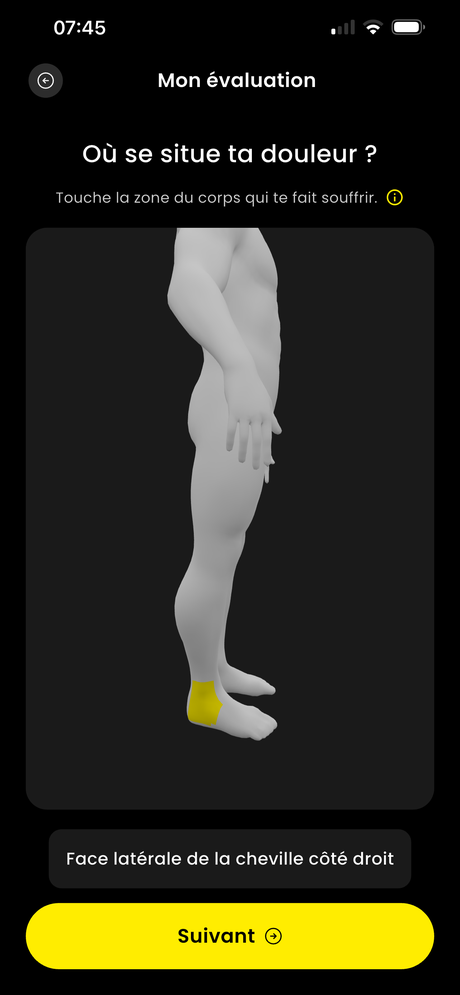
Pain on the postero-medial edge of the ankle, just behind the inner ankle bone, triggered or worsened by running, prolonged walking and rising onto your toes. Over time, a gradual collapse of the arch may appear on one side compared with the other, a sign that the tendon is no longer properly performing its supporting role.
Differential diagnosis
Several types of ankle and foot pain can look like this tendinopathy:
- Posterior tibial shin splints with suspected tibialis posterior tendinopathy, where bony pain along the shin dominates over tendon pain
- Ankle joint conditions, more linked to stiffness and diffuse joint pain
- Plantar fasciitis, with pain more located under the heel, typically at the first steps in the morning
Causes and risk factors
This tendinopathy develops when tibialis posterior is repeatedly loaded beyond its capacity, particularly in people whose foot tends to roll inward.
Risk factors
- Excessive foot pronation (the arch collapsing inward)
- A too-rapid increase in training volume
- Footwear with poor arch support
- Recent weight gain
- A strength deficit in the foot and ankle stabiliser muscles
Treating tibialis posterior tendinopathy in rehab with a sports physio
The goal of treatment is to progressively strengthen tibialis posterior to restore its arch-supporting function, acting early to prevent any progression toward structural collapse.
- 1Reducing pain and managing load
- 2Ankle mobility
- 3Isometric strengthening
- 4Progressive concentric strengthening
- 5Eccentric strengthening
- 6Ankle proprioceptive work
- 7Correcting technique and footing
- 8Strengthening under sport-specific load
- 9Progressive return to running
- 10Return to competition
“It’s not that the tendon is fragile, it’s that the load needs to be better dosed and distributed.”
Strengthening, the cornerstone of treatment
Progressive strengthening of tibialis posterior restores its capacity to support the arch with every step. Comprehensive foot and ankle work, along with suitable footwear, effectively completes the treatment.
In brief
- Progressive strengthening of tibialis posterior
- Comprehensive arch-support work
- Adjusting footwear if needed
- Gradual return: mobility, then load, then sport
Ready to take your tibialis posterior tendinopathy seriously?
Start the HOPP programme designed by sports physios.
Should you rest or keep playing sport?
Total rest is generally not necessary. It’s better to temporarily adapt the activities that clearly reproduce the pain, while starting progressive strengthening as soon as possible.
Think you might have a different ankle injury?
Take your free test in 3 minutes flat.
When should you see a specialist for tibialis posterior tendinopathy?
If the pain persists for more than four weeks, or if you notice your arch gradually collapsing, a medical opinion is recommended to assess the tendon and prevent any unfavourable progression.
Expected recovery timeline for tibialis posterior tendinopathy
A structured programme generally brings clear improvement within a few weeks, with a full return to sport after several weeks of progressive strengthening. The earlier the treatment starts, the better the chances of avoiding progression toward structural collapse of the arch.
Preventing recurrence
A few measures help limit the risk of recurrence once the pain has resolved:
- Keep up regular strengthening of tibialis posterior and the foot stabilisers
- Choose suitable footwear, with arch support if needed
- Progress cautiously with training volume and intensity
- Keep an eye on how your arch evolves and don’t ignore discomfort that comes back
The HOPP care programmes to treat your tibialis posterior tendinopathy and get back to sport
This tendinopathy calls for early care and progressive strengthening. HOPP offers you a precise exercise programme, allowing you to get back to your activities as quickly as possible.
The programme runs from 3 to 9 weeks depending on the injury and ends with a reconditioning phase allowing a return to competition in the best possible conditions. Each programme is designed by the HOPP team, made up of two sports physiotherapists who are experts in assessing and treating athletes. You’ll also find theoretical content throughout your progression, so you master every aspect of your recovery and can adjust your treatment independently. If needed, our team of physiotherapists is on hand to support you.
Essential
FROM INJURY TO
BACK TO YOUR ACTIVITIES
59€
One-time payment
“AT YOUR OWN PACE WITH
DAILY ADAPTATION”
- 100% of the treatment programme
- Daily personalisation
- Flexibility / Mobility
- Strengthening
- Proprioception
- Progress tracking
- Return-to-running programme
- Theoretical content included
Performance
TO GET BACK TO SPORT
IN THE BEST CONDITIONS
79€
One-time payment
“GET BACK TO YOUR LEVEL
WITHOUT RISK OF RELAPSE”
- 100% of the treatment programme
- Daily personalisation
- Flexibility / Mobility
- Strengthening
- Proprioception
- Progress tracking
- Return-to-running programme
- Theoretical content included
- + 4-week return-to-play plan with 6 difficulty levels
Expert
PERSONALISED VIDEO-CALL
SUPPORT, ANY TIME
149€
One-time payment
“A PHYSIO
WHENEVER YOU NEED”
- 100% of the treatment programme
- Daily personalisation
- Flexibility / Mobility, Strengthening, Proprioception
- Progress tracking
- Return-to-running programme
- Theoretical content included
- + 4-week return-to-play plan with 6 difficulty levels
- + 2 video calls with an expert sports physio / return check-up
A programme that adapts to you every day
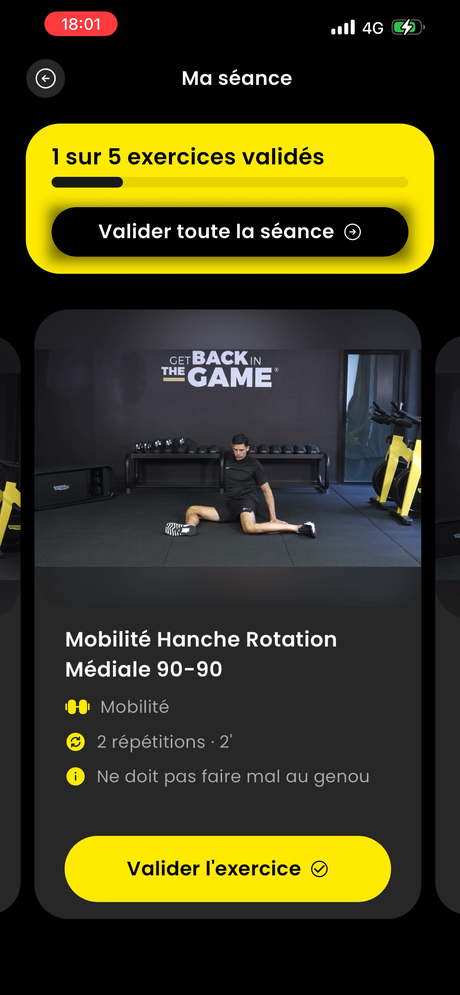
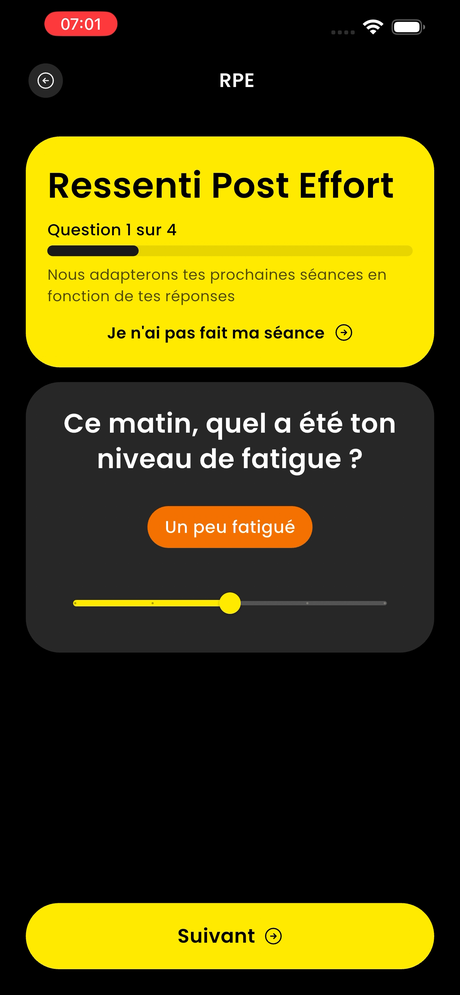
Every day, how you feel (RPE) is factored in to automatically adjust the rest of your programme: more load if all is well, a bit less if your ankle is complaining. This daily personalisation is what makes the difference compared to a fixed, paper-based programme.

Ready to start your programme?
Join the HOPP support programme designed by sports physios.
F.A.Q
Does the HOPP programme replace a medical consultation?
No. HOPP is a support and rehab tool designed by sports physiotherapists, but it doesn’t replace a doctor’s opinion. If in doubt, or if the pain persists, see a health professional.
Is the programme suited to all sporting levels?
Yes. Every programme is personalised to your sport, your level and how you feel each day, whether you’re a recreational athlete or preparing for competition.
Can this tendinopathy lead to flat feet?
A long-standing, untreated tendinopathy can indeed contribute to a gradually collapsing arch. That’s why early care is recommended.
How long does it take to recover?
A structured programme generally brings clear improvement within a few weeks, with a full return to sport after several weeks of progressive strengthening.
Can orthotic insoles help?
An insole with arch support can temporarily ease tension on the tendon, but it doesn’t replace progressive strengthening, which remains the underlying treatment.
What’s the difference from posterior tibial shin splints?
Shin splints affect the shin bone, while tendinopathy affects the tendon behind the inner ankle bone. The two can coexist, which is why an accurate diagnosis matters for targeting the right treatment.
Can you keep walking with this tendinopathy?
Yes, everyday walking generally remains possible. It’s better to adapt the activities that clearly reproduce the pain while starting progressive strengthening as soon as possible.