


The role of bone in athletes
Bone supports the body and protects internal organs. Connected to other bones by joints, it enables movement driven by the muscles and via the tendons. The adult human body has 206 bones.
For an athlete, a healthy skeleton is a solid structure capable of fast movement under muscular action, not just a protection for the organs.

How a fracture happens
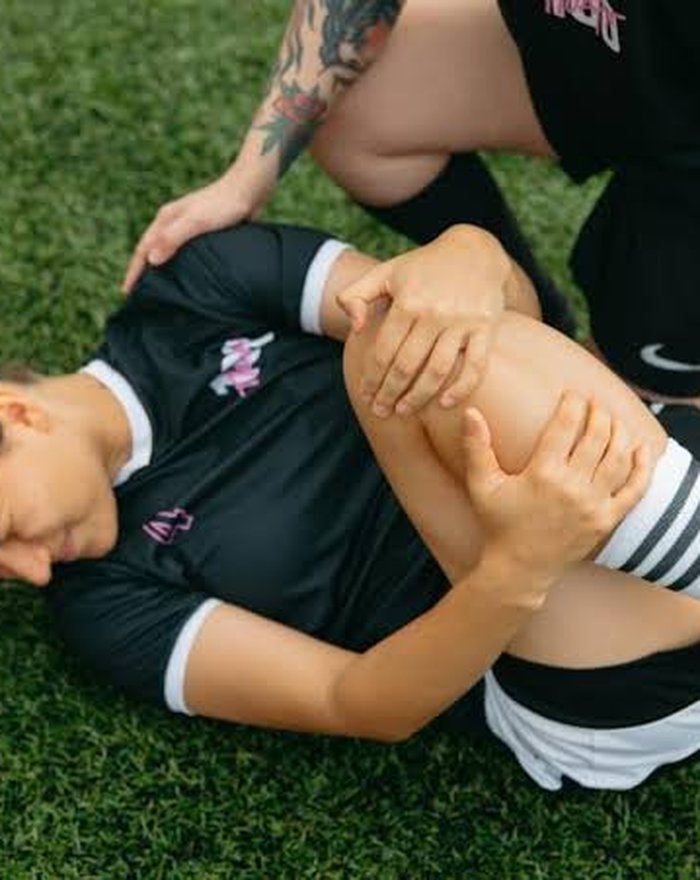
In athletes, a fracture generally results from an impact (with an opponent or equipment) or a fall. The bone breaks or cracks under the strain. It can be a clean break on the shaft (less serious) or affect the end of the bone, with an impact on the joint that often leads to stiffness.
On clinical examination, the athlete has sharp pain and functional impairment, sometimes with an associated haematoma or swelling. X-rays confirm the diagnosis.
Healing and possible treatments
Bone healing generally takes between 45 days and 3 months, depending on the type of fracture and the bone involved.[1] There are two main approaches: functional treatment (without strict immobilisation, or with a splint) and medical treatment with complete immobilisation using a cast.
Some fractures, known as “open” fractures (where the bone breaks through the skin) or that are significantly displaced, require surgery.[2]
The HOPP solution to support you
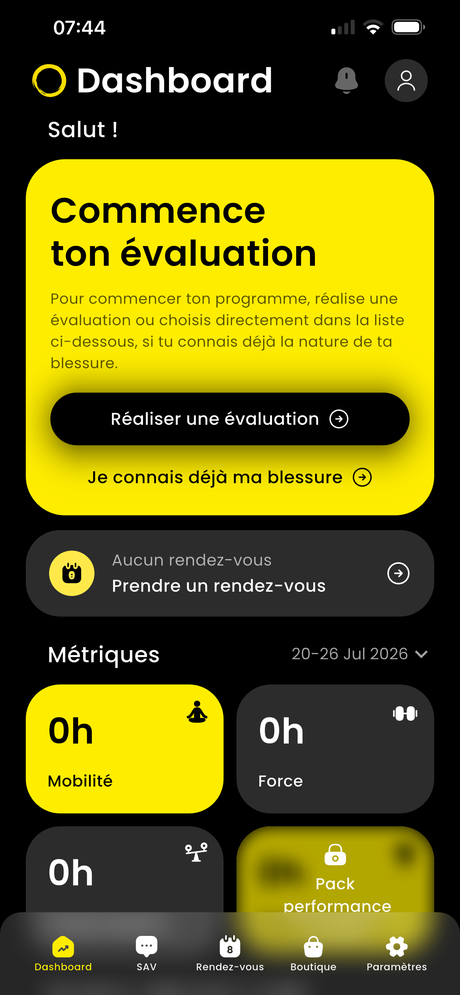
HOPP supports you after your medical diagnosis, structuring your progressive return once bone healing is confirmed.
A progressive return programme
Once your fracture has healed, HOPP structures your return to regain mobility, strength and confidence in the affected area.
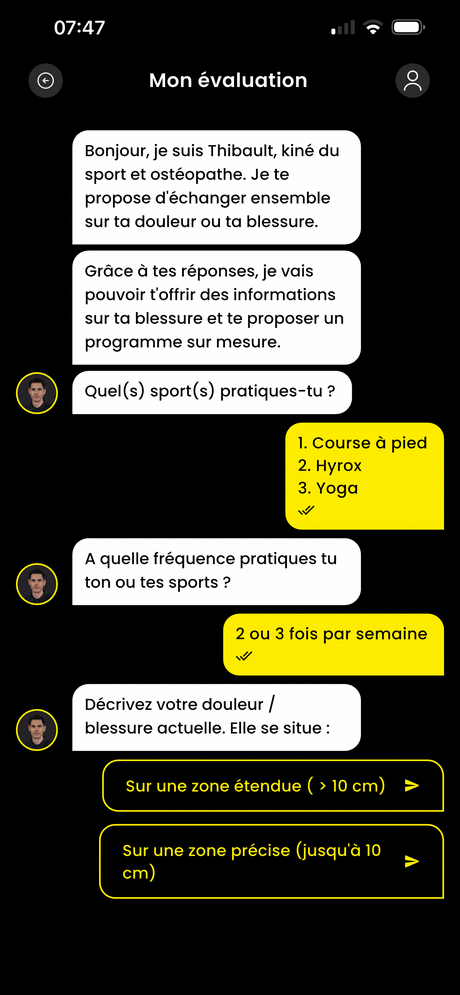
A sports physiotherapist to support you
Talk by teleconsultation with an expert sports physiotherapist to adjust your return programme.
Frequently asked questions
How long does it take for a fracture to heal?
Generally between 45 days and 3 months, depending on the bone involved and the type of fracture.[1]
Does a fracture always need a cast?
No. Depending on the location and stability of the fracture, functional treatment (without strict immobilisation) may be preferred over a cast.
How do I know if it’s a fracture or just a bruise?
Only an X-ray can determine this with certainty. Pain, functional impairment and any haematoma are warning signs to get checked.
Can I get back to sport while the fracture is healing?
Adapted activity for unaffected areas is often possible, but a full return waits until bone healing is complete and gets medical approval.
Does your pain sound like a fracture?
Get a clear answer in 3 minutes and start your suitable programme.
Scientific references
- Sheen JR, Mabrouk A, Garla VV. Fracture Healing Overview. StatPearls, NCBI Bookshelf, National Library of Medicine (NIH). ncbi.nlm.nih.gov/books/NBK551678
- Sop J, Sop A. Open Fracture Management. StatPearls, NCBI Bookshelf, National Library of Medicine (NIH). ncbi.nlm.nih.gov/books/NBK448083
This page is based on peer-reviewed scientific publications. It remains a general self-assessment tool and does not replace medical advice.